Thursday, March 12, 2015

Fantasy LP Covers

Fantasy LP covers made from my own artwork and photography, and used to both appear in gallery shows, and to promote my own music. Some of these have been printed as 12x12 prints and attached to vintage LP record sleeves found in thrift stores. A couple have been displayed in gallery show openings. At least one was used to promote a new song I have written. Which also gives me the idea to finally record and release an album of my own songs. I'll get around to that soon, I hope, life willing.


This next group of LP covers was made for the opening of a showing of my photographs of Silverwood County Park:


Labels: , , , , , ,

Saturday, December 21, 2013

Cabaret 2014 Banner

Just finished designing and illustrating the poster and web banner for the next musical event that I will be part of: Cabaret.

This began with a photo shoot with members of Perfect Harmony Men's Chorus, I then used several different digital painting methods in combination, to make the main illustration. The titling were made in Illustrator, where I usually do logos, or titling that needs special effects work.


Labels: , , , , , ,

Sunday, July 21, 2013

Queer Art Show in New York City


I was very pleased to participate in this Qweer Arts gallery show in New York City, that was put on by the gallery and RFD Magazine, in celebration of the magazine's new issue featuring lots and lots of great art. I have artwork in the magazine as well (look for Dragon), which is why I was invited to participate in the gallery show. I'm very glad for the opportunity, and very glad I was able to participate.

I sent six works of homoerotic photography and digital art for the gallery show. One work was purchased at the gallery opening, which is very exciting.

So I regard the RFD Magazine "Qweer Arts" show to be a big success. Six prints of my photo-based digital artwork were shown in a gallery in New York City, and one of them was sold! Adding these elements to my artist's resumé brings me a lot of joy.

Thank you.

This is the third gallery show that my work has been shown in, in 2013. I hope this might be viewed as a good omen of Things To Come.

Labels: , , , , , , ,

Tuesday, December 04, 2012

Lux Aeterna: Premiere

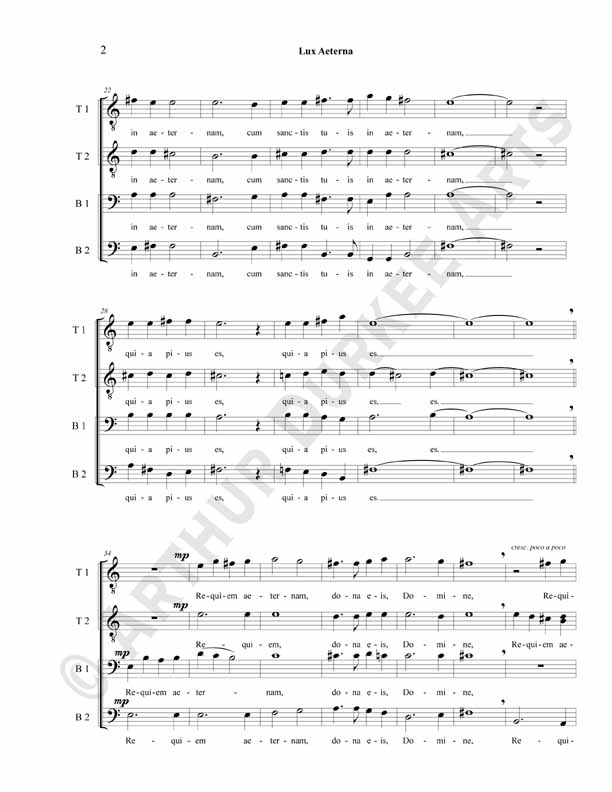
In January 2011 I wrote a short piece of a capella music for men's chorus, "Lux Aeterna," on the Latin text from the Requiem Mass.

It's a favorite text of mine, since, although I am post-Christian, there are many areas of spirituality that I find to be universal and eternal. The aspects of the existing organized religions that I find to be congenial and meaningful are those that speak of unconditional love, acceptance, compassion, universal siblinghood (if you will), and holiness.

To define the essential core of my personal spiritual practice more truly than I ever have before, my personal religion is that of the Light. I follow the Light. I may have been born in the darkness, but I work for the Light.

On one level, that's just another label, ultimately misleading because incapable of fully encapsulating what I mean into one word that functions as a label. What do I mean by "the Light"? So much more than I can put into words. Which is one reason I periodically choose to set sacred texts about the Light to music. Music goes deeper than words.

This isn't by any means the first piece I've written about the Light that was written during the dark days of winter, near the winter solstice, or soon after. Nor is it likely to be the last.

The Light is a recurring theme in much of my art-making, including my composed music, and I return to it again and again.

Indeed, when I operate as a fine art landscape photographer, every image made in the camera is made with light, and most are, if you look past the obvious subject of the photo, about the Light. I photograph the quality of the ever-changing light, as one my primary subject matters.

Here is the Latin text of "Lux Aeterna," followed by an English translation. (My own rendition from the Latin, based on a handful of other translations.) It is a text that begins and ends with eternal light:

Lux aeterna luceat eis, Domine,
cum sanctis tuis in aeternum,
quia pius es.
Requiem aeternam dona eis, Domine,
et lux perpetua luceat eis.


Eternal light shine on them, Lord,
with your saints in eternity,
for you are merciful.
Grant them eternal rest, Lord,
and perpetual light shine on them.

To say that I serve the Light doesn't mean that I deny the darkness, without or within. If anything, I know the darkness so well that I have chosen to serve the Light. (There are a lot of personal biographical and spiritual stories about how I was led to that choice, but those are irrelevant here.)

When I am writing the music to an existing sacred text, the words lead me towards how to depict them in music. I could go into a detailed analysis of my music and how it relates to the text, but in truth I don't think that matters. What matters is that the music have the emotional impact and depth found in the text.

Here's a sample of the music, from the middle of the score, to give you a sense of the setting and musical style:


(Click on image for larger version.)

In just a few days, on December 8 & 9, 2012, "Lux Aeterna" will be premiered by Perfect Harmony Men's Chorus, in Madison, WI, as part of their 2012 winter concert series. The concert this year is themed as Warm Wishes from Wisconsin, and consists this year of mostly popular songs in gorgeous choral arrangements, a few novelties that will make you laugh out loud, and a few story-songs and carols that are powerful and moving, including some of the beautiful Alfred Burt carols. "Lux Aeterna" is the only sacred choral work on this year's winter concert.

I am pleased and proud to have my music sung by this group of excellent singers. I am doubly pleased that so many chorus members have told me that they like this piece a great deal. It is a piece in a fairly modern, somewhat challenging harmonic style (remember what I said earlier about depicting the text in its emotional impact), and they have worked in rehearsal, and that hard work has paid off. We will be premiering "Lux Aeterna" in a resonant performance space well suited to choral music, that will maximize the music's effect, so I look forward to hearing it there.

May the Light preserve and protect you, and lead you home!

Labels: , , , , ,

Monday, November 26, 2012

Thanksgiving Gratitudes


One of the things I am grateful for, thankful for, despite all the pain and suffering it took to get me to the point of understanding—the many detours and wrong turns, the early knowledge and adult denials, denials for the sake of propriety and trying to please others, and ending with gratitude even for the horrific medical journey I've been on that culminated in surgery and recovery—is this:

Everything else stripped away, I at least know and accept now that my purpose in life is to make art.

Create. Make things. Write. Make music. Poems. Photography. Digital visionary and shamanic art. Paint. To make art.

It's what I'm best at doing, possibly the only thing I'm really any good at doing. It was what I was born to do.

I knew this when I was a boy, but then everything in life, and almost everyone, conspired to convince me I was wrong, that I could never succeed at being a composer or artist. That I had to find a "real" job. And I believed them. Or enough parts of me were beaten into that belief that I started to sabotage my own artistic success, by doubt and fear and self-created drama.

Enough. Maybe I'll never "succeed" as an artist, by becoming a wealthy and famous composer or writer or artist, but at least I've stopped fighting the core truth: making art is what I'm supposed to do.

Doesn't mean it will always be easy, or pain-free, but having a purpose goes a long way towards making the rest of life bearable.

I'm thankful for knowing what I'm FOR.

I hope you know that about yourself, too.


Thank You for the gift of beautiful and artful things
For the gift of being able to appreciate and enjoy them
For the gift of being able to make them
For the tools and materials and skills used to make them
And for the friends to enjoy making alongside
And for the friends to enjoy them along with


I think it was probably the life-threatening, near-death experiences I've been through recently—during which a lot of nonessential things got pared away, leaving the core of who I am—that this clarity about my purpose came life was able to emerge. A lot of useless drama in my life has fallen away. I have a heightened sense of my own mortality, the limited time on this earth to get done what I want to get done.

It was also a wake-up call to convert some old bad self-defeating habits into a more positive focus on what is possible rather than what was lost. That's still a new thing, still a fragile bit of learning. I have to remind myself to be positive rather than defeatist, most days. At the same time, I find I have less and less patience for those things and people that seem purposed towards wasting my time and energy. Awareness of your own mortality can heighten your impatience about wasting time. Stated more positively, I'll never be bored again. I have no time for boredom. There's too much to do, and I want to do it all.


Asked recently to write a short bio to accompany a set of my poems being published, I acknowledged this new awareness.

Arthur Durkee has finally woken up to the truth that his purpose in life is to Make Things: be an artist, a composer, poet, musician, painter, photographer, songwriter, landscape sculptor, book artist, videographer, etc. This realization came on the heels of a long illness, near-death experience, surgery, and recovery. Creative work is what he does best, and best loves doing; in fact, it's the only thing he's really good at. He's tried a lot of other jobs, from corporate to retail, and never excelled at any of them. He does still dabble for fun in freelance design and illustration for books and magazines, and creating art for musicians, such as posters and CDs. He observes the world from a slight angle, with an artist's eye and a bard's ear, and gives it back within new frames of focus. We are but mirrors and we marvel.


Labels: , , , , , ,

Tuesday, November 13, 2012

A Painting Journal


Aurorae, acrylic on paper, 2012

A painting journal

Trying something semi-new. Keeping a journal as I paint. Writing down thoughts in the pauses between painting during a session. Just as a record of the creative process.

Listening to music, while I paint, on random shuffle on iTunes on my laptop. Keep in mind that on my studio computer, my iTunes library can now play for over 190 days continuously, with no repeats. All kinds of music, truly random.

•

Thursday, November 8
4:16 PM

Feel like painting today. There is sunlight streaming in for the first time in weeks. There’s one painting that I want to finish, now.

Don't be afraid to paint over something you liked before, but which didn't work for this painting. I am finding myself wanting to finish one of the “Lights” (Aurora Borealis) series of paintings today, after having it set aside for weeks. I have the iTunes music library on shuffle, listening to random pieces while painting. All over the avant-classical pop rock map. Copland to Patsy Cline to books on CD to Kate Bush.

Several layers of dry rush blue night sky, over existing backgrounds. Then the luminosity of the aurorae themselves. Lots of edge softenings, nuances, translucencies.

Even though I started this painting with bold geometric shapes, I've moved away towards something more fractal, more natural. Follow the brush. Bold and solid under layers yield to thinner, translucent, feathered upper layers. It looks better that way.

Because of the way I'm painting right now, or because of the abstract-realist subject matter, I find myself using large flat brushes. Angled strokes, really rather calligraphic. Sometimes the brushtrokes form lines and surfaces like geographic texture underneath the more visible layers.

Peter Gabriel to science fiction soundtrack creepiness. “He's got a ray gun!” Melodic punk Bob Mould. Zen shakuhachi.

The painting darkens but the lights still shine through.

•

Thursday, November 8
4:46 PM

The next layers will lighten the painting up again. Let the dark over-layers dry for awhile. Then continue. Often I don't let the acrylics totally dry, because I do like the slight mixing that happens when you dry brush paint over a still slightly wet layer. The same kind of mixing that happens in nature, layers of sedimentary rock feathering and mixing together as they form, bleeding color from minerals leaching into the matrix.

Continuing to photograph each painting in progress, with the idea of using these closeups and sectional photos of color and brushstroke as painted stock backgrounds. Might even create and sell CDs of original stock on my own, of these my own materials. Why not? No one else has them, because no one else has these paintings in progress.

Photographing the painting in progress is also a way of looking at it, contemplating it, looking more closely.

Quick sunset of oncoming winter. There goes the last of the natural light. Even in the failing light, though, continuing to paint, kitchen lights turned on now.

Sometimes the texture of the paper still comes through, as do the lines of brushstrokes on lower layers.

Of course lighting affects mood. Color does as well. Despite what the neuroscientists claim, I don't think that's hardwired, I think it still has some culturally-bound factors. A lot of neuroscientists are not even aware that their own fundamental assumptions about what they observe are culturally-bound; unaware that their cultural bias is Western-scientific; as opposed to, for example, Inuit-mythic or Hindu-Buddhist-cosmological. Is a fish aware that it’s breathing water?

Color palette and language are not the same from culture to culture. What is held in common are the perceived colors of natural world objects. Red berries on forest plants around the world are poisonous often enough to humans to be of note. But there is no equivalent color in the northern Midwest to the color of young rice in the paddies, that unique yellow-green. So what we associate with those colors has at minimum some cultural input and conditioning with regards to how we interpret colors as emotions.

Yet I’m a North American, born on Turtle Island, and my roots for this kind of painting that I find myself doing are in Kandinsky and other branches of early Modernism, from the period before Modernism went ultra-rational, began to worship logical-positivism, and threw away all of its early vestiges of both irrationality and mysticism.

People forget that some of the key branches of early Modernism were deep explorations of the newly-theorized unconscious self, the realm of dreams and myths and archetypes; that got discarded in favor of rational utilitarianism. Not always an equal tradeoff. What the expressive color, the color of expression, in my painting means might mean what it means only to me, but as Kandinsky notes, if the experience of viewing the painting evokes an emotional, or mythopoetic, response in the viewer, all is good.

Laurie Anderson runs into Coldplay. Then 40s pop hits. A favorite slow movement from a Vivaldi cello concerto. Truly random music choices. The BBC Radio drama of Woolf’s To the Lighthouse.

Rest awhile. Make some more photos of the painting. Think about starting dinner.

•

Thursday, November 8
5:16 PM

I'm not remotely tired of photographing these paintings as I make them. It's not really about recording the process, more about watching change. Each working period yields a new painting. The painting you start with is not always like the painting you end with, and it might change several times during the process. Eventually it tells you when it's done, and you stop.

That's something a lot of my non-artist friends never seem to understand: listening to what the work tells you it wants. Non-artists all too often think art-making is all a conscious act of will, as though it were all planned out, pre-designed, engineered to the artist’s willful blueprint. Well, sometimes you do start out that way, but it almost never ends up exactly as you pre-visualized. It moves. It always has a will of its own. The artist doesn't control things as much as people think. There's a lot of intuition involved.

One of the things that makes a lot of current postmodern art so dry and emotionally flat, and often frankly boring, is precisely a lack of intuition, with too much conscious intent and control. Trust me, I've worked in advertising art and commercial design and illustration, where you are in fact working to a goal, an outline, a conscious intent. Art with a purpose, art intended to pass on a specific message. It's often still creative and fun, and sometimes even nuances, but it's not art that’s meant to endure. It’s meant to be seen once, clearly convey its message, then the reader moves on. Most art you see in magazines is like that. You don't desire to keep coming back to it, to look at it again and absorb it.

When I look at a Jeff Koons piece, for example, it's often very clever and flashy and interesting, really eye-catching and fun. But once I've seen it, I’m done with it. There’s no lingering. Looking at it a second time, I shrug. There is no desire to come back. It's commercial illustration writ large, and what it lacks is precisely that emotional intuition (Kandinsky again) that I find myself seeking from my own paintings. I don't tire of looking at them, or making photos of them.

Probably most artists feel this way about their own work, so it's hardly a revelation, I imagine. If it didn’t interest you as an artist, you wouldn’t return to it, or to doing it.

October Project. A movie soundtrack. Tom Petty and the Heartbreakers. Cowpunk ditties. "I hate to wake up sober in Nebraska." Music rolling on.

Pause to make dinner. Ravel solo piano music.

•

Friday, November 9
11:45 AM

Now we lighten up the colors again, so they emerge from the dark, glowing. Red glows over green.

Thinking ahead, planning ahead, envisioning in advance with the mind’s eye, what photographer Edward Weston called “pre-visualization,” is something I learned to do years ago as a graphic designer. You keep the goal in mind. You can hit the mental undo button to go back a step if necessary. You visualize what the end result will look like, and you approach that visualization even if you never quite match it in the real world. Imagination remains more malleable, in the end.

Working in layers on a painting, adding layers over layers, is for me analogous to working in layers in Photoshop. You know what's above and below, what masks and what shows through, how they interact. There is a similar sense of happy accident, the indeterminacy I often like to see in all the art I do. Being surprised as the artist is one of the things I love about the process. Discovery. The mystery of an unplanned but even better outcome.

Thinking about this further, layers are natural to me because they are prominent in my music, and the music I play and listen to. All those years spent playing Javanese gamelan, which is layered cycles of melody and heterophony. The influence of the Indonesian music I've studied and played on how I play in a jazz or rock combo setting, in which I also tend to think in layers. Avant-garde classical music and jazz, often structured similarly. I'm thinking of Steve Reich's cyclic gradual process music, and also more recently of Nik Bartsch and his ensemble Ronin, in which the tension between layers of melody and rhythmic cycles is integral to the music.

The underlayers of the painting show through in parts, in textures underneath, even when the pigments are covered over or mostly so. Remnants. Memories. Little bits of the past. Every painting is a history as well as a fact.

•

Saturday, November 10
12:34 PM

Recently acquired the special edition DVD of Ed Harris' movie "Pollock," which is an excellent biopic about the artist Jackson Pollock, unsentimental and deeply moving. It’s not a psychoanalysis of Pollock, it’s a presentation of his life. The most interesting and intense parts of the movie are the scenes in which we see the artist at work, creating. To do this role, Harris learned how to paint. He built a studio behind his house, and began to learn. The paintings seen in the film are re-creations of Pollocks, made by the film studio art department, but also worked on by Harris on camera. This is one of the most realistic depictions of a painter in the films: there’s no faking it.

Watching Harris paint as Pollock painted, in character but also DOING the paintings is enthralling. You can see that the actor has absorbed how the painter moved, physically, which gives a strong clue to how he painted. This is a simply terrific film. It inspires me to take up the brushes again today and work some more.

Painting is becoming something that, once I've started doing it, becomes self-sustaining. I still have trouble with all the labels around art: painter, artist, etc. I'd rather than just do it than have a label I have to wear like a name badge. So I still don't think of myself as A Painter, I just paint. I’m happy to say I paint, and leave it at that.

•

Monday, November 12
2:07 PM

This painting is now finished. No title yet, though I do know it’s part of the aurora borealis series. Call it simply “Aurorae” for now. I’ll put it up on the bedroom wall with the other painting, and continue to grow the cluster of paintings there, adding color to my room’s most empty wallspace.

Finished. Rather, I don't know what else to do with it. The end result is a bit darker than I had envisioned, nonetheless it's saturated with rich color. There are a lot of details here I like. Brushstrokes like waves of light and air.

Poet Paul Valery once opined, "A poem is never finished, only abandoned." I feel some of that now. This painting is abandoned. I feel the need to go on, to work on other paintings. To do something new and unknown. To improvise.

In painting as in poetry, there comes a point after which more revision won't fix anything, and often makes things worse. I once was boggled to hear that a poet was teaching her writing workshop students that she sometimes revised a poem sixty times. I frankly find that either unbelievable or pathetic. If it takes that long to "fix" a piece of art, chances are you never will. Either it has defeated you already, or you've gotten stuck.

I don't feel that way about this painting, it just feels done. Abandoned, maybe, or perhaps it’s just telling me that it’s done. I don't know what else to do with it. I'm satisfied. I'm ready to move on to the next piece.

Labels: , , , , , , , , , , , , ,

Friday, November 02, 2012

The Day After the Day of the Dead


Some of these guys look a little hungover. Too much fun the night before, maybe. Or blood.


When I went out this morning to start taking down my decorations, I found someone had put a Peanut M&M in the mouth of one of the hanging skeletons. So even the hungry ghosts got fed last night.


Labels: , , , , ,

Wednesday, October 24, 2012

Rural Skies in Infrared


Recently I drove the back roads around my small town, which I often do when I need to get out and clear the cobwebs out of my head. It's like a camera walk, the purpose of which is not to make art, but to do a kind of meditation: to just walk, to see what is there, to see rather than just look. You make images with the camera, but the focus is on the process rather than the product. Sometimes I get only one good image from a camera walk, sometimes I get several. Driving around with the camera is similar, just with a wider range of opportunities.


Open prairie skies, endless sea of grass. . . .


I ended up at one of my favorite local county parks, photographing the brilliant autumn colors. I also set my other camera on B&W and made some infrared photos, and also some drive-by photos of farm buildings and fields as I drove. This photo is the best of the drive-by photos.


Labels: , ,

Autumn Colors at Their Peak


A few days ago, taking a break from working on projects, I went out for a drive in the afternoon, just to change gears for awhile. That's always a good way to clear out the cobwebs in the head. I wound up driving out to one of my favorite local county parks, where the autumn colors in the trees were at their peak. A stunning display.


Autumn colors in the local park. No one about. A gentle breeze in this sheltered valley becomes a stiff and howling wind on the open farm fields outside.


Stillness in the valley, except for the trees bowing in the wind above the high hill. Stones of memory and silence, embracing entwining encompassing encapsulating. Where the river runs out to dry the stone begins. Wind becoming an ending, a beginning. Becoming light. Always into light.


Bluejay in a golden maple. Thin haze between blue sky and still=green lawn. Spruce bearing fruit that on second glance is little brown birds, and a female cardinal.


The road covered with glory. Leaves by the ditch brilliant with light.


Labels: , ,

Wednesday, October 03, 2012

Painting

Although I am, if I do say so myself, an experienced and even award-winning visual artist, I have never thought of myself as a painter. I did paint with acrylics in my youth, as well as do drawings with technical pens. I always preferred acrylics to oils because they are less toxic, and I also their overlap in technique with watercolors. I enjoyed painting, but it was purely an amateur hobby pursuit.

Last year I rediscovered a cache of some of those old paintings, and was interested to notice that some of the same themes I still pursue in my visual art were already fully-formed: transformation, shamanic and archetypal themes, cosmic imagery, mountains and moons. It is always interesting to learn that some of the themes that you thought you'd grown into along the way were in fact there from the very beginning.

I still don't think of myself as a painter, and probably never will.

Nonetheless most of the art I've made over the past month or so has been: painting.


Kandinsky's Poem, 2012
Collage, papier-maché, altered books, acryclic painting, brush calligraphy, photography, on watercolor paper, 30"x40"

This is a piece I made to donate to a fundraiser being done by the local public library to support literacy education in the community. Literacy was something both of my late parents felt strongly about—our family when I was growing up was a family of avid readers who were not averse to pulling out the dictionary or encyclopedia even while at the dinner table to answer a question—and both of them volunteered to teach literacy at the local public library. So, for me, when I was given the chance to donate art for a literacy fundraiser, it was a chance to connect to my parents, and also to a cause I myself support.

I made this piece to be donated. But as I worked out what I wanted to do, I realized I wanted to start with an acrylic underpainting. Bright colors, that would show through the papier-maché layer, which consisted of prints of my own photos and pages from an old two-volume dictionary. I highlighted the key words on the pages torn from the dictionary using Japanese brush calligraphy materials.

The altered books aspect of this collaged piece was in fact the central aspect, and the origin of the project. The call for donations from local artists, for the library fundraiser, was specifically about altered books. This is a form of art-making using recycled materials that I've been interested in for a few years, but never worked in before. An altered book is essentially an artwork made from an existing bound book, or its pages, or form, or materials. The creative possibilities are endless. I remember seeing examples of books a few years ago from the Berkeley Public Library, books that had been vandalized or damaged, and were given to local artists to make into altered books. In other words, to be given new life. That was spirit of this local library literacy fundraiser, and books were provided by the library, but you could also use your own. I used this old two-volume dictionary that I found at the local thrift store for almost no money at all. And no doubt will make more art from these volumes, as well as some others I have set aside to work with.


After finishing this large collaged piece, I continued to feel an urge to paint with acrylics. So I went and got a few more large sheets of fine printmaking paper, and have been painting. I am almost done with one more large painting, which is purely a painting. I've been working with large swatches of paint, teaching myself both saturated color and dry-brush techniques. I've been reading books about acrylic painting in the public library, and making notes. I've been thinking about putting more art on the wall over my bed in my bedroom; and what better thing to put up there than something I made. I don't care if anyone thinks it's narcissistic, but most of the time I'd rather make art to put up than buy it. I don't call myself a painter, but I am an artist.


As I've been working on this large painting, I've been making photographs of it as I proceed. Both to document the process, so I can retain what I've learned by doing, but also because I had the idea to make detail photographs (detail, meaning close-ups of sections of the artwork) for the purposes of stock photography. Such abstracted forms could be used in future for stock backgrounds, as elements of illustrations, and more. I have worked on this large painting over two or three sessions so far, and have one or two more sessions to go before I reach the point that I have envisioned in my mind.

One reason I referenced painter Wassily Kandinsky in the collages piece I donated to the fundraiser was that Kandinsky, as well as being one of the founders of Modernist abstract painting, wrote extensively about his theories of emotion in painting, about how he wished to reduce representation in painting to pure emotive form, to tell a story in an abstract way. I've written here before about abstract realism in photography; now I approach the topic from the direction of painting, as influenced by Kandinsky.

What I am intending to do with this artwork I am making, despite refusing to label myself as a painter, is brushwork that evokes emotion.

Brushwork can refer to calligraphy as well as painting, writing as well as representational art. Indeed, in Chinese and Japanese art history, brushwork refers to all of the above; because writing in those cultures is ideogrammatic rather than alphabetic, and done with a brush and ink, there are even literary forms that reference the brush in their definitions. So, for me, brushwork includes more than painting.

I am interested in Kandinsky's ideas about how abstraction can still evoke emotion. Almost in the same way music does, not through specific image but through form and mood and color and rhythm. Abstraction that evokes feeling. Which of course is what the American abstract expressionists were pursuing in the middle of the 20th Century. But they were painters, and I'm not.


So, since I work in multiple media, it's only natural that I would import my paintings into the digital realm and work with them there as well. I've been experimenting combining text and illustration, for example.


Storm Coming Near, 2012

I go back and forth between digital and actual painting in this work, which to me seems entirely natural. Paintings will become elements of digital illustrations, be used in stock photos, and will influence art made directly in the digital realm.

One of the most interesting parts of this ongoing exploration has involved painting on photographs, both actual and digital.


What I am exploring now is painting digitally on my tablet computer, my iPad. I am using several apps to paint digitally on the tablet, both in terms of making original illustrations and calligraphic pieces, and also in terms of painting on photographs.


Taos Home

I am particularly enjoying making paintings from some of my best photographs of the Southwestern United States, photos made on recent roadtrips. This is a process of using the photograph as a reference for making an original painting.


Vermillion Cliffs, NM, 2012

Sometimes I start by painting-over a photograph using digital painting software. I can sample and replace the colors in the original image, or I can go wild. I can make the forms and elements of the piece realistic in one area, and completely abstract in another. I find myself usually preferring to veer towards abstract realism.

I have no real desire to learn how to paint or draw photo-realistically, but that is what most instructional books emphasize. If I want a photo-realistic image, I make a photograph, because I am a professional photographer. I have those tools and those skills. I am much more interested, in drawing and painting, in loose realism, or abstract realism.

As with photography, I often begin with a landscape, a place and a time, a mood, an evocative moment. In making a photo, I often wait a long time for the light to be perfect, before I release the camera shutter. Photography can be an art that teaches you extreme patience. You learn to look at your subject a very long time, to see it, before you make your image. These are often the kinds of images I choose to make into painted versions.


Moonrise, 2012

Shapes and forms. Elements of color. Mood and feeling. Abstract realism. Emotion and music and lighting and those times when art takes you out of your mind and into your larger self.

That's what I am seeking as someone who has been painting lately. I am not a painter, and don't want to get stuck in that definition, which limits and skews as often as it liberates. I'm aware of art history, but I'm not dwelling on it. I'm just making some paintings.

This trend is continuing and growing. I am also making little illustrated visual haiku, calligraphic illustrations, sketches and drawings and little scraps of ideas. I'll write more about that later.

Labels: , , , , , , , , , , ,

Thursday, August 09, 2012

North Shore Infrared


Highway 166, MN


Canoes and dock, Kawashaway, MN


Temperance River, MN; my favorite swimming hole


Falls of the Cross River, MN; time lapse exposure in infrared

Labels: , , ,

Friday, July 20, 2012

Taos, NM, in Infrared

Photographs of St. Francis of Assisi church in Rancho de Taos, NM, July 2012


and of a ruined plaza building near the church:


Labels: , , ,

Thursday, July 05, 2012

Sun & Moon & Fireworks