Sunday, January 24, 2016

Who Are We, and Where Are We Going

a Spiral Dance essay

It's pathetic, I suppose, that I'm now more comfortable in anonymous hotel rooms than anywhere I'm supposed to be living, I have a place to live in Madison, now, with a very positive and even supportive roommate, but sometimes I still prefer being alone. That's really why I stopped at a hotel last night. Too tired to deal with people. No spoons left for social graces. Too much effort to even talk to people I like and want to be with. I just wanted to be alone and silent. I don't know how to survive without silence and solitude, anymore. Happiest out there driving alone on the road, in the desert, or forest, or wherever there aren't many people, or any.

I've been kicked out of every group I've ever belonged to. It keeps happening. I should accept it by now, but I keep fighting it. Every group I've ever given my loyalty to, I've been forced to leave behind. I keep getting kicked out of the nest, before I'm ready to leave on my own. Either I've outgrown them, or the gods want me to move on, or it's time and I don't want to go, or fate moves the pieces on my board and I have to leave.

It keeps happening. It's happening again.

Madison, WI, isn't supposed to be where I live. During the crushing end of times in Beloit, when I was having to see everything I own, including my home, the only home I've ever owned, I dreamed that I could give Madison a chance. After all, I used to live there, and had and have many friends, and musician partners, and so on. I've given it a good try, but everything, literally everything, has told me not to make a hime there. No signs of inevitable placement. I've been prevented at every turn. That's the usual sign.

I went through the hell of trying to rent an apartment in Madison, only to be confronted by the unsolvable Catch-22 of: 1. You can't rent an apartment unless you have a job, or credit, or income source. 2. You can't get a job unless you have a street address of a place to live, like an apartment. That paradox is what me onto the road in early November, where I spent almost two months out West; two months, I must say, that were almost the only happy times I had in all of 2015. Everyone noticed. Everyone commented on it. I was happier out West than I had been all year. Less stressed. More positive.

Then I came back to Wisconsin. And the stress immediately got worse again. And then I got bullied, and had to flee a situation where I had been staying. And that pushed me back out on the road again. If only for more healing via travel.

Then I came back.

I'm exhausted, right now, because after two weeks on the road, to Ann Arbor then down to Tennessee and Kentucky to check out another possible living situation, which did not pan out, I had to immediately go back to Ann Arbor for a job interview. I sucked at the interview, and I don't think I'll get the job, but the more I thought about it the more clear it was: I am being invited to live anywhere except Madison. It's time to go.

I got really clear, driving back towards Madison, although stopping short at a hotel before getting there, that Wisconsin is hell for me now and I just need to leave it behind. I got really, really clear; it's so obvious that I should have seen it before, that all my remaining time spent in Madison will be about preparing to leave. It's true, there are details to finish up of this life. I won't rush, if the gods permit, and I know I won't be staying much longer. A few months, probably.

Wisconsin has been very hard on me for the past decade, and it's never going to emotionally neutral there. All that suffering will always leave an aura of sour apples behind. Maybe not in the greenwood per se, but everywhere there are people. So it's time to go. I have more Stuff to get rid of, from the storage locker, and I have time to say goodbye properly to some long term friends, but then I will be gone. These past few months were offered to me, in the words of a friend, as a Farewell Tour. And that's how I am treating them. I won't say de ice what kind of Farewell, just yet. It doesn't have to be that final one, although for awhile that too was in the cards. But it's definitely a Farewell to the life that used to be, that I have now outgrown, and need to put behind me, so I can actually live and thrive, elsewhere. That's the truth of this. That's also why hotels feel better than what used to be "home."

I've never been able to "go home again" in my life. (Cue Thomas Wolfe.) I've never really been able to go back, and stay, anywhere I used to live. I've always been required to live in a new place. I know that on some level that the gods park me in a new place, to be of service there, so that my frequency of light can be used to brighten up a dark place. I'm really tired of always being alone, of never finding a loving partner, although I accept this as part of my path. You're getting a lot more honesty from me, tonight, in this hotel, than anyone is probably prepare to deal with. Well, deal with it. This life path I am on is nomadic, is lonely, is demanding, and has its powerful rewards that sometimes make it all feel like it's been worth it, although not that often.

And I have to keep going.

Caroline Myss, one of my spiritual directors this lifetime, says: Loyalty is a beautiful tribal quality, especially when it is conscious loyalty, a commitment that serves the individual as well as the group. Extremes of loyalty that harm one's ability to protect oneself, however, qualify as a belief pattern from which one needs to free oneself.

That nails it on the head. When I first give my loyalty to a group, I am very conscious of it, and very aware that service is the key: serving others, we serve ourselves. Yet I tend to give my loyalty a bit too fiercely, and it does come back to bite me. Because I make the mistake of thinking that others also give their loyalty as I do. That's one reason I've been kicked out of the nest so many times. People change, and I find myself alone in where I gave my loyalty, with no reciprocation anymore.

I don't really want to die, anymore. I'm not really suicidal. But I do still have days when I just don't care, when I'm too tired to care, and don't want to go on. Lots of honesty, here. Days I can't face anything normal or socially typical. When I'd rather be out there talking to the Green Man God of the Woods than any human. When Dionysus has my love, and you don't. Days I just can't deal with the superficiality, the inanity, the shallow self-regard. Days when I could cheerfully be a hermit in the desert, and talk to the coyotes more than people. I'm half wild as it is, I guess I always was. Maybe that's why I keep getting kicked out of every nest I've ever tried to build. It's happening again, right now. Let me just pull the knife out of my back, before I continue. There. That's better.

The last year has been about getting rid of or being forced to let go of everything I owened, everything left to me by my parents, all my money, my condo, my belongings, my whole life here. Another nest just taken away. Apparently I'm just a drama queen for ever mentioning it, or for it affecting my mood, or for being so exhausted that I'm not perky or cheerful enough, for it giving me a "bad attitude." I guess that's true. Never mind that it's been the most horrific decade of my entire life, beginning with the deaths of my parents more or less in my arms, passing through almost dying from chronic illness, and finally culminating in the Year I Lost Everything.

Well, so what.

Time to move on. Time to start over somewhere else. Time to go back out to the desert, or the woods, and start over elsewhere, with a lot less baggage, including the physical. Since that seems to be the pattern of my life, I might as well embrace it. I don't know if I will ever live with people anymore, I'll just drop in for a visit. A good visit. With some people, a very good visit. But love and sex? Probably never going to be a permanent thing, for me. Always moving on. I can accept that, too. It doesn't hurt too much, tonight, to embrace that. After all, being pansexual or an omnisexual mystic means I've had sex with the sky and the mountains as often or more than sex with people, men or women or both.

I like people. I really do. I just can't build permanent love relationships with them. I mean, other than as family of choice, which I do love and am grateful for. I just seem to be the wanderer, the warrior, doomed to be homeless, rootless, and so on. That's not self pity talking, that's just acknowledging the archetypes that rule a life.

So, here I go, again. Writing this out in a hotel in the middle of the night after collapsing into sleep upon arrival. That's why you get so much honesty, at the moment, no point in lying to myself. No need to pretend anything other than what it is. And we go on.

Labels: , , , , ,

Monday, August 05, 2013

The Hollow Places

That hollow place in you
Left hollow
When something you love has gone
When someone you love has left

Don't let it be filled in too soon
Or with just anything

Keep it open

Don't put a fence around it
But don't let it be filled in too easily

Let it be

Sometimes in the forest of the heart
A pine grows, sometimes a saguaro
But both are trees of the oldest Tree
Whose roots bind yours to
The root of the world

•

And sometimes the dark hollows
Are not a hole of what has been
Lost or gone missing
But a well

A well soon filled from below
By a flood, slow at first rising
Of black water shot with silver stars
The waters of the power under life
The creative force that drives the wold
And waters the roots of that same Tree
In which you yourself are rooted
Wellspring and branch and solace

Labels: , ,

Monday, July 08, 2013

A Thousand Words About Endings

(A Spiral Dance essay.)

Not for the first time in my life, nor even the third, an important relationship in my life ended because the other person had an idea about me that was wrong, or thought I had done something that in fact I had not actually done. This has happened more than once, and in quiet moments of self-reflection, I wonder. It's been on my mind today, sadness and bitter regret and anger and hurt and contemplation and acceptance all mixed together.
More than a misunderstanding, the event itself, that has been said to happen, can be a matter of perspective and interpretation, and sometimes viewpoints are so relative that they seem to exist in different universes. But people get very attached to the narratives that they create for their lives, especially those in which they become locked into being in the right, so that you must be wrong, and so justification and rationalization come into play. Most people have egos that need to be fed, and are not capable of suffering much contradiction. So your viewpoint might not even get a hearing, or might get dismissed, and if you insist on creating a dialogue, which takes two or isn't real, sometimes you get rebuffed. Nowhere.
So what did I contribute to the situation? It's a reasonable question. Yet when the other party accuses you of something you know you didn't do, and won't listen, it's a question impossible to answer. I've considered it often, and with no feint towards justification I can honestly say I don't know. Both parties feel wronged, but only one wishes to work it out.
For my part, I know well that I live my life at a level of intensity and passion that some people simply don't like, and don't want to engage. So maybe the other felt provoked. Yet sometimes the rationale for a break-up is dishonest in that an excuse is found rather than the truth being told. People look for an excuse to conceal their real, even unconscious, intentions. Sometimes people think that's the best thing to do, or the least likely to cause suffering, which itself can be another layer of delusion or self-deception.
For my part, I always prefer telling the truth. It's easier, it's simpler, and you don't have to waste time trying to remember which lie you told to which person. But not everyone feels that way. Most lies we tell are self-supporting justifications, or rationalizations that appear to make sensible our most irrational urges and compulsions. Learning to live more consciously means first of all that you have to stop lying to yourself.
And that can be the hardest work you've ever done on your own self. I know for a fact that on at least one occasion, probably two, the person pushed me away, or rather found a reason to break up with me, because my presence was requiring them to stop lying to themselves about something in the core of their being. I made them uncomfortable. Not deliberately, not because I wanted to, but because of my insistence on honesty, and my refusal to go along with the lies they were telling themselves. Lots of people do not like very much honesty.
But in a relationship that's what I have to give. Honesty. I do not do codependency, and the reason I do not do it is because it's always built on lies we tell ourselves, like the idea that we don't deserve anything better. People often reject honesty when it doesn't serve their self-aggrandizing interests. Our illusions can seem more comfortable or pleasing to us. We are all guilty of that, me too, once or twice in our lives. But codependent people live within an even deeper tangle of delusions and despairs. They often believe that love is supposed to hurt, so they work subconsciously to make it painful even when it doesn't need to be.
Which is why I find it so fascinating that this pattern of being rejected for something I never said or did keeps happening, in my life, that people shove me out of their lives because they have decided to believe something about me that isn't true. Of course, you don't always get a chance to tell your side of a conflict.
I must consider if this is a flaw in myself, of which I am not conscious. That's why I mentioned intensity and passion. It has been pointed out to me by a few friends that my personality can, without my knowledge or intention, dominate a room. I've been told I can change the mood of a room just by walking into it. I have learned to be much more aware of that, since it's not something I want to do, usually. I hold myself back. I rarely let show the full force of my personality. I've gotten used to being invisible.
Maybe I just keep choosing complicated, damaged people to love. Maybe the reason I end up alone is because I am in their lives for the period of time it takes them to grow up, and then we're done, and we grow apart. Maybe I should just open a finishing school.
But there is another possibility, if you examine life from an archetypal, symbolic level, a level of oversight that floats above the everyday and can look down upon events with dispassion and honesty, that the relationship was already done, and it was time for me to move on. It wouldn't be the first time I was severed from some situation and person that made me feel comfortable and accepted, but like an eagle fledgling needs to be pushed out of the nest so that it could learn to fly, I needed to be pushed out of my comfort zone.
So maybe when the job is done, some higher purpose forces me to move on. You are of service, and you must go on to the next job. Maybe this functions on the archetypal level of sacred contracts. Maybe that's my purpose, here, my job. An unarticulated and secret function, as healer and shaman. Not all healings are obvious, and you don't always get to know the outcome.
At this point I do not expect to ever have a permanent, long term love relationship. It doesn't seem to be my fate. If I'm honest with myself, it's not the way I'm wired. I will probably always be alone, which has its own challenges. I don't seem to be wired for monogamy, anyway, nor shall I be permitted its pleasures. Who cares? I've survived thus far, and who knows what the future might bring.
All I know for certain is that here is a pattern. Patterns always mean something. You have to pay attention whenever you discover a pattern, or there is no chance of altering it. No doubt these musings will mean nothing to anyone but me. So be it.

Labels: , , , ,

Sunday, June 09, 2013

on the shore of the last sea


and we meet them on the shore
of an endless sea in blue twilight in bright sun
brighter so bright one can barely see past sun tears
as more and more of our beloved dead gather
to greet us to love us to say hello and farewell one time
more in the promise of something we cannot contain
the lost restored to each other
all sorrows healed
not papered or scarred over but gone as if they never
existed

and we meet them on the shore
as the light of that long bright afternoon fades
to blue wind and lapping waves
rising out of the waters we are born from
and to which we inevitably return
when our span of suffered growth is done
given to each other given our sons to the sun
held in hands blessed with infinite brilliant
light

and we meet them on the shore
where at the edge of vision gold sunflowers
stand tall offering of vigilance
a requiem of attention
shadows of clouds reflected in wind-bled waters
sound of waves of that lapping last shore
sound of breeze in tall grass and flowers
sound of sigh of breath of sleeping children
sound of trees beyond the windows
all one sound the same sound same sigh same breath
all one

and we meet them on the shore
as they go forward into silence
fingers sliding apart last touch after long merge
until we too we also
meet our own children our own loves
from the other side of this meeting place
we dead now those who go on
and return to water in blue
eternity

Labels: , , ,

Tuesday, April 30, 2013

Spiritual Art Juried Painting Exhibit 2013


I have four paintings, one of them a group of four smaller paintings that are a series or cluster, in this juried exhibit of "Spiritual Art."

I was encouraged to enter my paintings in this show by a friend, although I had hesitated at first. On one level, even though I did a lot of acrylic paintings in my youth, I hadn't put paint to canvas or paper for almost thirty years till I began painting again last year. So I am both a total beginner at painting, and a very experienced visual artist with years of design, composition, and photography under my belt. In the past I've won awards for my visionary visual artwork, and photography. So, I had mixed feelings.

The call for entries of this show of "Spiritual Art" left their definition of Spiritual very open to interpretation. Being that this is a fairly conservative small town region, I expected that they would receive many entries of frankly sentimental religious art—for example, pictures of angels, and of people praying in church. So I hesitated to be part of that.

Frankly, sentimental religious art makes me cringe. I mean no insult to any artist who paints that kind of art, and I mean no insult to anyone's belief system. The problem I have is not with religious subject matter, but with thoughtless sentimentality. There is so much imitation rather genuine in bad religious art. On the other hand, finding a piece of religious art fresh and filled with life is rare enough that it ought to be celebrated.

My own spiritual tradition lies far outside the mainstream of organized religious worship. The details don't matter, what matters is that the points of convergence I have with the organized religious tradition are all normative to the mystical threads of tradition and usually controversial to the mainstream. As for painting, if you want to see a genuinely glorious and praiseful depiction of Creation, I recommend you take in a van Gogh exhibition.

Painting for me has become a form of personal therapy. I mostly do it for my own needs, and not to illustrate or depict a theme or subject that I want to present to an audience. I use a lot of vibrant colors in my paintings, often in many built-up translucent layers that create depth and subtle lighting effects. Most of what I paint is very abstract. Since I've been doing brush calligraphy for a long time, I have made a few paintings based on that kind of brushwork, even an enso or two, painted rather than ink-brushed. I "follow the brush" when painting, and it is expressive for me, but I don't particularly feel like I am in any school or have any purpose. A lot of what comes out is big bold fields of abstract color, with sometimes just a hint of form that might be a hint of subject. I feel like what I am doing is closer to what Kandinsky originally described in his theories of expressive color, than any more recent school of painting. I know a lot of art history, and I don't want to be part of a school or -ism, I just want to paint. Less theory, more art.

Even though painting for me is a personal expression, mostly, what comes out is abstract enough that it's not a journal entry, or overly personal. People can look at these mostly-abstract paintings and read in whatever meaning they wish, that is their own and not mine. I've talked many times of what I call abstract realism, which is abstraction from nature, but also abstraction not divorced from the form that inspired it. In painting, for me, this might look like an abstract painting that for me evokes a memory of the aurora borealis; but I'm okay with another viewer finding something else in it, or just looking at it purely as abstraction. If they get some kind of emotional or aesthetic response from the painting, I feel it's succeeded.

With all this in mind, I also knew that anything I submitted to a "Spiritual Art" show would probably be quite far outside the box, different from other entries, and quite possibly beyond the pale. I did end up submitting four paintings to the juried show, with no expectation that any of them would get in. I deliberately chose paintings that broke convention, and are very much experimental. One of them is even a three-dimensional work, not a traditional painting. The joke is on me, because all four got in. So what do I know?

Here are thumbnails of the pieces I will have in this show, all of which were painted in 2013:


Void: Emergence


Earth and Sky II


Enso (Meditation in the Marketplace)

This depicts for me the classic saying from Zen meditation practice: "Anyone can meditate alone on a mountaintop. The real test of your meditation practice is when you return to the busy, noisy city, full of sound and lively action, and try to meditate in the marketplace there."


Paleo-Icons

A group from an ongoing series of paintings inspired by prehistoric cave art, petroglyphs, ancient civilizations, and the colors of the rocks and land where such art is to be found. The other source of inspiration here is Byzantine icons, with their formalized styles and color palettes. I'm really enjoying this series, and have done a few more since submitting this grouping to the show. The icons are all the same size, and can be displayed in several different ways.

Labels: , , , , , , , , ,

Tuesday, December 04, 2012

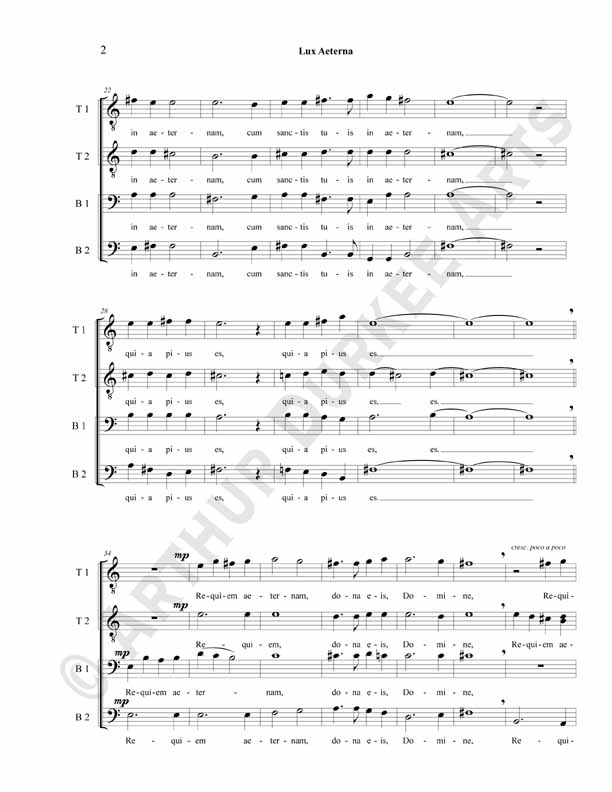
Lux Aeterna: Premiere

In January 2011 I wrote a short piece of a capella music for men's chorus, "Lux Aeterna," on the Latin text from the Requiem Mass.

It's a favorite text of mine, since, although I am post-Christian, there are many areas of spirituality that I find to be universal and eternal. The aspects of the existing organized religions that I find to be congenial and meaningful are those that speak of unconditional love, acceptance, compassion, universal siblinghood (if you will), and holiness.

To define the essential core of my personal spiritual practice more truly than I ever have before, my personal religion is that of the Light. I follow the Light. I may have been born in the darkness, but I work for the Light.

On one level, that's just another label, ultimately misleading because incapable of fully encapsulating what I mean into one word that functions as a label. What do I mean by "the Light"? So much more than I can put into words. Which is one reason I periodically choose to set sacred texts about the Light to music. Music goes deeper than words.

This isn't by any means the first piece I've written about the Light that was written during the dark days of winter, near the winter solstice, or soon after. Nor is it likely to be the last.

The Light is a recurring theme in much of my art-making, including my composed music, and I return to it again and again.

Indeed, when I operate as a fine art landscape photographer, every image made in the camera is made with light, and most are, if you look past the obvious subject of the photo, about the Light. I photograph the quality of the ever-changing light, as one my primary subject matters.

Here is the Latin text of "Lux Aeterna," followed by an English translation. (My own rendition from the Latin, based on a handful of other translations.) It is a text that begins and ends with eternal light:

Lux aeterna luceat eis, Domine,
cum sanctis tuis in aeternum,
quia pius es.
Requiem aeternam dona eis, Domine,
et lux perpetua luceat eis.


Eternal light shine on them, Lord,
with your saints in eternity,
for you are merciful.
Grant them eternal rest, Lord,
and perpetual light shine on them.

To say that I serve the Light doesn't mean that I deny the darkness, without or within. If anything, I know the darkness so well that I have chosen to serve the Light. (There are a lot of personal biographical and spiritual stories about how I was led to that choice, but those are irrelevant here.)

When I am writing the music to an existing sacred text, the words lead me towards how to depict them in music. I could go into a detailed analysis of my music and how it relates to the text, but in truth I don't think that matters. What matters is that the music have the emotional impact and depth found in the text.

Here's a sample of the music, from the middle of the score, to give you a sense of the setting and musical style:


(Click on image for larger version.)

In just a few days, on December 8 & 9, 2012, "Lux Aeterna" will be premiered by Perfect Harmony Men's Chorus, in Madison, WI, as part of their 2012 winter concert series. The concert this year is themed as Warm Wishes from Wisconsin, and consists this year of mostly popular songs in gorgeous choral arrangements, a few novelties that will make you laugh out loud, and a few story-songs and carols that are powerful and moving, including some of the beautiful Alfred Burt carols. "Lux Aeterna" is the only sacred choral work on this year's winter concert.

I am pleased and proud to have my music sung by this group of excellent singers. I am doubly pleased that so many chorus members have told me that they like this piece a great deal. It is a piece in a fairly modern, somewhat challenging harmonic style (remember what I said earlier about depicting the text in its emotional impact), and they have worked in rehearsal, and that hard work has paid off. We will be premiering "Lux Aeterna" in a resonant performance space well suited to choral music, that will maximize the music's effect, so I look forward to hearing it there.

May the Light preserve and protect you, and lead you home!

Labels: , , , , ,

Saturday, October 27, 2012

You Must Honor Illness


(a Spiral Dance essay)

I've felt pulled off-balance for so long, off-center and not-grounded, and for good reason. I had been ill for twenty years, although it hadn't been diagnosed as what it was till near the end of that time. Then the cure had its own pulls off center, a genuine cure but it comes with its own set of problems, changes and re-creations of what was and what can never be again. I still don't know what the new normal is. If there is one. If there will ever be again a sense of stability and direction.

I spend all this long day waiting, a day where nothing bad happened but I just couldn't get rid of that sense of darkness and void lurking just behind everything you see. Out of the corner of the eye the fabric is ripped away and the play is revealed for what it is, a painted backdrop over nothing. If you turn your head too quickly, the paper rips and you see through the world into that emptiness behind all manifest things.

And that's why I often feel off-balance and fogged out and ungrounded lately. It's just that I don't have any maps any more. All the old maps are useless or incomplete. When you've drifted this far out to sea, there's no sense of which direction to go to find land again. It's water heaving all around, and no smell of shore.

So in the past few days, after a summer's long pull down towards the smiling void, I find myself turning, or returning, to those sources that have given me a sense of center before, a center from which to extend. And so this morning I read, out of nothing that could remotely be called a coincidence, words that linger with me all this long day. Words that come back to me as I fail to find my center and extent once again this late night:

You must honor illness. It gives us time for reflection. As hard as it is, it helps us sort out our priorities. I know there's nothing worse then someone telling you, 'This illness of yours is a gift.' No, it's painful and discouraging. It's not a gift, but it is a time to pull back and take a closer look at one's life.

—Father Sergei, quoted in Mary Swander's luminous book The Desert Pilgrim: En route to mysticism and miracles.

I have tried hard, many times, to honor my illness, and my recovery. Illness has not been a gift. It's been a passage that more or less removed any chance of meeting whatever ambition I had felt years ago for purpose in this life. This doesn't mean there was no direction, but such maps as there were were never more than puzzle codexes in a lost language leading you away from treasure island. Illness sent me adrift and astray. The beneficial knowledge that comes from hindsight about this illness is knowing that in fact my failures in life, so labeled when they occurred, were not a failure of will, not a personality defect, nor a lack of focus. The life-force truly had been sucked out of my blood, blood which tastes like a lost ancestral ocean. I was neither too lazy nor unambitious, I was in truth waylaid by gravitational tides fully veiled until this recent complicated cure.

Still the recovery has been a time of reflection. My priorities, after almost dying, were reshuffled into a new configuration. I know what my purpose here is now, and I know upon reflection what I'm for, what I do best: I am a maker, a bard, an artist, who's really not very good at much else. Self-knowledge is not all roses and lilies, though, as I have discovered I lack any patience for idiocy that would further leech my essence. I know my mortality from the inside out, having almost lost my ability to live. I have a lot to do, and don't want to waste any more time doing it.

So that's the necessary distinction: My illness was no gift, yet it did provide me other gifts. Of self-awareness, of self-confidence in knowing what I'm good at and what I'm supposed to do with it. I'm still recovering. Not what was lost, but what I never had but dreamed. A dream wherein a map guides me no land that ever was, but an island come into being as one discovers it. There's nothing on the other side of those mountains till you cross their range and see what's there, the act of vision itself what solidifies void into form, light into mass. That effortless conversion of energy into matter.

Labels: , , , , , ,

Friday, October 26, 2012

if you let that silence in

Feeling really inward this evening. One of those times when you just want to sit and watch the changing of the light, as the evening sky goes from afternoon to sunset to the indigo of night. Reading until it's too dark to see anymore. That sort of mood. Wanting everyone to just go away and leave you alone, even though it's not that you want to push people away, just that it's hard to be around people when you're in that mood. This is exactly how depression and PTSD alienate: you don't feel like you can connect with anyone, because you're in a different universe than they are. Nothing connects. E.M. Forster's epigram and key phrase from his novel Howard's End was "Only connect." But at the end of his greatest novel, A Passage to India, there's a scene between two of the main characters that raises the doubt that we ever can connect. That it might just not be possible. We try hard but there are always rocks and hills that get in between us, get in our way. I feel on the other side of the mountains from everyone, in these evening moods. This is the ceremony of the changing of the light. No light to see by, till the carriage lights turn on and the sky tries to fill with stars. Which it won't tonight, because of clouds and cold. I need to get out and go grocery shopping, just a few odds and ends, but I don't want to move at all. I wrote a poem some years ago in this mood, and it had some legs, even got published. "La Madonna." A young wife's interior monologue, as she sits in silence, in a quiet moment between the flurry of her usual day. "In a minute," she says, before the poem ends. She'll rejoin the world in a minute. Sometimes you just want some time to yourself, to be still and silent and by yourself. One thing that experience has proven is that extraverts never really understand introverts; they never comprehend why we need to be still and silent for part of our day, how it recharges. I also feel in no rush to be around people these days, as they tend to be noisy and clueless and overbearing. PTSD for me means I get easily overstimulated. It just gets too loud and overwhelming sometimes. I get the sense that lots of my friends really don't understand that. I doubt few of them have even read this far. How do you get a quiet message through the personal and cultural noise? The voice of the divine isn't loud, it's a still small voice, a voice you must listen for, and it's easy to miss. Too much noise, not enough signal, that's the state of the world. It's mostly noise, very little signal. I've had friends marvel at the fact that when they come to visit, I don't have the TV on, or the radio, or even the stereo, using background noise to cover over that silence, that void and gap in conversation and communion that most people seem to be deathly afraid of. Geese are passing over, there's only a thin line of light on the western horizon, everything else has gone blue and grey. People are afraid of silence. We've all gotten so used to the loud noise of cultural that people are afraid of even gaps in conversation. We're so used to fast editing in the entertainment, sharp cuts and jerky camera shots and editing for maximum adrenaline stimulation, that people don't know what to do with themselves if the moment is too quiet. I have friends who are incapable of sitting in silent companionship, saying nothing, just holding space, just sharing the silence. The minute there's a gap in the noise, they try to generate signal. But it always comes out wrong. They stumble. But I'm afraid of the silences and gaps in fellowship. I'm comfortable with silence. The void is a longtime companion that I have come to know very well. Whole worlds can drop into those silences. When I'm driving across the loneliest two-lane highway in the world, a hundred miles from anywhere, out in the desert in Utah or Nevada, or on the unpaved roads of the northern Great Lakes backcountry, I sometimes pull the truck over, turn off the motor, get out, lean against the hood, and just listen to the silence. An hour of the total silence of the desert is worth a month of talk therapy. Things settle in place. Life stops. There's nothing but the present moment, nowhere to be, nothing to do, and most importantly nothing that needs to be said. I know a lot of very smart people who are incapable of silence, who process everything in words, whose lives make no sense to them until they talk it out or think it in their minds in words, till they fill the void gap with their own words. I know writers and poets who never shut up, and don't know how to. But I also know musicians who know the value of a long rest, of the fermata, of the breath-pause in between phrases, that tiny moment of absolute stillness that an entire world can fall through, between the end of one phrase and the beginning of the next. No words there, and none needed. The words fail us at that point, and that's where the bard and shaman know that poetry begins. Purple and grey band of light under the soft lip of steel clouds behind forks of bare trees as the wind stills for long enough for you to hear something in that evening silence that can feel the world. If you let it.

Labels: , , , , ,

Wednesday, October 03, 2012

Kandinsky: Concerning the Spiritual In Art

One hundred years ago, artist Wassily Kandinsky wrote and published a small book called Concerning the Spiritual in Art (1911). It was translated into English and published in the British Isles in 1914.

Here is the complete text of that translation online: Concerning the Spiritual in Art. (The first page is the translator's preface, which is an interesting historical document for its context, although reading it almost a hundred years later, some of the big arguments about Modern art in this preface have long since been considered settled.) And here is a downloadable etext of the book from Project Gutenberg.

Kandinsky was Russian-born, lived and worked in Germany, and is considered by many to be the first abstract painter of the Modernist era. He sort of started the whole abstract painting project. A lot of what followed, including the flowering of Abstract Expressionism in the USA in the 1950s, flowed from what Kandinsky had started. At some point, every abstract painter needs to deal with his ideas.

The key point in all this for me is the word "spiritual." After a century of Modernism and Postmodernism, and more, the one part of Kandinsky's contribution to ideas about art is the spiritual aspect of art. This remains entirely unfashionable. I have written before about mannerism and decadence, about the re-enchantment of art. The spiritual component of art, so important to Kandinsky, is the main thing that the past century has worked hard to ignore or dismiss. Not all contemporary artists agree with this, though; the spiritual in art is beginning to return to the notice of artists and critics alike.

For example, a recent article by Taney Roniger: Beyond Kandinsky: Toward a New Sense of the Spiritual in Art. I have on my shelves next to my art-making part of my living room creative corner a small collection of books that look at this very topic. This isn't just art therapy, this isn't just psychology, there's more to it than that.

Creativity Beat website boils this down to a nutshell in a post on Kandinsky, and I quote:

In his introduction Kandinsky says, “The nightmare of materialism, which has turned the life of the universe into an evil, useless game, is not yet past; it holds the awakening soul still in it grip”. A little over one hundred years later these words speak succinctly to our current state of crisis. The world financial crisis, global climate change, escalating violence and high-tech wars, all point out the destruction brought on by the greed of excessive materialism.

In Kandinsky’s time the vast majority of museum goers and art lovers could only understand art that represented reality. And even though modern and post-modern art have opened us to new ways of seeing, the gate-keepers of the art world currently have very little room for art with spiritual content.

But today, there is a great awakening, a re-membering of our soul’s connection; more and more people from all walks of life are responding to the spiritual in art. As an artist I take these words of Schumann to heart. “To send light into the darkness of men’s hearts- such is the duty of the artist.”


Let me repeat a key statement from that: The gate-keepers of the art world currently have very little room for art with spiritual content. I can attest to this personally, as an artist whose visionary and shamanic art has been rejected more often than not. Something about my artwork seems to scare people and attract them at the same time. Perhaps due to its often archetypal contents. I've written about this before, and I've thought about it a long time. So Creativity Beat accuses the gatekeepers of the art world as being hostile to spirituality in art, I can only nod my head in agreement. I do think, though, that Kandinsky would have been dismayed by this hostility's ascendance in contemporary arts culture; although he may not have been surprised.

For myself, I find new resonance in Kandinsky's words of a century ago, because as artists we are right back where he started from, a century ago, finally addressing these issues of the spirit in art after having denied their existence for so long. Or perhaps addressing seriously for the very first time.

Here are some quotes from Concerning the Spiritual in Art that I find worthy of contemplation.

•

There is no form, there is nothing in the world which says nothing. Often - it is true - the message does not reach our soul, either because it has no meaning in and for itself, or - as is more likely – because it has not been conveyed to the right place.. ..Every serious work rings inwardly, like the calm and dignified words: ‘Here I am!'

•

All means (in painting) are sacred when they are dictated by inner necessity. All means are reprehensible when they do not spring from the fountain of inner necessity.. ..The artist must be blind to ‘recognized’ and ‘unrecognized’ form, deaf to the teachings and desires of his time. His open eyes must be directed to his inner life and his ears must be constantly attuned to the voice of inner necessity.

•

The artist must have something to say, mastery over form is not his goal but adaption of form to its inner meaning.

•

In a composition in which corporeal elements are more or less superfluous, they can be more or less omitted and replaced by purely abstract forms, or by corporeal forms that have been completed abstracted

•

The artist must train not only his eye, but his soul.

Labels: , , , , , ,

Sunday, May 22, 2011

Poet and Priest

It would be a realization of that which as yet we glimpse from afar, if a priest were also to be a poet, if a poet were allowed to be a priest, if the life of a priest and that of a poet were to intermingle and be woven one into another. . . .

It is time that we asked: what has become of the times when great theologians also wrote hymns? When they could write like Ignatius of Antioch, compose poems like Methodius of Olympus, be carried in hymnody like Adam of St. Victor, Bonaventure, and Thomas Aquinas? What has become of those times? Has theology become more perfect because theologians have become prosaic?

—Karl Rahner, "Priest and Poet," essay from his collection Theological Investigations

There's a long tradition—bardic, skaldic, shamanic—of the priest being a poet, of the poet being a priest. It's tied directly to the ancient Paleolithic conception of spirituality as animist, nature-connected, mystical: the world is divine, and the Divine is the world. Not "in the world," but "is the world." The ancient figures of the Green Man, of the Great God Pan, of the Piper at the Gates of Dawn: all masculine images of the fecund and fertile cycles of the living world, which dies every autumn in the harvest, and is reborn every spring with the return of the Greening. A truly agrarian cycle. Lived in miniatures in the house gardens we keep in our window-boxes in our apartment windows overlooking the streets of our cities that we imagine are somehow divorced from nature. "Pan" means "everything," after all, which by implication means all of nature itself, all of the cosmos, all of the Universe.

We live in a very left-brain, rationalistic, materialistic, Apollonian culture. The solar god Apollo symbolizes light and consciousness, reason and commerce and rationality. The agrarian, fecund, earthy god Dionysus welcomes spontaneity and irrationality, the wildly creative and the sensual, somatic, sexual body. The sun god is in the sky, detached and rational, giving light to the world but removed from it. The earthy god is the Earth itself, its cycles of seasons, climate, violent and benign weather alike, tethered by gut-level emotion, feeling, and (right-brain) intuition to the physical and dark: the darkness of shadows, soil, and the grave. No wonder the priests of Apollo fear the revels of Dionysus: the celebrations of life that no do not ignore the reality of death, of the limitations of life, of the body. The detached mind prefers to believe it's immortal and unchanging, and events rational religions with philosophical theology to explain and affirm its immortality. Theology, however, is talking about God, rather than being a direct experience of God. When theology becomes too rational, too prosaic, the direct experience of God, which is often a disruptive experience, is given to the poets, the artists, the mystics, and the drunken (unmanageable) ecstatics who follow Dionysus.

Apollo fears Dionysus—but both are necessary, two halves of a whole that must be integrated, to become fully human. Organized, institutional religion prefers Apollo—a god who manages, and can be managed—while spirituality, individual, anarchic, based on experience rather than theory, prefers Dionysus.

We manage our art: we turn it into entertainment, thereby denature its potency, and then pat ourselves on the backs for being meaningless, for making poetry that has no impact on the world, that is in fact completely divorced from the world. But entertainment is death, precisely to the extent that it is not life-affirming. So much of popular music presented to us as entertainment is narcissistically anthropocentric to the point of nihilism. Where is its social consciousness? Where is its connection to the function of prophecy? of being the words of the priest?

I don't really believe in "American Idol." First of all, you would never find Joni Mitchell or Bob Dylan on "American Idol." They would never have won.
—k.d. lang

Poet-priest k.d. lang once again speaking the truth no-one else has bothered to mention. And she's absolutely right. She articulates my own feelings, which I'd never put so clearly into words: why I don't watch "American Idol," and never have. The model of the music business that "American Idol" portrays is bitterly accurate in its fickleness, harshness, and supportive moments alike—both good and bad. There's a lot of that in real life, off course, but when you take bards and turn them into entertainers and then do your best to make a profit off them, it brings out the shadow something fierce. Many of the more independent-minded bards get out, or fight through on their own terms, and refuse to be broken. (Which is the theme of Tom Petty's song "I Won't Back Down.")

Can you imagine a recorded music industry if it was run not by non-creative business managers (who can be correctly perceived as parasites living off the creative gifts of others) but by poet-priests?

In fact, I can: it's what happened in the 1970s, when practically anyone who could put out a self-produced vinyl LP of their own, idiosyncratic music; and it is what is happening right now, when composers and songwriters can connect directly with their listeners via Internet downloads and direct album sales that do not pass through the gatekeepers and managers of the music industry. (Something which greatly upsets the managers, who fear losing their parasitical profits.) The managers are also no longer the gatekeepers of taste, deciding what gets released to the public and what does not. When artists can sell directly to their public, without going through the middle-managers, it's direct democracy in action: one person, one vote. (Which is theme of the song by Johnny Clegg & Savuka, "One (Hu)'Man, One Vote.")

So, what's wrong with self-publishing a chapbook of your own poems? Nothing. The big publishers would like us to believe that unless they retain their status as gatekeepers of taste, a lot of bad poetry will get published. The truth is, though, that a lot of bad poetry was published even when they were the de facto gatekeepers. Their track record on publishing quality is random at best, fouled at worst.

There will soon be no more priests. Their work is done. They may wait awhile..perhaps a generation or two..dropping off by degrees. A superior breed shall take their place....the gangs of kosmos and prophets en masse shall take their place. A new order shall arise and they shall be the priests of man, and every man shall be his own priest. The churches built under their umbrage shall be the churches of men and women. Through the divinity of themselves shall the kosmos and the new breed of poets be interpreters of men and women and of all events and things. They shall find their inspiration in real objects today, symptoms of the past and future....They shall not deign to defend immortality or God or the perfection of things or liberty or the exquisite beauty and reality of the soul. They shall arise in America and be responded to from the remainder of the earth.
—Walt Whitman, "Preface" to Leaves of Grass (1855 edition)

Labels: , , , , , ,

Tuesday, May 17, 2011

More Poems Without Categories

What appeals to me right now about most spiritual literature—sacred poetry, scripture, personal essays by religious and ex-religious, sacred mythologies and philosophies; which is the sort of reading I tend to do in that first hour of the day, when I'm still waking up, meditating, slowly starting my day so that it can go forward on an even keel—is the qualities of serenity and solace it brings. I need both. I am preparing for major life-changing surgery—on one level, just one more life-changing event among a long sequence of events over the past few years—and time is ticking down towards the scheduled date, after which everything is going to be different, physically different, with consequences and maybe, if hope is not too toxic a zone to enter, cures. Whatever happens, life will be different: for awhile, and perhaps permanently. There will be a recovery period, and another surgery, and another after that. Removal, reconstruction, completion.

I can conceptualize this several ways, as my mind seems to want to work metaphorically around the topic, at the moment, rather than clinically. I can think of it as the three-part structure Japanese Noh drama, joh-ha-kyu, with the long slow introduction in no-time, the building of the narrative force to a revelation of the pivotal character, and the rushing towards the denouement, the stylized dance of the central, almost divine character, accompanied by the small orchestra of percussion, voices, and flutes.

Knives flashing in the light, while I sleep. This god who lives among the pine trees, dancing with his fan covering most of his face. Just a watchful bright eye. The threads that bind us together, that suture the world into place. Flesh and stone, the rising mist over a pond, the way exposed guts steam in an air-conditioned slaughterhouse. My calves still ache from the last dance. There is just enough fog over the mind to drive my canoe sideways. The blood is the life, and the wine is the color of blood inside the veins before it oxidizes in the revealed air.

What keeps me going, some of these mornings, as I get ever closer to that day when everything will change, is the certain knowledge that none of it matters: I'm just one small leaf drifting on a pond, in the grand scheme, and the Universe is too large to care. There's solace in being small

Ten thousand flowers in spring, the moon in autumn,
a cool breeze in summer, snow in winter.
If your mind isn't clouded by unnecessary things,
this is the best season of your life.

—Wu-Men

Keep it in perspective: don't let your mind be clouded by unnecessary things. Fear and worry fall into that category, although I have the habit of both. I inherited my mother's ability to brood over a cherished worry, and I do it well. One reason I've taken up gardening is to, literally, put those worries and fears into the ground: it really works, after an hour of my pushing my hands into the dirt, of planting, of weeding, of tending, I come back inside dirtier and more at peace. Gardening as spiritual exercise: a known connection amongst monastic communities for many centuries.

We are the driving ones.
Ah, but the step of time:
think of it as a dream
in what forever remains.

All that is hurrying
soon will be over with;
only what lasts can bring
us to the truth.

Young men, don't put your trust
into the trials of flight,
into the hot and quick.

All things already rest:
darkness and morning light,
flower and book.

—Rainer Maria Rilke

There are savagely judgmental postmodern poets who like to tell stories of the personal failings of great poets; there is glee in the telling. But are you behaving any better than the dead ones who didn't do so well? Whose dealings with the real world, with the so-called real world, were stuttering and problematic. At some point you have to realize that being a professional, whether poet or artist or philosopher, is not always the best option. We only turn professional as poets because our fingers are too manicured to stand in the flood and throw another sandbag on the levee. It's always about holding back the tide, when you turn professional, about mastering the forces of nature, about the triumph of engineering over chaos. To engineer is human, and so is failure. We learn a lot from what goes wrong. Even if that bridge is burned, we learn to build the next one better. If there had always been a happy ending, if Orpheus hadn't failed by turning on the last stair, his foot already half into the daylight, if he hadn't lost Eurydice in that turning, her shade falling back into the shadows—well, what would we have left to learn? What would we write about? The gift is in the failure. The gift of this long-term illness is how it has pared my life down to what really matters. You try to live a good life, and still, everything goes wrong. You do everything right, and follow all the right advice, and still you have to go forward knowing that none of might matter, in the end, that it could still fall apart at any second. There's some solace in knowing how fragile your plans are, some serenity. Still, something, as yet unnamed, comes into the gap, every time. Mind the gap: that last stair-step is the critical one.

Moon and clouds are the same;
mountain and valley are different.
All are blessed; all are blessed.
Is this one? Is this two?

—Wu-Men

When we separate the world into different parts, it's only conceptual. When we argue over different categories of poetry, over kind and type and style and worth, it's all in the mind. It's even less real than before. Does that make it a higher art form, because of its very abstraction, as some poets claim? In truth, it makes it lesser. Everyone likes their boxes. Ballet dancers conclude, after some consideration, that ballet is the highest artform. This would be a newsflash if it hadn't been reported, by ever artist for their own artform, a million times already. We like to think of ourselves as drawn towards the good and the beautiful. So we tend to think that what we like best, is the best, the most good, the most beautiful. That kind of conceptual engineering, though, builds walls around your boxes, rather than bridges to other game-tables. You are the spinning ball that locks itself inside a compartment of the roulette wheel and refuses to come out, not till the world stops spinning. But we live on a planet that never ceases its spinning. Add to that whirl of orbits, the sun's longer whirl around its own central star-pool. and you can see the truth of it: it's all vibration, all spinning, and nothing ever stops. What I like best is that there isn't anything to like best: it's all good. Is this one, or two? Your preference is as conceptual as your artistic abstractions: the result of prejudice and personal taste. It's not equally the same, but it's all blessed all the same. Every category, every box, equally blessed, when seen from on high.

When the mind is at peace,
the world too is at peace.
Nothing real, nothing absent.
Not holding on to reality,
not getting stuck in the void,
you are neither holy nor wise, just
an ordinary fellow who has completed his work.

—Layman P'ang

My mind is not noisy with desires, Lord,
and my heart has satisfied its longing.
I do not care about religion
or anything that is not you.
I have soothed and quieted my soul,
like a child at its mother's breast.
My soul is as peaceful as a child
sleeping in its mother's arms.

—Psalm 131

•

(Poems excerpted from The Enlightened Heart: An anthology of sacred poetry, ed. by Stephen Mitchell.)

Labels: , , ,

Monday, May 16, 2011

Poem Without a Category

Browsing the thrift store bookshelves today, found a few treasures, old and new.

The real find of the day was Arthur Laurents' autobiography Original Story By, since Laurents has only just now died at age 93. I came home and immediately sat down to read, finishing about a third of the book in one afternoon. Very smart, very crisp, and completely open about his own life as a gay man, triumphs and mistakes included. It's fascinating to read about his Broadway and film work, the many people he knew and worked with. I suppose on some level this is gossip, but it doesn't read that way; it reads as memoir and revelatory memoir at that. One gets a real feel for what it was like to live as an artist in the closet during the McCarthy years, for example, which Laurents always refers to as the Witch Hunt years. He spends a lot of time on the psychology of informers, and the suffering caused, concluding, I think quite rightly, that someone who can betray their friends by informing on them will ultimately commit other betrayals, because they are at core incredibly focused on themselves first and foremost. One of the most interesting parts of Original Story By, to me, is the chapter on the genesis and first stagings of West Side Story, a story I've read before from Sondheim's and Bernstein's viewpoints. To hear it again from Laurents' viewpoint is fascinating, interwoven as it is with several other threads.

Also acquired were some backup or loaner copies of some other books: ones I often loan or give away. It's always good to have spares of those, and at thrift store prices they're easy to acquire. One of these was a pristine paperback copy of Andrew Solomon's The Noonday Demon: An atlas of depression, one of the best books I've ever read about depression; the book is truly encyclopedic, even including some good background information on related spiritual conditions such as acedia and the dark night, and how they can look like depression but aren't, really.

And I found another pristine copy of The Enlightened Heart: An anthology of sacred poetry, ed. by Stephen Mitchell, which is a good anthology for eclectic students of the poetry of spirituality and vision. I opened the book at random, and this is the poem that I read first, which today has rather deep resonance for me—especially after my recent comments about categories, boundaries, critical boxes, and the avoidance of same:

•

Poem Without a Category

Trailing my stick I go down to the garden edge,
call to a monk to go out the pine gate.
A cup of tea with my mother,
looking at each other, enjoying our tea together.
In the deep lanes, few people in sight;
the dog barks when anyone comes or goes.
Fall floods have washed away the planks of the bridge;
shouldering our sandals, we wade through the narrow stream.
By the roadside, a small pavilion
where there used to be a little hill:
it helps out our hermit mood;
country poems pile one sheet on another.
I dabble in the flow, delighted by the shallowness of the stream,
gaze at the flagging, admiring how firm the stones are.
The point in life is to know what's enough—
why envy those otherworld immortals?
With the happiness held in one inch-square heart
you can fill the whole space between heaven and earth.

—Gensei (trans. Burton Raffel)

Written in classical Chinese form by a Japanese Buddhist monk, a loose wander of the mind through the day, avoiding all categories typical for the classification of poems. The poem's own restlessness is part of the avoidance. Not a nature poem, not a Zen poem, not an urban bustle poem. A poem of simple observation of an afternoon's wander.

But then the shock of those last four lines:

The point in life is to know what's enough—
why envy those otherworld immortals?
With the happiness held in one inch-square heart
you can fill the whole space between heaven and earth.


Fill infinite space with even the smallest happiness held in the smallest heart's vessel. I feel that way a lot, lately. I feel both very small and insignificant, and yet the whole Universe cannot contain what I am feeling. Certainly words cannot. Sometimes what is being contained is serenity: unexpected, quiet, it comes upon me at the least likely moment.

Another Japanese Buddhist poet, from the same anthology, the same period, writes simply:

Die while you're alive
and be absolutely dead.
Then do whatever you want:
it's all good.

—Bunan

That's the heart of Zen for me at the moment: dying while you're alive, right now, no waiting. Then, you're completely free, and everything is everything. Mountains become mountains again, after having been illusions for awhile, and sudden;y whether or not you ever climb to their summits is a matter of no importance. If you do, that's good. If not, that's also good.

The Enlightened Heart is a diverse tapestry of spiritual wisdom in poetic form—certainly heretical to the contemporary poetry yen for "words for words' sake"—ranging from the Upanishads and Lao Tze to Emily Dickinson and Rilke. The anthology ends with Robinson Jeffers' poem "The Treasure," with its long lines summing up many truths in a few poetic phrases:

. . . That silence is the thing, this noise a found word for it;
    interjection, a jump of the breath at that silence. . . .

Labels: , , , , ,

Wednesday, May 11, 2011

Solace of the Blur


It is in the admission of ignorance and the admission of uncertainty that there is a hope for the continuous motion of human beings in some direction that doesn't get confined, permanently blocked, as it has so many times before in various periods in the history of man.
—Richard Feynman


•


A [peaceful] warrior accepts that we can never know what will happen to us next. We can try to control the uncontrollable by looking for security and predictability, always hoping to be comfortable and safe. But the truth is that we can never avoid uncertainty. This not-knowing is part of the adventure. It's also what makes us afraid. . . .


If we find ourselves in doubt that we're up to being a warrior-in-training, we can contemplate this question: "Do I prefer to grow up and relate to life directly or do I choose to live and die in fear?"

—Pema Chödrön, Comfortable with Uncertainty


The central question of a [spiritual] warrior's training is not how we avoid uncertainty and fear but how we relate to discomfort. How do we practice with difficulty, with our emotions, with the unpredictable encounters of an ordinary day? For those of us with a hunger to know the truth, painful emotions are like flags going to say, "You're stuck!" We regard disappointment, embarrassment, irritation, jealousy, and fear as moments that show us where we're holding back, how we're shutting down. Such uncomfortable feelings are messages that tell us to perk up and lean into a situation when we'd rather cave in and back away.

When the flag goes up, we have an opportunity: we can stay with out painful emotions rather than spinning out. Staying is how we get the hang of gently catching ourselves when we're about to let resentment harden into blame, righteousness, or alienation. It's also how we keep from smoothing things over by talking ourselves into a sense of relief or inspiration. This is easier said than done.


Ordinarily we are swept away by habituated momentum. We don't interrupt our patterns even slightly. With practice, however, we learn to stay with a broken heart, with a nameless fear, with the desire for revenge. Sticking with uncertainty is how we learn to relax in the midst of chaos, how we learn to be cool when the ground beneath suddenly disappears. We can bring ourselves back to the spiritual path countless times every day simply by exercising our willingness to rest in the uncertainty of the present moment—over and over again.

—Pema Chödrön, The Wisdom of No Escape

Labels: , ,

Sunday, May 01, 2011

Merry Beltane


I can't get to any Beltane gatherings this year, but I did go out this afternoon, while it was still sunny, and stick my hands into the garden dirt. Planted calla lilies and tulips, weeded some pernicious scrub grass, cleaned out and mulched the hosta bed, generally spent time connecting with the renewing and healing earth. Daffodils exploding everywhere, the tulips about to bloom, too. Possibly even tomorrow; there was one tulip whose bud was reddening all day, visibly changing during the day. Lilies emerging from the earth. The bleeding heart bushes have spread, and are nascent with pink flowers. I should probably transplant a few of them to the back garden, to thin them out. The rose bushes are all coming back to life, with small red-green leaves clustered around their bases, and some of the last year's stems greening up again. Robins in the crabapple trees that are just about to flower.


The Great God Pan, the Green Man, all coming back to life now. Reminds me to feel alive, even when I'm not at my full strength.


So, Happy Beltane to those who celebrate the return of spring to the land. And happy spring to everyone else.

Blessed Be!

Labels: , , , , ,

Sunday, September 19, 2010

The Dark Night

I am prompted to write by a brilliant commentary on the dark of the soul and the new atheists by the Maverick Philosopher. (Hat tip to Frank Wilson for the link.)

The Maverick Philosopher's short article takes on professional gadfly and contrarian, Christopher HItchens, one of the loudest voices of the so-called New Atheism:

Hitchens, like the other members of the 'Dawkins Gang' as I like to call them, does not have a religious bone in his body. He simply does not understand religion, and has no sympathy for it, so much so that he must dismiss it as nonsense.

Lack of religious sensibility is like lack of aesthetic sensibility. There are people who lack entirely any feel for poetry and music. They lack the 'spiritual organ' to appreciate them, and so their comments on them are of little interest except as indicative of the critics' own limitations. Others are bereft of philosophical sensibility. I have met mathematicians and scientists who have zero philosophical aptitude and sense and for whom philosophy cannot be anything other than empty verbiage. These people do not lack intelligence, they lack a certain 'spiritual organ,' a certain depth of personality. And of course there are those with no inkling of the austere beauty of mathematics and logic and (let's not leave out) chess. To speak of their beauty to such people would be a waste of time. They lack the requisite appreciative organs.


Hitchens is also, right now, dealing with esophageal cancer, a life-threatening illness with a low survival rate, despite chemotherapy, radiation treatment, etc. I've known other people dealing with esophageal cancer, and it very much depends on when they catch it, and if they are able to remove all the affected tissue.

No one expects Hitchens to have a religious conversion due to his illness, and no one expects him to be anything but continuously contrarian. I for one would never require any person to have a religious conversion, nor would I require them to change themselves in any way contrary to their nature. Nonetheless, serious illness promotes change. We have two usual responses to serious, life-threatening illness: one is to resist mightily and fight hard to retain our identity; the other is to give in to the process, float along with the changes, and emerge as a pilgrim on the other side, one who has undertaken the journey and emerged changed. As a natural part-time Taoist I tend to go with the flow, but there are times when I also fight hard to retain some sense of the self that I used to be.

However, just this morning an artist friend of mine sent me a quote relevant to her upcoming New York gallery show, on the topic of pilgrimage:

Only the walker who sets out toward ultimate things is a pilgrim. In this lies the difference between tourist and pilgrim. The tourist travels just as far, sometimes with great zeal and courage, gathering up acquisitions and returns the same person as the one who departed. The pilgrim resolves that the one who returns will not be the same person as the one who set out. The pilgrim must be prepared to shed the husk of personality or even the body like a worn out coat. For the pilgrim the road is home; reaching the destination seems nearly inconsequential.
—Andrew Schelling, poet and scholar, from the anthology Meeting the Buddha, edited by Molly Emma Aitken

It's hard not to view my last few years as a pilgrimage. This chromic illness that I have waded into full-body has elements of pilgrimage. I resist the New Age cliché that all experiences are teaching experiences, because that is too glib, as usual; nonetheless there have been lessons learned from my illness that are life-lessons, that have utterly changed the way I perceive the world, and my relationships. Many insubstantial relationships have fallen by the wayside, leaving me often alone, and just as often embraced within the circle of my closest friends. You know, those real friends who are there for you no matter what, and you return the favor.

I set out on each longer roadtrip, those trips of a month or more, with the hope of pilgrimage: the hope of returning changed. So far, so good. My last roadtrip out to the winter mountains and the stormy winter Pacific Ocean did accomplish this ambition, at least in part. You cannot expect your life to utterly change, when you go away and return: you also have to integrate the new experiences, somehow, into your returned, existing life. Re-entry to that normative life within the normative social order can be relatively painful, the more you have changed during a journey, the intense the pilgrimage has been, and sometimes the urge to just stay on the road and never go home seems unbearable. And when on a longer roadtrip I do function as a pilgrim, as Schelling says, when reaching the destination seems nearly inconsequential. I never feel freer than when I drive only so far in a day, and stop early, make camp in a state or national park, wander about seeing the sites, then make a meal slow-cooked over woodfire or the Coleman stove under the stars. I do some of my best thinking during those long drives. I sometimes settle life-long issues in heart and mind. More often, I find my own inner philosopher, the part of me who is able to articulate, often in poetry or essay, what most matters to my life. And I make dozens or hundreds of photos; the process of sorting might not begin till months after I return, but the process of making fresh images of favorite scenes, under the changing light, is itself a reward, itself a kind of pilgrimage.

And so I return to the Maverick Philosopher's point about sensibilities, aesthetic, philosophical, and religious: It is obvious that an aesthetic sensibility is in play when I'm out on the road, making photographs. I have had friends and other photographers question me, while watching me at work, about my working methods. My method is to look a long time before raising the camera to my eye and making a single image. I watch the light change till it's just perfect. A lot of my best photographs were made by being in the right place at the right time—often when no one else was around. Several good photographers looking at the same scene will often make very different images, since each sees through his or her own eye and experience and desire. This has been made obvious every time I've taught a photography class, and I do encourage it when teaching: the group scatters on location, and almost no one duplicates an image by another.

Nonetheless, I am often questioned as to why I don't make more images than I do, on location, and why I often contemplate a scene in nature for a long time before making an image. The answer I give in the moment is usually that I'm waiting for the right moment, waiting for the light. And while that's true, it's also true that I am waiting for my heart and soul to quiet and become still, as reflective as a still mountain pool reflecting the moon. I am waiting for my inner stillness to reflect the scene before me. At that point, I'm ready to get to work, because making a photograph for me is not about "artistic self-expression," it's about reflecting and responding to what is already there. This process has little place for egotism. I am often waiting, when I wait, for my ego to dissolve into some larger vessel, so that it doesn't get in the way of making the photograph. It's not that the "I" completely goes away—one still has to retain enough "I" to manage one's camera, and to be aware of where the trail approaches the cliff—it's that the "I" doesn't dominate the aesthetic experience, the artistic process.

With regard to the religious sensibility, which I must point out overlaps significantly with the aesthetic sensibility, at least for many artists and musicians of my acquaintance, as well as for myself, the Maverick Philosopher continues with the meat of his commentary:

Hitchens, who remains a man of the Left in his total lack of understanding of religion, doesn't seem to appreciate that [Mother] Teresa was a mystic and that her dark night of the soul was not a crisis of faith, where faith is construed as intellectual assent to certain dogmas, but an experiencing of the divine withdrawal, an experiencing of God as deus absconditus. A believing non-mystic might lose his faith after applying his reason to his religion's dogmatic content and then finding it impossible rationally to accept. Although I haven't read Teresa's letters, I suspect that this is not what happened in her case. After the fullness of her mystical experience, she experienced desolation when the mystical experiences subsided. So, contra Hitchens, it was not a realization of the "crushing unreasonableness" of Roman Catholic dogma that triggered Teresa's dark night, but her experience of the divine absence, an absence that is an expression of the divine transcendence.

I suggest that an atheist like Hitchens, for whom theism is simply not a live existential option, cannot understand the spititual life of a person like Mother Teresa. He can understand it only by caricaturing it.


The reason this makes so much sense to me is that the Maverick Philosopher has put his finger on the experience of the dark night, and why it's not a merely intellectual or moral choice. It often strikes me that the New Atheists have no sense of life whatsoever beyond the intellectual. Do they ever actually stop to appreciate a sunset? Perhaps, but they never write about it (except to negatively claim that their enjoyment of a sunset didn't require God's presence), so there's no evidence of it.

Let me be clear: I have no use for most of organized religion. I am a person who has had numerous mystical experiences, including the dark night of the senses and the dark night of the soul. I have no more use for the organized Christian church than do the New Atheists. Where we differ is that I do have a religious sensibility, and have had mystical experiences. We also differ in that I don't attempt to explain away my experiences as mere brain chemistry, or with merely intellectual rhetoric. The Maverick Philosopher is quite correct that the New Atheists seem unable to even comprehend mysticism, even accept it as an existential possibility, and so they must do their best to denigrate it.

In the year 1990, for several years, I was lost in what St. John of the Cross termed the dark night of the senses. The religious sensibility was taken away from me. Everything I had ever believed, every idea or belief I had had about my personal spirituality and connection to the Divine, was removed from my sight. Everything was hollow, meaningless, pointless. I was terrified of the emptiness. I had had my first real vision of the Void, and I could hear its emptiness continuously, in every waking and sleeping moment, for about four years. I couldn't find belief, much less faith, anywhere. Everything crumbled as soon as I touched it. Every tenet became provisional. Nothing had any substance, any reasonable verity. it was all hollow and blank. You could try on a belief system, but it was exactly like trying on a coat: something you could shrug off again all too easily. During those years, I did indeed throw a lot of paint at the wall of spiritual practice and belief—but nothing stuck.

I continued to have what some would call visions, what others would call waking dreams, but which are so normal to me that just call them "Oh, you again." It was during this period that I realized the full truth of what Rilke wrote about in his Duino Elegies: that Every angel is terrifying. So one could say the messengers, the intermediaries, the animal spirits, the angels, were still tapping me on the shoulder. But nothing they had to say meant anything. At least not then.

And then it was over. About four years after my first vision of the Void, I had a second, even more powerful Vision of the void, which was curative and healing. It was the moment of Letting Go. Even though meaning did not suddenly flood back into the world, even though tenets and dogmas have remained always provisional, suddenly I was at peace. It didn't matter anymore what I or anyone else believed. It didn't even matter if they believed in anything. I had re-found, or more accurately I had been re-gifted, my own center. My tenets to this day do not require anyone to share them, nor even for anyone to believe in them, or in anything I have to say on the topic.

The great science fiction writer and philosopher Erik Frank Russell once defined our fundamental basic right as: "Every man has the basic right to go to hell in his own way." My approach to that tenet, which I largely agree with, is to have become ever less willing to intervene in anyone else's progress or process. Non-intervention. The Prime Directive. Individual destiny. Whatever you want to label it.

At the same time, my capacity for empathizing with the suffering of others, my capacity for compassion, was deepened by the visions of the Void, by my experience of the dark night of the senses. I am politically as well as naturally Taoist, yet the Vow of the Bodhisattva means a great deal to me: I vow to put off my own escape into nirvana until I have been able to assist in the enlightenment of all other sentient beings. In practical terms, this means you have to stand by while others fail, but bear witness to their lives, and be there to offer help if they ask for it. Some will never ask for help.

Have you ever noticed how so many of the New Atheists commit the sin of pride, if only by their extreme lack of humility in their opinion that they're right and everyone else is wrong? The New Atheists are as convinced of the rightness of their beliefs as are many religious fundamentalists; indeed the psychological parallels are noteworthy. (cf. Eric Hoffer's The True Believer for more on the psychology of political and philosophical fundamentalism) A genuine commitment to the truth cannot be hampered by ideological prejudice. You have to be open-minded enough to admit that you might be wrong. That's something I can't imagine Christopher Hitchens ever admitting, not even on his probable deathbed. His utter certainty about the verity of his own opinions leaves no tenet unprovisional. It is this very smug self-certainty that undermines everything the New Atheists have to say that I might otherwise agree with; after all, their critique of organized religion has some very valid points, some very harsh but true criticisms of the evils that organized religion has perpetrated on humanity. But in their utter certainty that religious belief itself is the cause of all this evil, and their total lack of religious sensibility, the New Atheists succeed in undermining themselves, and in the end convincing no one. (Except each other—which is one psychological characteristic equally shared by high school cliques and ideological cults.)

By contrast, even now, every tenet I hold remains provisional. This is the truth of mysticism: that unknowing is as important and valuable as knowing. After experiencing the dark night, I can never have total certainty again about any idea or belief. There remain a few certainties that I hold as valid and true, even if I might sometimes myself question them: That everything will die; that resisting entropy is nonetheless worth the fight; that I can discover beauty in almost anything if I look long enough; that there deep inside me, when you strip everything else away, something unbreakable, undefeatable, indestructible. During even my worst days and nights, when I'm ready to give up because I just can't take it anymore, I remember that despite all the times I might have died, I'm still here. I'm still here.

In 2004 I moved to New Mexico to live for six months in the desert outside Taos. I was lost again. I had hit a career dead end, and stagnation. I was laid off just before 9/11 and like the economy itself, I had never really recovered. So I pulled up stakes in the Midwest and tried to start over again in a new place. But this was the beginning of the period of my life, still ongoing, when things, no matter what I tried to do, seemed to only get worse.

In the desert of New Mexico, for six months, I experienced the dark night of the soul full force. Actually it lasted longer than that, in fact it's been revisiting me this past year of major illness, but my desert sojourn is a convenient marker for those who need bookends to every experience. The Presence of the Divine was withdrawn from my cognition. make no mistake: I have no use for the word "God" precisely because we all use it thinking it means the same thing when it never does; so it's a label I avoid. My desert dark night experience taught me that the truest, most potent name for the divine, at least for me, is Mystery. I thrive on the Unknowing, on not-knowing the true nature and depth of the divine. My tenets all remain provisional. It is not that I tolerate and put up with not having all the answers, it's rather that I actively and passionately embrace not having all the answers. My life's experience has given me many answers to specific situations, always somewhat provisional of course, that I find myself repeating when asked for them by someone I'm teaching or mentoring or discussing life with. But the last thing I'll claim is certainty that I have all the answers. I know that I do not, and never will, at least not while I still inhabit this flesh. Paradoxically, I suppose, I am certain that my certainty has severe limits.

How can you go through life not knowing all the answers?

An indirect yet very necessary response to that question is to point out that the idea that one can know all the answers is an intellectual, rational, logical-positivist idea, one which contains its own assumptions and ideological baggage. The New Atheists, many of whom are renowned scientists, seem unable to comprehend that their own position is an ideological position, and not representative of the way science is actually practiced: that is, experimentally and provisionally.

I trained in science from a young age and all through my college years. As a result, I am not likely to agree with the committed religious that science is the enemy, because they too misrepresent what science actually is: a method of study of the natural world that is based on observation and provisional questioning.

From my viewpoint, which is a mystic's viewpoint, both the New Atheists and the religious zealots who are their most profound mirrors, are wrong, and wrong-headed. Both of these opposing camps are certain of their own tenets. Both camps are sure they possess the truth, and no one else does. This accounts for their equal zeal in trying to convert others to their way of thinking—as well as their intolerance for internal dissent amongst their rank and file. Again, the psychology of each camp seems mirrored in the other.

A second response to the question, How can you go through life not knowing all the answers?, lies in the tenet that many spiritual traditions hold: That one must learn to be comfortable with uncertainty. Even, with practice, to make uncertainty into a positive value, not merely something one tolerates because one must. This is the way of Unknowing. It turns up as a mystic's wisdom expressed in all the world's major religions; it is as often expressed in Tibetan Buddhism as it is by the Medieval Christian mystics such as Meister Eckhart and St. Teresa of Avila. The wisdom of uncertainty lies at the very root of Taoism, and therefore of Zen Buddhism, which is a blending of tenets that occurred when Indian Buddhism was brought to Confucian and Taoist China centuries past.

So it seems to me that one of the aspects of religious sensibility that the intellect-based New Atheists such as Hitchens cannot seem to ever comprehend is this very truth of Unknowing. Once again, they dismiss it as a merely intellectual belief. "Of course we can eventually know everything! That's the magic of human consciousness!" This intellectual certainty of the New Atheists' response to the tenet of uncertainty seems like an almost allergic reaction: an instant denial that is more knee-jerk than thoughtful, exactly like you how can't help sneezing when hay fever strikes.

One the chief lessons of the dark night of the soul is that one must become comfortable with uncertainty. There really is no choice. It's one of the profound lessons of the experience: because you don't know what's going on, or why, you are forced to accept that you may never know what's going on, and may never know why. When you're in the dark night, it's impossible to see the exit. There is no exit. There is only the dark night. It is a self-contained experience, and it takes place inside a container with no doors, no windows.

Eventually, someday, a little light comes in. I knew that I had begun to emerge from the dark night, or at least from that period of the dark night, when it didn't matter to me anymore that I couldn't feel the divine presence anymore. All I could perceive was Mystery, and that was as it should be. The dark night is key to the mystical path of the via negative, the Negative Way, which is the Way of Letting Go, the Way of Unknowing. You have to learn to trust and surrender to the experience of the darkness itself. This is a profoundly non-intellectual experience, because if there is one thing the ego and the intellect have difficulty doing, it's surrender and trust. In the dark night you discover that "trust" and "surrender" and "faith" are all the same thing: just different labels for the same attitude, the same feeling, the same groping, the same experience. I still struggle with this. It's hard for me to trust that "All shall be well again" one those days when the only truth I can confront with certainty is that "pain hurts." This isn't a matter of belief. It's a matter of the religious sensibility.

For myself, one way I have managed to survive the dark night is by discovering that for me, as for many other artists and musicians, the aesthetic sensibility and the religious sensibility overlap to a great extent. My practice of faith is in my art-making, in my music. Johann Sebastian Bach signed every one of his musical manuscripts, Deo gratias, "To the glory of God." I don't have a relationship with the straightforward Christian God, even though like Bach I was raised in and participated in the Lutheran church. It's not that I had an atheistic conversion and left the Lutheran church in a huff of annoyed resentment, it's rather than I outgrew the tenets I had been raised with. The version of the Lutheran church that I was raised in was a very rational church—miracles only happened in the Biblical era, and in our contemporary world they had no more existence. So what was the Lutheran church to do with a boy who started having visions of angels and other worlds from the age of five? I hold no resentment, and I held no resentment back then; rather, I think I just outgrew the Lutherans. By the time I had my first vision of the Void, and the dark night of the senses that followed, I had long since moved on.

(The only point of resentment and distrust between myself and the church I was raised in centered on the issue of my homosexuality. I don't want to make that big a deal out of this. I was not cast out or dramatically condemned the way so many other gay men were; I don't carry those anti-Christian wounds that many gay men suffer for decades after being vilified and ejected from their home churches. My Lutherans were far too rational and liberal-minded for that sort of casting-out and hatred. They were at most just uncomfortable and perturbed. I did leave the church in part, it's true, because I was gay, and felt I had no place there anymore; that was part of my coming out process, as for many other gay and bisexual men. But again I don't want to make it into more than it was. The deeper reason I left was because I had outgrown it. There was no rejection, but rather a realization on my part that I would never really fit in. It was also about my lack of interest in group worship, as opposed to solitary spiritual practice, my preferred mode. About twelve years after I had left my church, I first started seriously reading Thomas Merton, the contemporary writer and mystic. It was through Merton's mysticism and example and writings that I found my way to accepting that the Christian church was not all bad, in fact it had some good aspects. Merton was my path to genuine acceptance, and perhaps forgiveness. I remain unaffiliated with any organized religion, and I remain a maverick, fitting poorly into group worship situations, preferring to follow my own idiosyncratic path wherever the visions have led.)

So for me, making music, making art, making poems, is very much akin to a religious practice. It is a daily practice: I make something every day, even though I don't write a poem every day, or record a piece of music every day. I know a lot of the musicians I work with would agree that most of their spiritual awareness and experience goes into their music. Few of them would frame this using any variety of religious language. Most of them would squirm at the very idea. But some would agree with me that the aesthetic experience and the religious experience are sometimes indistinguishable. One or two might even frame the overlap between the aesthetic and the religious as I have here.

Pity the poor atheists, who have nothing in them that allows them to partake of the aesthetic sensibility, the religious sensibility, or the philosophical sensibility. I express neither judgmentalism nor pity when I say that I would find such a life hellishly empty and excruciatingly hollow, devoid of even a sense of sacredness of place, or of the solace of art-making.

Labels: , , , , , , , ,

Tuesday, November 24, 2009

Giving It Away

I'm extremely irritated right now. I was just chastised, on a free and open forum discussing spiritual issues, by someone for not giving away for free my knowledge and experience, in the form of my original writing about my own life. The chastisement arose because I signed my writing, and used the copyright symbol and dated it.

It was implied that only charlatans earn their income from selling their teachings. (Even though I posted this on a forum, for free, with no expectation of anyone even reading it.) It was implied that only a "controlling teacher" would use the copyright symbol. It was implied that I was a bad person for not simply giving away, for no recognition, no cost, no signature, all my hard-earned writing, knowledge and experience. It was presumed that my use of the copyright notice, after posting my own writing, somehow meant that I was trying to force people to believe what I had to say, that I was a running-dog capitalist, and that nothing I said could possibly be of any merit because obviously I was preaching my word from on high!

This is utter bullshit.

And this is what Harlan Ellison has to say about that, which I completely and utterly agree with. (I've posted this before, but apparently even some writers need to be reminded of it.)


Harlan Ellison is exactly right: Why do people assume that writers don't need to be paid? or even given credit, in the form of a proper citation after a quote, for their work?

I'll tell you what I think: Since these implications about my being bad and wrong happened on a forum about spirituality, and since many people involved in searching for an alternative to establishment religions are incredibly dysfunctional about their expectations in terms of their training and search for knowledge, I can make educated guesses about the thinking behind the person who tried to chastise me for daring to sign and copyright my own work.

This person had previously made a comment, later reversed, that there are no real shaman anymore in the world, only charlatans and wannabes. The assumption being that, for example, anyone who pays some expedition leader to take them to have a shamanic experience in the wilds of some tribal culture;s homeland is throwing their money away to charlatans and con-men. Although this person later reversed their opinion that there are no real shaman left in the world, after called on it by a couple of others, myself included, it's clear that he operates under the usual assumption that money can only taint spiritual seeking. That money is inherently evil, and spirituality is inherently good only if kept free of the capitalistic sins of the flesh. Therefore, all books on spirituality which the author got paid to write, and collected royalties upon, are tainted by definition, and therefore all such authors are charlatans. It's perfectly true that some are—but not all, and not for those reasons.

It was further assumed that I was speaking from a position of a teacher who wanted to control the knowledge I was dispensing, merely because I used the copyright symbol. Since I wasn't dispensing knowledge, but only telling my own story, this assumption is ludicrous. The actual pieces of my writing in question are some fragments towards an autobiography, written a few years ago, which are entirely about my own experiences, that tell no one what to think or believe, and are in no way a set of organized teachings or doctrines, and require no one to believe in what I wrote. In fact, the tone of the essay is searching, diffident, hesitant, and vulnerable: a writing in which I felt quite nakedly self-revealing in my honesty about my own life-experiences. To be labeled a "controlling teacher," because I included the copyright symbol when I cut and pasted this writing from my website onto the forum in question, is extremely offensive. I only cut and paste it, rather than linking to it from that forum, because I was encouraged to do so on the grounds that the forum's owner preferred it that way, as he knew that many folks would not exercise themselves to follow links, and it was better to have the contents at hand, for discussion. Had I linked, I doubt I would have been chastised for using the copyright symbol on my own website. (Or on this blog, for that matter.)

At the same time, the person who chastised me (not the forum owner, but a moderator) has repeatedly copied and pasted copyrighted material onto this forum, with no attributions, and no credit given. Even when he openly admits its not his writings, but someone else's, we are not told who that source was.

His rationale is that all spiritual teachings are free and open to all, and should not be controlled. Nowhere does he seem to understand I actually agree with him about spiritual teachings being free and open, and that in fact all that is copyrighted is my words, my own story, my version of the teachings, and my written experience, knowledge, and individual content. Of course no one can control and cage a teaching—the Tao that can be named is not the true Tao, everyone knows that already—but my particular translation of the Tao, in my words, is an artistic product that I can take enough credit for to expect to be attributed, and/or compensated.

Again, this is typical of the dysfunction of many contemporary seekers after the truth: it's all free and open, and no one has to pay for anything. That commonly arises from a quite valid rejection of the hypocrisies of many organized religions, which are forever demanding tithes while offering no spiritual sustenance; and it is the lack of spiritual certainty that drives many seekers away from the organized religions they were raised in, to go off and seek something else, something better. We indeed live in a time of the rule of the Pharisees. So it is quite common for many seekers to automatically equate any form of tithing as a rip-off, and furthermore to equate any whiff of named service as automatically coming from a minion of Control. The irony of course is that it was the founders of many of the world's organized religions who equated the accumulation of wealth as being a sin, forever missing the point that it is the attachment to accumulating wealth, not wealth itself, that sours the milk. We take the exhortation to poverty of spirit too literally, and require it to be poverty of flesh, to be saintly. It's amusing how many followers of the new age take this very Christian assumption about the inherent evil of money with them wherever they spiritually travel.

So let me clarify this for you right now: when you offer a white scarf to the Dalai Lama when visiting him, when you offer tobacco to a Lakota elder before a sweatlodge that elder is leading for your healing, you are giving symbolic payment—an exchange of energy—for their accumulated years (or centuries) or wisdom and experience. You are honoring their practice, their accumulated wisdom and knowledge: you honor their knowledge, wisdom, and experience by giving them a symbolic or literal offering. To not so honor one's mentors is to show extreme ingratitude for their teachings, which means that you don't really value them, and probably won't learn anything from them. You wouldn't expect a lawyer to give you the benefit of their years of wisdom and experience for free, so why would you expect that of a spiritual elder? Both may have spent their entire lives in their training and practice, and you went to them precisely because they have done so.

So frak the idea of giving it all away.

Don't ask me to give it away. Don't require me to give it away. If I give it away, it's because I choose to do so.

The choice is mine. How dare you try to take that choice away from me? How dare you try to coerce me into your value and belief system by criticizing mine?

And I won't give away everything I have, or know, for free. For one thing, that dishonors the process of learning I went through to acquire whatever wisdom I might have attained. (Little enough, some days.) Some of it was earned the hard way, through experience. Some of that will not be given away, because I paid a high price to earn it; and giving it away cheapens it.

There's a principle of energy exchange discussed in Reiki training, which I have to come to believe is absolutely necessary to honor, and practice, for the sake of the Reiki work itself at a fundamental level: You cannot and must not give it away, because when someone gets it for free, they don't value it in any way, and they won't get any benefit from it. If you do a Reiki session for someone, and all they can give you is one dollar as a payment, it is essential that they give you that one dollar. Because if they give nothing up, they can easily dismiss what has happened to them, and will not value it, or their own healing process, and so they will not be healed. If you do not honor the healing you have received, and the training lineage of the healer, how can you expect to be healed?

It took me some years to understand this. I used to give it away. I don't anymore. I have lived poor for many years, and many of my friends who wanted a Reiki session from me had no more funds than I. In some cases, we bartered a payment; in others, they were also Reiki practitioners, and we traded Reiki sessions. Other than with other certified Reiki Masters and trainers, I won't do that anymore. It feels like dishonoring my teachers to just give it away; it feels like dishonoring Reiki itself. Let's be absolutely clear about this: If I do a Reiki treatment for you, you must pay me. Period. It can be a tiny amount, and you must still pay me, otherwise there is no energy exchange, and no healing will happen. Paradoxically, the charge for healing is to make sure that the client takes it seriously, rather than goes merrily on their way as though nothing had happened; which they are likely to do if there is no energy exchange.

As a freelance artist, designer, writer, and illustrator, I have sometimes seen the work I did for clients rejected, because they did not like the finished results. (The issue of their unwillingness to work with me, to change it towards what they wanted, is a separate issue; and in several instances, it's because they never told me what they really wanted in the first place, and I was forced to guess, and therefore guessed wrong.) In more than one instance, I had to point out to them, that they are free to throw away everything I did for them, but what they are paying me for was the time and effort I put into their project. They were paying me to work for them, period. They were paying me for the hours I put in on their project, and the skills I spent many years learning—skills they didn't have themselves, because they did not have my training and experience. Which is why they hired me in the first place.

Lots of clients don't understand this very important point: You are not paying for results, you are paying for your freelancer's effort. They are probably as highly trained and skilled as you, and they may have put many hours into the work they did for you. You must pay them for the work they did for you. Period. What you do with that work afterwards is irrelevant, to them, and it should be to you as well.

Paying someone for the work they do for you amounts to expressing gratitude to them in the form of an energy exchange. Many ungrateful managers don't realize how much more their workers would give to them if they expressed simple gratitude, much less respected the worker enough as a person to try to make a fair energy exchange with them.

This is one of the spiritual laws of the Universe: Gratitude is essential. Giving thanks is not something you do once a year, but something you do every moment of every day. Giving thanks comes back to you in so many ways that manifest as many forms of abundance. This was the very simple lesson offered to Ebenezer Scrooge in Dickens' A Christmas Carol: Give thanks, or die. Gratitude is what sustains life.

Love is not what makes the world go around, self-esteem is. Without self-esteem there can be no genuine love. And without gratitude, there grows in no heart any genuine self-esteem. It's really very simple: saying Thank you can save a life. It's saved mine, on more than one occasion.

When you hire someone for their knowledge and skill and experience, don't assume they'll give it away for free. Don't ask them to give it away. Don't require them to give it away. Don't make assumptions about their ability or inability to give it away for free. Let them choose, and be grateful for whatever they give you, even if it's not useful to you. Do you respect them only if you can use them? What does that say about your own ethics?

Many writers are nice people, and will give you much more than you asked for, essentially giving you something for nothing, if they like you, and if they like working on your project. But if they give you that extra lagniappe, let it be on their offer, and let it be their choice. Don't assume it, and don't demand it, and don't require it of them. "Mandatory overtime" is an oxymoron.

And for the gods' sakes do not insist that they cannot use the copyright symbol to mark their work, where it's appropriate to do so. Especially if it's one hundred percent their work, and they're sharing it with you. And for the gods' sake give credit where credit is due. Even if you can't pay them for it, don't tell them they can't copyright it.

This is an issue of ethics, honor, respect, and wisdom. Don't pretend it's about anything else. And if you don't think it's about all these things, then you yourself need to ask yourself about your own ethics, honor, ability to show respect, and whether or not you've earned any wisdom, so far, in your own sad, miserable existence. Your actions will give the truth or the lie to all of that.

Labels: , , , ,