Saturday, April 16, 2016

Playing and Making

Music performance and composition:

Lots of us play musical instruments, or sing. I play adequately, and I sing well (albeit not this week, thanks to pneumonia). But I was not a performance major, practicing several hours per day. I was a composition major. My urge has always been to Make, rather than recreate.

I do believe you have to be able to do both. I can read music like a sonofabitch, and I could do so even before I went to music school. I've been musical since I was 4 or 5 years old. I started piano at age 6 or 7, and I started singing in choir and chorus at that age, as well. The Lutheran church in Ann Arbor that my family went to had a music staff who were at the University of Michigan, and we did a lot of ambitious music in church choir: before age 24 I had sung probably a third of all the Bach Cantatas, some more than once. So I have some pretty good performance chops.

But I'll never be as good a Chapman Stick player, or bassist, as several of my friends are. I don't put in the practice time. (I'm not a slacker. In fact, for most of my adult life, I had an undiagnosed chronic illness that sapped my strength and willpower, and which I will spend the rest of my life recovering from.) There was a period in my 30s when I was in several bands that focused on improvised music; so you could say I was composing on a weekly basis, and playing spontaneous music. But most of that went direct to recording, and was never notated. It's only in the past five or six years that I've begun seriously notating written music scores again, and I've been prolific throughout this period. (Within the limitations of chronic illness and post-illness, always.) When I was in my 30s I did not suck as a player, but in fact I'm a better player now, even though I play gigs less often: time and experience do that, no matter what age you begin. I don't have as many opportunities to play, which sucks, but on balance I'm musically satisfied because I'm writing more.

My focus was always on Making. On writing music. On composing. I have been reading a biography of Wayne Shorter, which made a comparison between Shorter's meticulous writing of music and Joe Zawinul's habit of improvising a piece, then transcribing it, and declaring it done. Actually, I do both. Both of those methods work for me. Most of the music I recorded in my 30s and 40s was never notated, but it WAS recorded, and stands as pieces. I did on occasion transcribe music I had recorded and made it into a score others could play. ("Night/Fire" on my album The Western Lands was done this way.) If I had enough energy, or an assistant, I could transcribe most of what I recorded in those years, and give you a score you could play from. (But I don't. If I have any regrets about surviving chronic illness, it's that I never had the energy to do what I wanted to do, and so much never got finished.)

You see, that's been the trade-off: I will never learn to play as many songs as many of my friends do, and I'll never play them as well as they do. (Mostly. I do have my moments.) But most of them don't compose as much I do, either. That's the trade-off I observed way back in music school, where I was majoring as a composer: what your emphasis is, is probably what it will in future. Bruce Cockburn, the great songwriter, once said something that really stuck with me: "I don't know many songs that I didn't write." (He then said, "But this is one of them," and launched into Monty Python's "Always Look on the Bright Side of Life." A song, I might add, that I also know, that I didn't write.)

In music school I focused on making new music; all of us music school students who were not performance-track were required to play or sing, and have declared instruments, but even then in my piano and percussion minors I preferred to focus on new music. (Or music so old it was new all over again: hence my minors in Medieval and Renaissance music.) In music school, and after, I was involved with a group of composers and performers who presented concerts of new music several times a year; some of us were both performers and composers, and traded hats as needed. It was a very fertile ground upon which to write and have performed new music scores. It was also the time in which I began to learn to play jazz, and improvise.

Im not sure why I wanted to write about this, today. Maybe it's because I never stop thinking about music, no matter what else is going on. Maybe it's because I see some of my Stick playing pals and other musician pals having all these minor and major successes in their musical lives that make me want to stand up and cheer. And I do cheer! And then, sometimes, I think about how the touring musician life was never one I could take on (undiagnosed chronic illness, for one; opportunities, for another). It makes me very happy to see some of my friends out there on the road, and to get to their concerts as often as I am able (energy permitting: I'd go to a hell of a lot more concerts if I had the strength).

I genuinely enjoy hearing my friends make their music. I love hearing what they do. I'll never play as well as they do, and I'm okay with that.

And then I go home and go back to writing. It's just what I do.

Labels: , , , , , , , , , ,

Monday, March 14, 2016

What I'm For, or How To Discover Your Purpose In Life By Failing At Everything Else

When I was young, I wanted to grow up to be a scientist.

I spent several years on that, training in the sciences, especially the earth sciences. I pursued that goal all the way to college level classes in geology and chemistry. What stopped me was math studies. I placed in advanced math till the eighth grade, and then I got stuck. Later in life, my Mom said it was because of the math teacher. She had seen it at the time, but had not been able to change it, or talk to me about it; she thought there were psychological problems in play. I had really liked my math teacher at the time, for example he liked to play Beethoven's Sixth Symphony during class while we worked, but he did somehow derail my confidence in my math studies.

I'm not really sure how that happened. I only remember that after 8th grade math, I felt stupid rather than smart in math studies. I had little confidence in my own ability. When it came to college entry exams, I scored nearly perfectly in Language Arts, and only at 50 percent in Math on the SATs. This was after scoring in the top 1 percent in every test battery taken throughout my school years. I still somehow scored in the top 5 percent overall for college entry exams, and placed out of both English and Foreign Language requirements, by getting top marks in Advanced Placement classes for both. But not for math.

I was a gifted child who didn't want to be one. I was one of those child prodigies. But I was bullied for being smart, for being a teacher's pet, for being different. I wanted nothing more than to fit in, to be liked, to be accepted. Well, that never happened. I continued in the sciences, till college, and loved doing geology in the field, partly because I loved being outdoors, and then I realized something.

I wasn't meant to be a scientist.

Well, I was, and none of that work was wasted, but there was a thing in me that could never be suppressed or ignored or set aside. It just wasn't possible. It was too powerful to ignore. It's too much more of what I was, and supposed to be.

I wanted to be a scientist. But I was supposed to be a Maker.

I was born to make art. I'm a natural creative. It's the thing I do best. (Really. I can barely handle mundane tasks like managing money, by contrast.)

It took me a very long time to accept that I'm supposed to an artist, a composer, a worker, a person who makes things. New things. A MAker

I say this with neither pride nor humility. I am neither egotistical about it, or falsely humble about it. It's just a fact. Making things is what I do best.

It's really the only thing I'm any good at. I've tried a lot of other career paths in life, and mostly failed at them. I'm looking at a future of failure again, every time I try to fit in, or be accepted, or be like other people. Fitting in never worked in school, when I was being bullied, and it still never seems to work in my adult life. I seem to fated to always be "other." Again, that's just data, not ego.

In mid-college I changed majors from science to the arts. I switched from geology to music, and transferred to the Music School. Almost everyone tried to talk me out of it, including the Dean of the Music School. But the fact is, I had been playing music since I was 5 or 6 years old, singing as a boy soprano soloist. I began piano studies at age 7. (That was inevitable, as Mom was a concert pianist and music educator. Both my sister and I studied piano. I think it made us better thinkers overall, as later education studies seem to suggest.) Everyone wanted me to continue in science, get a good job, and continue to be an amateur musician. But I couldn't do it. In fact, I had been composing music, and had even had a few pieces played, since I was a young boy. I had won awards for short story fiction by age 16. I had gotten interested in photography at a young age, and got better with every year. Even when I was out studying geology in the field, all summer long in Wyoming, my very first college class, when I returned home I had already taken so many photos in the mountains that people started to notice them. I was a gifted child, and stood out, even though a lot of the time I just wanted to disappear.

After music school, my first job after graduation was ironically with Mathematical Reviews, a monthly review journal, where I got in on the ground floor of the desktop publishing revolution, and became a computer graphics expert, a digital type designer, and more. Working in corporate graphic design jobs was creative enough to be fulfilling for me, and I did it for many years, but it still wasn't enough. A book design company, one of the best places I ever worked for, allowed me to use their gear to teach myself Photoshop, and become even more of an expert. I also started to win awards for photography and digital art. I worked there till they corporately downsized. The book publishing business collapsed starting in 2000, and has radically changed since then. Nonetheless, I still have all those skills.

And corporate employment just never seems to work. I can never seem to make it work. It's like it's prevented. And then my life changed due to chronic illness. I suspect those corporate doors may be forever closed to me now.

So I've got no choice, now, but to go forward with no hope of success but with my only choice being to be what I am, a Maker. I make stuff. It's all I'm any good at. I don't know if it will be enough to sustain me. I guess it's time to do what I'm good at, and forget about the rest.

It's pretty scary, because I've developed trust issues. Really big ones. I guess the only thing I actually trust anymore is Making, in which I never seem to doubt myself, and in which I always have full self-confidence in my ability and need to make things.

I make art of some kind every day. (Well, some really bad days I can't. But that's a symptom of a dark day. I hate it, but I try to get past it.) Even if everything else falls apart, that's still true. ON good days I make things, on bad days I make things, I just make things. I guess that's how to tell that's what you're for: it's the thing that you never stop doing, even when all the rest has been taken away. So that's what you do. That's what you're for.

And that's all I can do. It's all that's left. Wish me luck.

Labels: , , , , , , , , , ,

Thursday, March 12, 2015

Why I'm Not Writing Poems At the Moment

Well, it's complicated.

Of course, that's what one always says. But there is truth to it. I am at the moment going through an exhausting process of getting rid of most of my belongings, preparing to sell my house and move, probably even be homeless for a month or two, and going on from there. It's a big change, and often quite overwhelming. It is so enveloping a situation that I find myself not making much art right now—which is an aberration in itself—and in particular not doing much writing.

This is one of those things that I will write about when it's all over. When, during the course of the summer, I will probably be living in a tent, traveling for a bit, spending some time absorbing and processing what has been happening, and what has happened, and thinking about What Next. I often do much of my my best thinking and writing while traveling. I often write longhand when on the road, poems, essays, journal rants, even the occasional short story. I expect that to happen, this summer, once the dust settles. I really miss not having been able to travel much in the past year or so. Cabin fever has been a constant problem. I didn't get to do a road trip out West in the past 20 months, and I can feel both the spiritual and psychological pressure, and the physical restlessness, that are a result.

Not making art is not good for me. I've been under too much stress and anxiety. So, sometimes I just have to shout. Sometimes you just have to. I have been making some art, in between, but the stress and physical exhaustion of all that must get done has often left me with no energy after a long day or night, and I just collapse. It's not good for me to not make art. It can be worrisome if I'm not getting that done.

And the truth is, I have been in a music-making and visual art mode for several months, writing only scraps of poetry, and shorter personal essays, rather than longer poems and so on. I have been composing a lot of music in the past few years, and that is so very satisfying that it sometimes makes the rest of the art-making go away. Music is still my centre, my core, my deepest source and root. Poetry has never been the primary art form for me—which has been known to piss off other poets, who think it ought to be, or like my poems well enough that they want more. Well, most of them have other jobs, too: so they have no pressure on their writing beyond what they put into it. I am required to use my creativity for whatever trickle of income it generates. So I wrote a short poem when I am moved to: not when folks want me to. It's a matter of focus.

But also of crop rotation. Right now, I'm just not in poetry mode. I expect that will come around again. Honestly, I write a lot of poems, and good or better poems, when I'm not feeling so musically satisfied. The visual art is on its own parallel track, because these days it just goes on no matter what, since even my cellphone has an excellent camera on it. I can always make photos.

Recently I spent some time in the Art Institute of Chicago, looking at artwork. It's always inspiring to visit a museum full of paintings and other art. You get ideas. You absorb the vibe. You think about how other artists lived and worked. You feel validated in even some of your craziest. It's always a good day when it's spent in an art museum.

And so, why I'm not writing poems at the moment doesn't really matter. It will shift back in that direction when I'm on the road again, I have no doubt of it. I hope to write a few more songs soon, as I am finally ready to gather enough songs to record a solo album of songwriting. There will be other singers than myself, I hope; singers with better voices, albeit under my producer's direction. I hope to get to that once I'm past this big change in life. Stay tuned.

For the moment, this is just a ramble out loud down the thinking lane towards the garden of forking paths. Who knows what's around the nest turn? I never have known what art I'm going to make next. I just do it, and see what happens. And we go on.

Labels: , , , , ,

Thursday, May 22, 2014

Harvey Milk Day


Happy Birthday to Harvey Milk, and also to his legacy.


A couple of years ago, I was inspired, and I'm sure I was one among many, by the anniversary of Harvey Milk's death, to write a piece of music based on his words, and in his honor. I chose to set to music, for a capella male chorus, words from his famous late speeches and recordings. The music was premiered approximately one year ago, in concert.

I share it here in continuous celebration of the life and legacy of Harvey Milk.

Words by Harvey Milk
Music by Arthur Durkee
Performed by Perfect Harmony Men's Chorus, Madison, WI
dir. by Ken Forney

You Gotta Give 'Em Hope    

I know that you can't live on hope alone.
But without it, life is not worth living.
And you— and you— and you gotta give 'em hope.


Hope will never be silent.

I cannot say enough what these words means to me: Hope will never be silent. I set these words to music, more than any other, in my piece. It is the refrain. You gotta give 'em hope—hope will never be silent. That is the message of the music. If I am at all a good composer, I hope that I have made the words come alive for you.

I am not by nature a positive thinker, a deeply hopeful person, or a Pollyanna optimist. Despite what many people who know me think, I am also not, therefore, a person who is by nature a negative thinker, or a cynic, or a pessimist. I am none of those. What I am not, however, is blindly or thoughtlessly optimistic, or a positive thinker who ignores reality. If you look at the record of history, you can see that hope is one of the most important dynamos of change. But it is not blind hope, it is activist and effective hope. It is the kind of hope that Harvey Milk embodied: laughing hope, refusal to despair, willingness to speak out in opposition to oppression, even thoughtless and ignorant but otherwise unintentional oppression. He could have despaired. He did not. He never gave up. He inspired many to keep fighting for what was right, past every obstacle, even past threats of death, and actual murder.


If a bullet should enter my brain, let that bullet destroy every closet door.
Burst down the closet doors once and for all,
and stand up and start to fight!


Harvey Milk continues to inspire me. For me, his words are a beacon of hope. And I struggle with hope. Hope doesn't easily to me—because all too often the kind of hope that is presented to me is toxic hope, built on fantasies and expectations, that in the end leads only to more disappointment and suffering. That's not the kind of hope Harvey Milk teaches me to follow: he teaches me to follow difficult hope. Earned hope. Hope that has been earned by struggle, and by an occasionally stubborn unwillingness to give in to all-too-available despair. I often struggle with this. Despair comes all to easily to someone who has been through the dark night of the soul, and who is (hopefully) intelligent enough to observe and report on life as it is, not just as we wish it was. Harvey Milk teaches me clear-eyed hope. Hope that is real because it acknowledges suffering, and is built on experience rather than fantasy or ideology. Harvey Milk gives me hope.

This is why I wrote this music.

Labels: , , , , , ,

Saturday, January 12, 2013

Songwriting: American Roads


Lost Roads (detail), 2011 ongoing

In the past few weeks I've written three new songs, each in a completely different style. Two of them are fully notated for voice and piano, the third is a folk/country song, a kind of shuffle, called "American Roads." I wrote the basic idea for the lyrics a year ago, and set it aside for awhile.

I have three or four additional lyrics in my notebook that are finished and ready to be set to music; plus many more still being worked on. I decided to keep a lyric-writing notebook a year or so ago, after completing Heartlands and continuing to write new songs. With "American Roads," I now have five or six new songs completed and ready to record. That's starting to feel like an album, or at least an EP. I gather them together as they gradually finish themselves, and perhaps will eventually publish a songbook and an album.

Of the three recent songs, one gave me a very difficult time. It took a great deal of work to hammer it into shape, and I felt despair at the writing more than once. In a bit of unintended irony, when it was finished, I gave it the name "Endless." I started out with an idea, and went with it, got a ways into it, then felt stuck. Then there was a breakthrough, a eureka! moment when I figured out what was needed to finish the song. I then had to go back and rewrite the beginning, and still the ending took a long time to get just right. I can look back on it now, and say, this song is actually pretty good. Perhaps only I will ever see the seams where I made changes and fixes.

Meanwhile, in the middle of that difficult process, I suddenly broke away for an afternoon and a completely different song emerged, in a completely different style. "Still/Here" took less than two hours to write down, start to finish, the words and the music emerging at the same time. I only had to change one or two details, in the end, to finish it up and get it done. The results are good, and I've already heard several people say they like this song a lot. It will get performed soon, one way or another. I look forward to that.

During the process of writing these songs, looking at my own creative process, I noted that this writing took so much effort that I was on;y able to sit down and write every other day. One day on, one day of rest, one day on, one day of rest, and so forth. I don't know if that pattern will continue, whether or not it's part of the new normal.

Then I sat down to write "American Roads." As I said, I completely rewrote the lyrics, then sketched out the basic chord changes, melodies, and harmonic ideas. That was all I could get done in one day. I've written this piece as a lead sheet, just melody, chords, and words. The typical song lead sheet, what you find in The Real Book or on a chart for a studio recording session. It's all you get for a lot of folk music, after all, and this song is definitely within my folksong writing zone. With a nod to light country shuffle in it as well.

Here are the first verse and refrain. (Actually, the song structure is two verses and a refrain every time. Technically speaking, then, that's one verse repeated since the pattern is the same.)

•

Put the kettle on the Coleman
and fire up the truck
load up the blankets and the tent
and turn the radio on

I got this urge for going
right off the deep blue end
a corner of a long sky road
going round a bend

Refrain:
American Roads
winding through the heart
some place I’ve never been
American Roads
open wide for me
and take me home again


•

When I was rewriting the lyrics, I noticed that my original idea had two kinds of lyrical elements: first, specific moments, with specific references to places and activities I've experienced on various roadtrips; and second, a more familiar trope found in many folk, bluegrass and country songs, all derived from old-timey roots-music threads, which were thoughts about home and rootlessness, roaming and yearning for home. So when I was rewriting, for each set of two verses before the refrain, the first verse is specific, the second verse more philosophic and universal.

There's also a twist at the end, with a repeated refrain with new words that take the song off in another direction. Common practice in folk covers.

So, there you have. Three new songs in a couple of weeks. Very satisfying.

I have a lot of other tasks to deal with for the next few weeks, and I wrote these to meet an audition and performance deadline. I always write well on deadline. Having a fixed target often gets my creative juices flowing. But at the moment I'm in the mood to keep going, keep writing, see what happens. Perhaps I'll work some more on more songs this coming week, in between other creative projects and Things To Do that I must get done.

Oh, by the way, I do take requests.

Labels: , , , ,

Tuesday, December 04, 2012

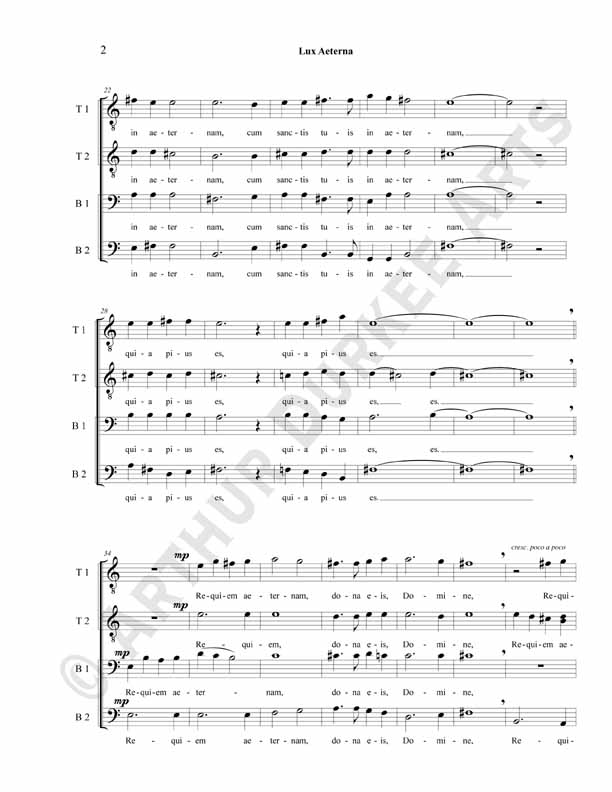
Lux Aeterna: Premiere

In January 2011 I wrote a short piece of a capella music for men's chorus, "Lux Aeterna," on the Latin text from the Requiem Mass.

It's a favorite text of mine, since, although I am post-Christian, there are many areas of spirituality that I find to be universal and eternal. The aspects of the existing organized religions that I find to be congenial and meaningful are those that speak of unconditional love, acceptance, compassion, universal siblinghood (if you will), and holiness.

To define the essential core of my personal spiritual practice more truly than I ever have before, my personal religion is that of the Light. I follow the Light. I may have been born in the darkness, but I work for the Light.

On one level, that's just another label, ultimately misleading because incapable of fully encapsulating what I mean into one word that functions as a label. What do I mean by "the Light"? So much more than I can put into words. Which is one reason I periodically choose to set sacred texts about the Light to music. Music goes deeper than words.

This isn't by any means the first piece I've written about the Light that was written during the dark days of winter, near the winter solstice, or soon after. Nor is it likely to be the last.

The Light is a recurring theme in much of my art-making, including my composed music, and I return to it again and again.

Indeed, when I operate as a fine art landscape photographer, every image made in the camera is made with light, and most are, if you look past the obvious subject of the photo, about the Light. I photograph the quality of the ever-changing light, as one my primary subject matters.

Here is the Latin text of "Lux Aeterna," followed by an English translation. (My own rendition from the Latin, based on a handful of other translations.) It is a text that begins and ends with eternal light:

Lux aeterna luceat eis, Domine,
cum sanctis tuis in aeternum,
quia pius es.
Requiem aeternam dona eis, Domine,
et lux perpetua luceat eis.


Eternal light shine on them, Lord,
with your saints in eternity,
for you are merciful.
Grant them eternal rest, Lord,
and perpetual light shine on them.

To say that I serve the Light doesn't mean that I deny the darkness, without or within. If anything, I know the darkness so well that I have chosen to serve the Light. (There are a lot of personal biographical and spiritual stories about how I was led to that choice, but those are irrelevant here.)

When I am writing the music to an existing sacred text, the words lead me towards how to depict them in music. I could go into a detailed analysis of my music and how it relates to the text, but in truth I don't think that matters. What matters is that the music have the emotional impact and depth found in the text.

Here's a sample of the music, from the middle of the score, to give you a sense of the setting and musical style:


(Click on image for larger version.)

In just a few days, on December 8 & 9, 2012, "Lux Aeterna" will be premiered by Perfect Harmony Men's Chorus, in Madison, WI, as part of their 2012 winter concert series. The concert this year is themed as Warm Wishes from Wisconsin, and consists this year of mostly popular songs in gorgeous choral arrangements, a few novelties that will make you laugh out loud, and a few story-songs and carols that are powerful and moving, including some of the beautiful Alfred Burt carols. "Lux Aeterna" is the only sacred choral work on this year's winter concert.

I am pleased and proud to have my music sung by this group of excellent singers. I am doubly pleased that so many chorus members have told me that they like this piece a great deal. It is a piece in a fairly modern, somewhat challenging harmonic style (remember what I said earlier about depicting the text in its emotional impact), and they have worked in rehearsal, and that hard work has paid off. We will be premiering "Lux Aeterna" in a resonant performance space well suited to choral music, that will maximize the music's effect, so I look forward to hearing it there.

May the Light preserve and protect you, and lead you home!

Labels: , , , , ,

Thursday, October 18, 2012

Heartlands CD


News flash!

The Heartlands CD is finished and available for purchase. (Assuming you haven't already pre-ordered it.) As the composer and lyricist of this work, I am incredibly pleased at the completion of this CD release project. At some point, I will have more to write about it, and more to announce. For now, though, I just want to announce the news of the release itself.

You can acquire the Heartlands CD via the Perfect Harmony Men's Chorus website.


I also did the illustration and typography, layout and design for the CD and booklet. Here's the track listing the 19 pieces that make up Heartlands.


So, the completion of the major musical composition project of my life for the last year or so. I am incredibly pleased at the completion of this project. I'm also rather exhausted, and I've had some post-partum depression since our last concert performance of this music. But what matters is that this is only the beginning of the life of this CD. And that is the continuance as well as the beginning of the next phase of life for this music, for Heartlands. I hope to have more performances of this music, and also to be given the opportunity to write more in future.

Labels: , , , ,

Wednesday, September 05, 2012

John Cage Centennial: New Music for Prepared Piano

The John Cage Trust has released a cool prepared piano app for iPhone and iPad, called CagePreparedPiano. It contains samples of a piano prepared using the same exact materials that John Cage used to create his Sonatas & Interludes for Prepared Piano, one of his most famous works. It's been recorded several times, including recently by Adam Tendler, who offers a full performance for free download.

I spent part of John Cage's 100th Birthday today writing and recording two new little prepared piano pieces in homage, using the prepared piano app.

The first Cagean "Sonata" is a single movement in three parts, recorded playing my iPhone.


AD, prepared piano app

The second "Sonata" is a three-movement sonata, preformed using my iPad.


AD, prepared piano app

Truly this app is a remarkable homage to Cage, in that it carries his compositional ideas forward while also teaching the user something more about the man, his music, and one of his major inventions, the prepared piano. It also allows the performer to capture some of Cage's wonderful sense of humor, in that exploring this app was tremendous fun. Also in the spirit of Cage and indeterminacy and constrained improvisational performance, there is a randomizer button that shuffles the samples on your playing surface, creating an entirely new set of sound possibilities each time you randomize.

Labels: , , , , , ,

Monday, August 20, 2012

GALA in Denver: A Personal Overview

(Images from the Denver Performing Arts Center, Denver, CO, July 2012)


In early July I was in Denver for five days at the GALA Festival of choral music, which happens every four years.


This was my second GALA Festival, my first one being in Miami in 2008. The Festival featured over 100 choruses of every conceivable configuration performing for each other and the public. There were special concerts, morning seminars both artistic and business-oriented, huge mass choral singalongs, and more. Over 6000 delegates attended, including singers, artistic directors, members of boards of directors, and more.


I attended and performed at GALA as a member of Perfect Harmony Men's Chorus of Madison. We performed our set in combination with City of Festivals Men's Chorus of Milwaukee.


I also attended as a GALA composer: someone who had written music that was being premiered at the GALA Festival. In 2011 I was commissioned to write a major new work for Perfect Harmony Men's Chorus, based on the lives and stories of the men in the Chorus. I interviewed many men, and gathered many emails and poems and other materials given to me by the members of the Chorus, then made them into poetry and music, completing a new work entitled Heartlands, in 19 movements in various moods and styles. This was a major commission for me, and work I was pleased to do. We premiered the work in June 2012 in concerts in Madison and Milwaukee, then re-premiered 7 songs from the work at GALA in Denver.


It was a privilege and an honor to have my music performed at GALA in Denver. "Heartlands" puts me among the ranks of composers who have been commissioned by choruses and had their works performed at GALA Festivals, which honors me. An important aspect of the entire GALA movement has been to commission new music: when the movement began in the early 1980s, hardly any music specific to LGBT choruses existed, those stories had not yet been told in music. Now many classics have been written, and performed by many choruses worldwide again and again.


The LGBT chorus movement has been about both affirmation and ambassadorship. Many choruses share similar mission statements, alike in intent if not in exact wording. That mission often reduces to: reaching out to make the world a better place through song. It involves education about LGBT social issues and lifestyles. It presents the movements for equality—and against bullying and other forms of oppression—in their best light, in an almost-unified message of validation and resistance.


(Downtown Denver at night)

The social-justice aspect of GALA Choruses is at times more dominant than the musical aspect. Personally, I like it best when both aspects are in balance. I think the social-justice aspect is best served by being cast as memorable and enduring art. For the same reasons that political poetry often has a short shelf-life, music about a social issue can be topical but not long-lived unless it finds something universal within the personal, and touches an enduring chord within both performers and listeners. Not all GALA Chorus music succeeds in the long haul; but there is a lot of new music still being written, and some of it will most definitely endure.


Meanwhile, many of the social-justice issues surrounding LGBT life remain unresolved, so much of the music will remain relevant until AIDS has been cured, until kids stop committing suicide (at triple the usual rate among teenagers) for having been bullied for being gay, until marriage equality has been achieved, until all states in the union no longer allow businesses to fire you or landlords to deny you a lease, just because you are who you are. In other words, till being different is no longer stigmatized, and all aspects of personal diversity become No Big Deal to the mainstream general culture—which is what the US Constitution promises all of us, at its core.


Heartlands was written to tell the stories of men growing up and living as gay people in the Midwestern heartlands, between the Great Lakes and the Great Prairie. The words and music evolved from many interviews done with the members of Perfect Harmony, and from writings and stories submitted during a process of gathering material. It was my job to then take those stories and interviews and turn them into poetry, then set those words to music. Often the stories themselves gave me a clue as to what style of words and music should be used to tell them: many stories had threads in common with other stories, leading to choral pieces that were many voices singing in unison or in parallel; other stories were distinct and unique, and led to writing either solo songs, or were set as movements for soloists with chorus. The range and style of music and mood across all 19 movements was diverse, and intended to be.


What that led to, at GALA in Denver, was a response that I had hoped for: we were one of the few performances at Festival that included light and dark, anger and sorrow as well as joy and affirmation. In fact, comments made their way back to us after our performance that our presentation stood out in its authenticity, for being "real" about how life really is, in all its complexity. Heartlands also stood out for being genuinely emotional because so many other choruses chose, this Festival, to do sets that revolved presentations of LGBT life as seen in current popular media, many performances notably modeled on or in imitation of the current television program Glee.


To be clear where I stand, and with no intent to provoke anything but thoughtful discussion: Glee has many charming aspects, not least of which is that it presents a lot of music performances on any given episode. However, Glee also presents a fantasy of schoolyard acceptance, represents culture as superficially as most contemporary pop music entertainment has often done, and in the end doesn't really stick to the ribs. At GALA Festival 2012 in Denver, the influence of Glee was perhaps too prevalent, as many GALA choruses performed sets direct from the TV show. This produced mixed results. Some choruses performed their Glee-inspired sets with such gusto, such enthusiasm, such vigor and joyfulness, that the audience was totally won over. Other Glee-influenced sets were less impressive, and less enjoyable. A lot of what made a difference was level of performance, and style of presentation: giving to whatever you're singing all of your heart and soul will always help you connect with your audience, and simultaneously giving a technically-excellent performance will only enhance that.


In my personal opinion, the influence of Glee on this GALA Festival was strong, perhaps too prevalent, and not always a good idea. On the other hand, some of the feedback we received about our performance of part of Heartlands was that it stood out all the more because of the context in which it was presented. I think some GALA delegates thought of our set as even more authentic and stand-out because we did a set so very different from many of the Glee-dominated sets. LGBT life out there in the real world is not all unicorns and puppies, folks, and the movements of Heartlands that we presented at GALA Festival made that clear.


There have been numerous similar commissions written for GALA choruses before—but not from a uniquely Midwestern, cornfield-and-small-town perspective. Most similar GALA works, made up from the stories of members of the choruses who commissioned the work, have been made from choruses that come from dominantly urban, coastal areas. I have essayed before that one of the most significant divides within LGBT culture is the urban-rural divide, which I believe is actually a greater divide than many others that create sub-cultures within overall LGBT culture. Heartlands reflects this, with many segments of the work focusing on what it's like to grow up and live as LGBT within small rural towns, on the farm, in those smaller places between the coastal regions of the USA that many people on those coasts dismiss as important, as the "flyover zone." Even within mainstream LGBT culture, which is mainly an urban (or urban ghetto) or suburban culture by its own estimation, the stories of rural gays and lesbians are often marginalized as outsider subcultures. So far as we knew when we began the writing of Heartlands, many of these kinds of stories of LGBT life the rural Midwest had never before been told in song, nor told at GALA Festival, except perhaps in small bits, in passing. Heartlands represents the first major choral work intended to fill in that gap.


As I said, for myself performing my own music at GALA Festival 2012 was a dream come true. I am now a "GALA composer." Perfect Harmony Men's Chorus gained status at this GALA Festival by being one of the small number choruses to present a full set of all-new, all-commissioned music—which put them among the ranks of much larger, more famous choruses such as San Francisco, Portland, Twin Cities and others with much larger memberships and budgets, who regularly commission new music. That our performance set was so very well-received put me on cloud nine for weeks afterwards. (Since I got home from GALA I admit to personally experiencing a difficult level of post-GALA, post-partum depression. I can hardly wait till next Festival, or the next new music commission I am asked to do.) My ambition is to do it all over again: write new music for other GALA choruses, to receive other performances in whole or in part of Heartlands, perhaps by other choruses, and to make this my future career. Nothing would please me more than to be once again a GALA composer.


There are other aspects of my experience at GALA Festival in Denver that I am still integrating, still thinking about, still exploring in my mind. I expect that process to percolate on for awhile. And I'm in no hurry to analyze or conclude. Meanwhile, life goes on, I continue to write new music, new songs, new words, and expect that to continue. Perfect Harmony will performing a short piece of mine this upcoming winter concert, a setting of the "Lux Aeterna." And being at GALA Festival inspired me to write a piece in commemoration of the life and work of Harvey Milk, using his own words as text, "You Gotta Give 'Em Hope." In my life, creative forward momentum continues on, and I hope it continues to do so for a long, long time. So Mote It Be!

Labels: , , , , ,

Tuesday, June 19, 2012

Heartlands: Concert Premieres

The concert premieres of my major new musical work, Heartlands, on two consecutive days in Madison and Milwaukee, went well. There were a couple of performance glitches, but no train wrecks. Overall I am very pleased. I also had the two concerts video-recorded and audio-recorded, and what I have reviewed so far seems quite good.

The truth is, though, it's still too soon. I need a few more days. The whole experience leading up to the concerts was stressful and full of anxiety—wanting as perfect a performance as possible, etc.—and the weekend itself was so overwhelming and personally overstimulating for me, not in a bad way, that I put my mind on "record" rather than on "assess" and frankly am still in that mode.

I actually dislike immediate post-mortems of concert performances. Back in the years when I performed in other musical groups, there were times when there was a party right after the concert, and if a videotape had been made, it was put on the TV and everyone gathered around and watched themselves in the concert they had just finished a few hours ago. I hated that. I hated that. I would usually off in another room, mostly by myself, rather than joiing in the self-love-fest of post-concert concert watching.

For one thing, no one is objective about their performance so close to the actual event. Watching yourself on tape later is a good thing, from time to time—but it needs to days or even weeks later, when the thrill and excitement and adrenaline have faded somewhat. No one can be objective right away. That takes time. It takes time to know if the poem you wrote is good, or crap. It takes time for emotional stirrings to settle down.

It's a really, really bad idea to watch your own concert in full, right after you did it. it can skew your perceptions to the extreme, both positive and negative. It can very much mess up your ability to perform naturally, by making you far too self-conscious to relax. It can make your performances become very mannered and pretentious. It takes a rare person, with a rare sense of self-possession and self-knowledge to not be affected in any way by looking at themselves in such a mirror. Very few have the self-confidence to be unaffected enough by a concert review to remain unselfconscious.

So I avoid such practices. I do concert reviews much later on, when all the dust has settled. Then I can listen and watch and be far more balanced in my assessments.

What I have done in the past evening is take the concert footage that was made for me of both performances, are streamed it into the computer. I have only watched enough of the video to do the editing required to trim it down to manageable size to fit onto a DVD. I have only listened to enough excerpts to make sure the audio was clear, clean, and of good quality. (Which it is.) I edited the raw footage down, made the titles, and set the file to render. Then I walked away from the computer and let it churn. Since this is a long piece of music, and I have two concerts to edit down to DVD length—which I am doing for the sake of documentation, not for commercial release; no more than that at this point, so don't ask me when it will be available, I don't know—I did the editing work, and set the files to render. When they're done rendering, I'll build the DVDs. That will take a few more days. Big concert files can take all day and night to render.

People keep asking me, How did the concerts go?! Where they a big success?! People genuinely want to know, because they really do care, and support my success as a composer and writer.

I feel like a heel for saying so, but the truth is: How the hell should I know? For one thing, I'm far too close to the events themselves to be objective yet. For another thing, I was far too crazy with stress going in to the concerts to do anything more than get through them, absorb what happened, and set it aside for later appreciation and thoughtfulness. Lots of good things were said to me, and about me. I appreciate them all—and at the same time, they don't at the moment feel like they have anything to do with me. I am too close to things to really know what's real and what's fantasy. I do myself no service by collapsing into some belief in my own genius, or allowing my ego to be inflated by praise to the point where I lose my balance and my objectivity both.

So I don't really know how the concerts went. I am not able to answer that as yet. I hope that they were a big success, and I feel that they probably were. As with all things, time will tell. Meanwhile, I have lots of work to do on the next phase of the process, as we prepare to record the music in the studio, and then take it to the GALA conference in Denver a few weeks later.

Many friends and family all said the concerts went extremely well, and so did some total strangers. I got a lot of very positive commentary afterwards. Many people said they really loved the work. And while we were performing, there were some moments when we could see audience members in tears. They were obviously moved by the performance, which pleases me greatly.

The thing you have to remember is: everyone in this audience wanted us to succeed. They support us, they support me, and that's wonderful! Nonetheless, it will probably be some time before I can be genuinely objective about this experience. Am I grateful? Beyond what words can say. Am I hoping to do more? Yes indeed.

Meanwhile, all I can say is that I'm incredibly grateful to have had the opportunity to write this large choral work, and to have been commissioned to do so. I'm incredibly grateful to all involved who made it happen; to all who attended; especially for family and friends who drove or flew thousands of miles just to be here for the concert premieres; and to all who sent their well-wishes even though they could not attend. This has been a major positive force in my life, these past months. And this is only the beginning. There will be other performances of Heartlands to come. and other new commissions to compose and write. I look forward to all of that, and I will be eternally grateful to all concerned for every aspect of this experience that has carried through my life for many months now. It's just the beginning. I have a long list of things to do, next, now that this concert series is complete, and the next phase begins.

Thank you all. Someday I'll talk more about how I felt about the concerts, before, during, and after. But not for at least a few more days.

Labels: , ,

Monday, May 21, 2012

Heartlands: A round on "When We Sing"

In preparation for the GALA choral Festival 2012 in Denver, an email went out to composers who have been involved with GALA, or who have been commissioned in the past by GALA choruses, artistic directors, and other interested composers. At every Festival there are evening concert blocks, with volunteer mass choruses made up of the members and delegates. There are always sing-along moments included in these events, and during the opening and closing ceremonies—this is a choral festival, after all, so sing-alongs are likely.

This year, there was a new idea, and this is where the composers come in, and I quote:

Why not create a body of simple, songs that could be taught on the spot in a sing-along setting and then taken out into the world by our choruses?

As a GALA friend and composer, you are invited to create a short round/canon or chant for GALA Festival 2012. All songs will be taught from stage by rote, but delegates will be able to download the complete collection of songs to take home to their own chorus to be shared, copied, taught, sung and performed without restriction all over the world. We want to get this music OUT there!


The call was for rounds, canons, chants, simple enough to be taught by rote from the stage in a few minutes, should include multiple voice parts not restricted to any particular voice so that men, women, and others could all join in, and be unaccompanied (a capella) vocal music.

So I joined in, and wrote two short pieces, a round and a canon, and sent them off. Hopefully they'll be part of the Festival mix. If the response is overwhelming, there won't be time to do all the pieces submitted, so they'll pick and choose.

But I thought this would be a great way to both join in, as a composer, and present my work to the GALA members. After all, it would be nice to be commissioned again to write music for a GALA chorus, as I was last year. I wrote "Heartlands" on commission, both words and music, and selected movements will be performed at the 2012 GALA Festival in Denver, in July. Participating in the GALA round/canon call would be one good way to get my music known by others, and also be a bit of free advertising for "Heartlands."

So while I wrote one completely new piece, I also took a refrain from the finale movement of "Heartlands," titled "When We Sing," and arranged it into a two-part a capella round.

Here's the music for it:


(Click on image for larger version.)

One group of singers will read through the first line, then go on to the second line while another group of singers does the first line. You go around and around till deciding to stop, which is how rounds are constructed. It's a very old musical form; if you think about it, you know some nursery rhymes and campfire songs in this form, such as "Row Row Row Your Boat." For this piece, I also opened it up to free harmonizing on the repeat, after every group has gone around the form once or twice.

I wrote two pieces in two days for this call for compositions, and sent them off right away. As I said, one was completely new, and this one was taken from "Heartlands." That ties it to the larger work, and hopefully makes connections and gets people interested in the larger work. And in my work as a composer in general. Nothing would make me happier than to have to do it all again.

Writing in short forms can be challenging. It's like writing haiku: you have to compress as much as possible, to get in as much information as you can into a very small space. Short forms such as rounds are technically challenging, as well, for needing to be circular and layered. You can think of a round as a variety of musical Moebius strip, with the musical line constantly turning back in on itself, each layer interacting with other parts of the music to add up to a larger, synergistic whole. Each line has to be checked against the others for effect, contrast, and similarity. So you end up thinking in circles, as you're writing in circles. Or at least I do.

This was quite a bit of fun. A fun challenge, and a good occasion for which to write a new piece. We'll see what develops next.

Labels: , , , , , ,

Wednesday, May 02, 2012

Video: Ocean Arch

Video: Light & Silence


I've opened up my own channel on YouTube, apdurkee, and uploaded two short videos by way of experiment. Eventually I plan to make better-quality uploads. There will more experimental short videos like this on my channel soon.

I have been making short video films since 2005, incorporating my still photography and original music, along with the occasional use of my poems as texts either presented as type in the video itself or read aloud as part of the audio track. I want to explore these possibilities in more depth; it's just taken me some time to figure out the technologies involved. (Including YouTube itself.)

Honestly, making the videos is the most time-consuming part; the upload is relatively easy. Creating, editing and mastering video programs brings out my latent perfectionism: you want to get everything just right, and look and sound its best. This means going over the finished product as a viewer two or three times, to find the last tweaks to make. It's the same process, really, as recording and mixing a song in a recording studio: you do the creative work, you finish the mix, then you take a short break, then sit down and listen through the track with fresh ears (and eyes) for final tweaks.

The video for "Light & Silence" was shot a couple of years ago, on an autumn visit to Grand Teton National Park. The dramatic skies made the day I spent making photos and video some of the best images I've made while at these mountains. The Tetons are one of my favorite places on the planet, in any season. The original video footage was in color, but I've been wanting to experiment with B&W video for some time, to bring the B&W photography aesthetic into the video realm. Two of the shots in this video are time-lapsed, to bring out the movement of the clouds over the mountains.

The music for this short film was made using software synths on my iPad. After recording the basic track, I did some sweetening with reverb while mastering the combined audio and video tracks. The music was recorded very plainly, to keep it simple and clean. It's essentially an improvisation within planned parameters—a way I like to compose a lot of my ambient music. You set an arbitrary limit, perhaps on scale, perhaps on instrumentation or tempo, then you improvise freely within those constraints. This is a way of working as a composer learned from Brian Eno, John Cage, and others. It is partly determined, partly free. Limits give you room to work within. My composition professor back in college once said that limits help us focus, using the constraints they place on us to give us freedom to work within; a lesson i've never forgotten.

Labels: , , , , ,

Friday, April 27, 2012

Heartlands: Rehearsal & Performance

Well into the rehearsal period of Heartlands, the large choral work I was commissioned to write last year, and which will be premiered in June, it's fascinating to watch how the rehearsal process is developing. Even if I have any special insight into the score, having written it, I have been surprised a few times with the ways things have developed.

One fascinating aspect of the completed score in rehearsal is that there are a few pieces which look daunting at first but in fact are easy to learn and perform. And there a few pieces that seemed easy at first but are hard to learn. The latter especially among the pieces for solo voice and piano. People seem to be afraid of one or two of these songs, in so far as no one is rushing forward to audition for them. There is still time to cajole people into taking a leap and trying these pieces; nonetheless it provokes some momentary anxiety in a composer who wants to get the best performance possible of his work.

I'm well aware that I "held back" at times from writing music more complex than might have been, that I restrained myself from over-writing and showing off as an artist. I've written before how it's essential in writing songs not to over-write—a tendency many poets fall into when the first begin to write song lyrics. Stephen Sondheim warns against this tendency in his two recently published books of Collected Lyrics, Finishing the Hat and Look, I Made a Hat. One of the chief values of those books is Sondheim's commentaries, wherein he shows you where he succeeded in following his own dictums of clarity and simplicity, and where he failed. That's a lesson I took to my heart at the very beginning of the commission writing process.

The same is also true for writing music. It's always tempting to pull out all the stops and write to the edge of your ability as composer or performer. That's a good thing to do when you're challenging yourself as an artist to grow a little bit more. But when you are commissioned to write music for a specific ensemble, no matter what that ensemble is, you do better to take into account the skills and abilities and needs of the musicians who are going to be performing the work. When I wrote Heartlands, because I knew the Chorus well, I had a pretty clear sense where I could stretch and push them and challenge them, and where it would be counterproductive to do so.

You have to find that dynamic balance where the music is fresh and lively and challenging, and fun to learn and perform, balanced against music that is so difficult no one wants to try it. You want to work along that fine line between their familiar comfort zone, and sometimes get them to stretch a bit. (Years ago, when I was writing three art-songs for a singer and pianist who I knew could perform anything well, I "pulled out all the stops" and really pushed the edges of technique and expression. Yet, since I don't believe in technique for its own sake, but that craft is in service to expression, I wrote musical gestures intended to support the mood of the lyrics. These "Three Songs" were well-received, and I learned an early lesson in finding that balance already discussed.)

I've become aware of this balance again in the rehearsal process, as some people find themselves unwilling to audition for some of the solo songs. I expected that, I just hope people will take the risk and go for it anyway. That's how you grow as a musician, whether you're a singer or pianist or whatever: you take some risks.

That's also how you grow as a person. When I was commissioned to write Heartlands, and I received the commission because I can write music in varying styles and tones and emotions, I knew that this music would be a journey. Not just for me, but for the singers in the Chorus who gave me their stories to make into music. I knew that they would experience hearing their life-stories refracted back to them as art. I hoped that some of them would feel enlivened by seeing their life-stories from a new perspective, and that would open doors. (I am well aware of the possibilities in music performance for healing, therapy, and growth. I have experienced this myself, many times, and I have been told by some listeners that they get that from some of my other music.)

So I've been encouraging singers to go for it, whenever they've come up to me with questions or concerns. I've told some individual singers privately that I'm glad to see them stretching themselves. And I've been open about my hopes for the overall performance, premiere, and continued life of this large new choral work that I've written. Hopes, not expectations—I've been very clear to make that distinction. I have very high hopes for the long haul for this music; this entire composition and rehearsal period has been one of the most positive things in my life.

While I "held back" at times in the large choral movements, knowing that what I wanted to write should be easy to learn, and memorize, and integrate into one's performance, I also "let myself go" in some of the solo voice and piano movements. I didn't write anything so "modern" that it would be too hard to learn, given the length of the rehearsal period, but I did know where and how I wanted to stretch the performers, to challenge them to a higher level of performance, that I knew they could achieve even if they do not. I reserved some of the more difficult piano writing for these moments in the overall score. Where you find some pianistic writing that is outside the box, where the piano part becomes more than accompaniment and takes on a role as equal, that's where you'll find some of these moments intended to encourage everyone to push themselves a little bit further, a little bit outside their comfort zones. I hope to hear eventually from some performers that those moments where they were being asked to step outside their comfort zones were, in the end, moments of revelation. And I have already received a few comments along those lines.

Remember, music is written not only for the audience, but for the performers. I want the singers to have fun, and to immerse themselves fully in the experience of performing a large-scale, sometimes challenging choral work. Nothing has pleased me more than when a singer has come up to me after rehearsal and told me how much they liked a moment, or a whole piece.

For Heartlands I have intentionally written pieces that are purely lush and beautiful harmonies, because that style suits the mood of the text. (In the end, its all about matching the mood of the words and music as closely as possible.) I have intentionally written pieces that are more edgy, at times openly angry, with more aggressive harmonic styles. I have written pieces that are more traditional forms, dance forms, folk song forms, inspirational ballads. And I have written pieces that are more contemporary, more "modern" in style and execution. (Also, where I've written the more contemporary styles, I've given lots of musical cues to the singers from the piano and from the other voice parts, so that the alert singer will never get lost.)

People think writing music for me ought to be easy—and on one level it is. It can be very easy to come up with an idea, or to find inspiration where I need it; and I have some facility as an improvising musician. I remember what jazz legend Lester Bowie said once about music: he said he has a permanent 24-hour soundtrack always playing in the back of his mind, a ribbon of music that is playing the entire time he is awake; he said that when he played, composed or improvised, all he had to do was dip into his permanent back-of-the-mind soundtrack, and bring that music forward into audibility, so that others could hear it, too. I experience improvising and composing music this way, myself. I think it's one reason that, unlike many other classically-trained musicians, I have no fear of improvisation; I have faith the music will always be there. I can always write music, whether notated or spontaneous, because what I do is a lot like Lester Bowie described for his own process.

Yet it takes time to write music down, to notate a score, to fill in all the edges, then to go back over the score and adjust it where necessary. I'm discovering that writing a song takes less time than to write, for example, a multi-movement solo piano work, but it still takes time. It took me ten months to write Heartlands, actually only nine months if you recall that I lost a month in the middle of the commission period to surgery and recovery.

What this means is that writing music is both easy and hard, it is as natural as breathing yet it also requires a lot of effort. And the same is true for performing music: It's as natural as breathing, and can require a lot of effort.

When I was sitting at my writing desk, notating the final pencil scores of Heartlands, I thought about this a lot. It was not separate from my awareness at all times of the level of difficulty of performance I was demanding from the singers. I was aware throughout the writing process of my desire to push the singers a little bit past their comfort zones—but not too far. I was aware all the time of how to both write an interesting line, and how to make it singable without being harder than was really necessary.

•

As a performer, who will be singing with the Chorus for the premiere of Heartlands, I find myself this week at that stage in my own memorization process where some of the music is playing in my head all the time, as the dominant element of my permanent 24-hour internal soundtrack. Hearing the music that I'm learning play in my mind is a familiar and welcome stage of the process of learning music for me, one I've relied on for decades. When I hear the music playing in my head all the time, like now, that means it's sinking in and I'm partially into the process of memorization. I'm a very visual person, so one way that I memorize music scores is to memorize them as visual pages; there are times when I actually read the printed page in my mind's eye during performance. Having the music play in my head, and singing along with it in my mind, is by contrast an aural memorization process. For best results I synergize the visual and aural memory/learning processes.

I know I have a piece thoroughly memorized when the visual and aural channels begin to merge with the kinesthetic channel, and I begin to feel a piece of music in my guts, in my bones, in my very blood chemistry. It goes into my muscle memory, which is a far deeper memory than the merely intellectual. When I have learned a piece of music that thoroughly, I never forget it. I might not come back and play a piece learned this way for many years, but it's still in there, and I don't need more than a glance at the score to get it back in my functional memory. I've learned over the years to rely on muscle memory for this, as well: the body remembers the sensations on all levels of detail that making this music require one to feel inside one's own flesh. Even when the mind goes blank, the body remembers.

Labels: , , ,

Thursday, January 19, 2012

Songwriting: Making a Demo

Recently I finished composing/writing a new song, for myself to sing at a fundraising event in March, called "The Power of Love." I auditioned the song for two of three artistic staff for the event, but the third person couldn't be at that audition, so I was asked to make a demo version of the song. That's mostly so they know how to program my song within the larger context of the fundraiser concert: where to put it, what it's mood and tone are like, etc.

Well, naturally I said, sure, I'll make a demo. Not having made a studio demo for some few years, nonetheless I was willing. For two reasons: first, to complete the audition process and assure my performance slot for the concert, and also to give myself the pleasure of a new creative challenge in my recording studio.

Now that I seem to be a songwriter as well as a composer, I suppose making demos will become more common for me. And I believe I will keep writing more new songs, now, both to keep up the compositional momentum, and to continue to grow as a writer. Words and music: that's going to be phrase on my new business cards.

I'm about to leave for a month-long roadtrip. It's time for my annual trip to the Southwest and to California, cameras in hand, writing journal nearby. I've been packing for this years' trip, organizing objects in a new system. Since the video camera I will be taking this trip is smaller and lighter than previously, I will be able to walk farther, and take longer hikes, with just a shoulder bag or smaller backpack. My strength during my post-surgery recovery has reached levels unseen for a decade, and I feel up to hiking a mile or two to get a good image. There are trails I know about that I haven't been able to attempt, which I feel able to do now, this year.

One of the bags I packed is my creative arts bag. It has pens and colored pencils, a couple of back-up notebooks for writing in, some drawing and watercolor paper, a few ideas sketched out to work on more later, and a few other things.

I have every intention of writing more song lyrics, or maybe a new art-song for voice and piano, while I'm on the road. As I've written before, it's become obvious to me that I do best when I am always making art, always writing. So the creative arts bag also contains some song lyrics that I wrote last year that I have yet to set to music, and a spiral music composition notebook, for writing music of whatever kind comes forward to be written.

I will probably take along a couple of my more portable musical instruments. Maybe my Stick.

Most definitely my newest musical instrument: my iPad, which is turning out to be a source of great creative possibilities for me. I have lots of photography and video apps on there, but the most useful apps so far have been musical tools. I have already used the iPad as an important computer-music source for an album I recently composed of music for meditation and healing.

All hail Rockmate! All hail GarageBand!

With these two iPad apps, I spent a few hours over the last couple of nights laying down basic tracks for a demo version of "The Power of Love." I have yet to record the vocals; which I'll do tomorrow, as it's late at night as I write now, and I'm too tired to do a good job singing. I will also probably lay down piano and/or classic Hammond B3 organ tracks, just a few bits here and there to give the demo some life and depth. Those also will likely by done with the soft-synths (software-based synthesizers) that I have in my recording studio.

Making a demo is about making a rough recording of a song to give a sense of what the song is about. It's not meant to be a final recorded version, it's not perfected or produced to the same level as an album track. Demos are meant to get people to listen to the song, and see what it's about. When you play a demo for a record label or a producer, it's always at least partly about auditioning your work for them, to entice them to work with you, and release your music as a produced album. Lots of demos never get any further than that, and that's fine. Lots of songwriters produce demos that get their toe in the door, which are then re-recorded.

I am making this demo to present the piece for concert performance later. But it can also serve as an introduction to my new activity as a songwriter. Being a songwriter these days usually means being a singer-songwriter. I don't have a lot of self-confidence as a solo singer. Maybe that will develop over time.

For this demo, I laid down some rhythm guitar tracks first, following the song's chord structure. Then a few fills of guitar lines in places where a short solo might fit. I don't play guitar, and have no real experience on or feel for the instrument. Rockmate was extremely useful for laying down the guitar tracks.

Next I laid down some bass lines, using an upright bass softsynth. I basically played a jazz bass line by hand. I'm a bass player, my first instrument after piano was upright bass, which I began playing in orchestra at age 13. (I was small for my age when I began playing bass, and the instrument dwarfed me for a couple of years.) I chose a jazz bass line, albeit a groove-based rather than freeform line, in part because in my mind "The Power of Love" is not a pop song, but a jazz-inflected folk-rock song. That's how I hear it in my head.

The drum tracks were actually the easiest to do. I basically used the SmartDrums feature in GarageBand, synchronized to the metronome click track I was using for the demo. I used a classic studio drum kit, useful for both jazz and pop music. Again, I programmed the drums to be more of a jazz than rock style, but with a strong backbeat. Once I synced up with the metronome click track, tracking the drums was the easiest of all, for this demo. All I had to do was make little variations in the rhythms, and fills, to keep it sounding organic and live. the software already does this well, but you can also tweak it on the fly, while it's playing, to make the sorts of stylistic and volume changes typical when shifting from the verse to the refrain.

This demo song, which I expect to be able to complete tomorrow, isn't going to be a perfect performance, just a heartfelt one. Demos aren't about perfection, they're about presentation. Of course you do the best that you can, given the time constraints, and in this case given all the other things I need to do before I leave on my upcoming roadtrip. I have no doubt that when I perform the song live in concert, a month or so from now, I will not only perform it better than on this demo, I will know the song better. Self-confidence in performance involves knowing your material really well, everything memorized and internalized. So I plan to take my Stick along in part so I can keep practicing and learning this new song that I've written. First you write it, then you have to learn it well enough to perform it.

And after that, who knows? Maybe more songs. Maybe a whole new writing project. Something to keep me creatively busy for awhile longer.

Labels: , , , , , ,

Thursday, December 29, 2011

Darshan

Soon after I completed Heartlands, the large choral commission I've been working on of throughout most of 2011, I was commissioned to make a CD of music for meditation, yoga practice, Reiki sessions, and other healing work. A friend's mother had been using my CD Trance for some time, and had given it some praise, so I was commissioned to make a new CD as a gift. I worked on this project in my recording studio for about a month, and completed the CD just before Xmas 2011. It's entirely instrumental music, prominently featuring shakuhachi, and Tibetan and Japanese meditation bells.

This year I plan to finally figure out how to market more of my music online, including this new CD as well as some older CDs. Here's the title track as a taste of things to come:

Darshan    

—AD, shakuhachi, computer music instruments


The musical soundscape was created in part by using some music apps on my new iPad. I got the iPad after completing Heartlands. I can see that for me the iPad is going to be a fantastic creative tool, both for music and photography, and likely in ways I haven't even thought of yet. The other cool thing about the iPad is that finally computer design and technology is approaching what I've wanted for years, after becoming a Star Trek fan. Design follows art in the best way possible.

"Darshan" is a Sanskrit word that means "see" or "seeing." In Hindu usage it refers to beholding the gods, or God, directly, and can also refer to those annual festivals when images of the gods are taken out of the temples and paraded through the streets for all to see. There is an implication that what we see also sees us: a mystical truth not limited to Hinduism, but found in most mystical traditions. As the great Medieval Christian mystic Meister Eckhart said, "The eye with which I see God is the eye with which God sees me."

"Darshan" in Indian philosophy also is used to describe worldviews and mindsets, the distinctive in which a systematized philosophy looks at things, including its exegesis of sacred texts. Yoga itself is considered a darshan. Yoga is a form of kinesthetic meditation, after all, like walking meditation or the highest levels of some martial arts.

So, Darshan is about the seeing the divine, the encounter with the divine. One realizes in the encounter that one is not separate from the divine, but all are part of the One. And one realizes that one's actions are not other than the will of the divine, which after all is made of all beings and what they will.


The blessing of doing this smaller commissioned piece of music is that it filled the gap between the completion of the writing of Heartlands, and the beginning of the rehearsal process. I have learned, as never before, that I need to always have something to work on. And the past few weeks have been very stressful, even dire and desperate at times. Multiple stressors all came home to roost at the same time. (Including having to change my dietary regimen (again!) just before the winter holiday season. The good news is that the new, even more restrictive dietary regimen is in fact effective, and I have made real progress losing weight this past week or so, for the first time ever since the surgery last summer.)

The wisdom of artistic perseverance is to make sure you are always working on multiple projects, and that as soon as you finish one, you start another. Don't wait. Dive right in. Never leave a gap in between projects, because a gap between projects is the door by which depression and despair can enter. It's not about doing make-work to keep yourself preoccupied or distracted: this is real work, not make-work. It's about knowing that I stay more grounded and focused when I have a big creative project of some kind to occupy my attention. It's a way of channelling one's energy in the best way, and preventing those inner voices of panic and depression form gaining a toe-hold. It helps with being able to cope with the day-to-day.

Therefore, as I completed the Darshan CD, I began writing a new song, maybe to become a new set of songs, for myself to sing and play. One of these will probably get premiered at a fundraiser in March. The style is more loose and jazz-pop-rock than formal. I'm still working on the lyrics, but after several false starts, the pattern fell into place, and progress has been made. All I anticipate needing to notate finally is melody-and-words, with chord symbols for the chord changes. I'll write lead sheets, in other words, instead of fully realized charts.

Then I'll do my best to learn to sing the song and play Stick at the same time.

I feel like my Stick playing is revitalized, as I wrote about after seeing Tony Levin in concert a couple of months ago, which I felt gave me permission to go my own way as a player; even to play simply and cleanly, and not need to become another solo Stick artist who can play anything. I have my limits, and I'm okay with them. Practice is what it takes to stretch them, that's all.

Labels: , , , , ,

Friday, December 02, 2011

Begin Again, Keep Going

Having completed a large commission of songs for male chorus and piano, which occupied all of my attention for several months, and which produced a concert's worth of music, I have this past week been newly commissioned to do another, very different musical project. A CD I had made on commission almost a decade ago, a CD of trance music to be used as background for yoga classes, meditation, and similar situations, has led to a commission to make a sequel CD. Not a repetition, but the next level. I'm a better composer and musician now, or at least I hope I am, since time is meant to improve your art-making, not stagnate it.

This new CD I am recording now will be used for meditation, yoga, healing, massage, Reiki sessions, and so forth. Thus I'm writing it to sustain those purposes, not interrupt them. That calls for a particular kind of music. A particular tone and tempo very different from the dramatic, narrative songs I've been writing for most of this year. It will be completely non-verbal, instrumental music. It will use original recordings of Tibetan and Japanese Buddhist meditation bells, bells recorded from my own collection. It will use a fair bit of shakuhachi. No doubt there will be some synthesizers and keyboards in the mix, and Chapman Stick. It will have a variety of shapes and tones, but overall will hopefully take the listener deeper into meditative states of consciousness, the opposite of overstimulated, stressed-out, Type A caffeinated states of mind.

There's a lot of bland, boring New Age music out there. The best of that genre has always been music first, New Age music second. I think of musicians such as Paul Winter, Will Ackerman, and a few others, who pretty much invented the genre, but also transcended it. Contrast their vibrant, emotional music with the soulless boring pap of Stephen Halpern's random noodlings on electric piano. Contrast the powerful presence of the music in Stephan Micus recording against the flatlined neutral of most New Age music. Even ambient music, created in modern times by Brian Eno, inspired by Eric Satie's semi-joking idea for "furniture music" a century earlier, has more soul than most music you hear played in New Age bookstores, or most healing centers, massage offices, or new Age spiritual healing seminars. People often make the mistake of equating music meant to be unobtrusive and supportive with toneless, dull, bland, and spineless.

Yes, I do have strong opinions about New Age music.

That's because I was a participating witness to the development of this music from its start, back at its inception in the 1970s. Some roots of that style of music are ambient (Eno), folk, cool jazz, especially West Coast jazz, and the encounters of improvising musicians with the musics and spiritual values brought over from India, Japan, Tibet, and China in the 1960s. A lot of improvising musicians from the jazz and rock world contributed to growth of New Age music by introducing multicultural music into Western pop. The movement was strongly influenced both by world music, and by spiritual and moral ideas from the East.

If you want to blame someone, blame The Beatles: their introduction of Indian classical music into Britpop in the late 60s and early 70s, instigated by George Harrison's encounters with India, opened that door to a million and more people who otherwise would never have heard the music, or learned to meditate. The influence of popular culture icons, especially those as beloved, and as restless, as The Beatles, cannot be underestimated. George Harrison's post-Beatles solo albums have been part of the trend, seminal and central, even when basically pop music.

The music I tend to create, now, when asked to make healing music, or trance music, or meditation/yoga music, tends to be on the ambient side. Not static and unchanging, but not tonal or harmonic, not based on Western ideas of music theory, and essentially timeless. One of my influences is of course my years playing Indonesian gamelan music. Another strong influence is Buddhist music from Japan, the Himalayas, and Southeast Asia, all of which I have listened to and studied for decades.

I am making it up as a I go along. It's an improvisation on a theme, a tone, an idea, a feeling. Most of my music is just so, whether notated or improvised. Art is improvised, life is improvised. It's all of a piece. So I keep going, making art, giving myself something to do that means something, a reason to go on, a purpose and a meaning, for my own life.

•

Music surrounds hate and forces it to surrender. —Pete Seeger

Hate, fear, all the corrosive forces of entropy, give way before music's power to make us all come together in harmony. So Mote It Be.

Labels: , , , , , , , , , ,

Saturday, November 12, 2011

Process of Writing 26: Lagniappe

The concept of a lagniappe was one I first heard many years ago from a New Orleans native. It's the extra little bit the baker puts in your bag, or the grocer, or the fishmonger, as a gift of neighborly friendship, sometimes as a reward for one's loyal custom. The baker's dozen is a kind of lagniappe. The extra piece of candy thrown in for free. One online dictionary gives the origin of the word, naturally, as typically Cajun, a blend of cultures uniquely N'Orleans:

American French, from American Spanish la ñapa, the lagniappe, from la + ñapa, yapa, from Quechua yapa, something added. First Known Use: 1844

I felt the new music commission I've been writing all year would be complete at 18 individual pieces, and it was. 18 is a number that I've always liked, for reasons I can't always articulate. (It turns out it contains some significance to Jewish custom, and mystical interpretation. Who knew I was a Jewish mystic after all? *shrug*) And I still had a small pile of unused lyrics already written or half-written, a few stories left over from the telling, and some other ideas.

One idea was a short, sensual, somewhat erotic poem I'd written during the project, a poem of my own, from the perspective of art and memory. During the week after I had completed the commission, this poem spoke up that it wanted to be set to music after all. So I did that, and the commission now contains 18-plus-1 compositions, 18-plus-1 songs in various styles and voices.

•

Brushwork/Canvas

I draw runes on your skin
a labyrinth of circles
over your heart

I draw my name on your breast
an arrow pointing down
from navel to root of sex

I draw chevrons on your arms
sentinel of my self
warrior guarding my soul

I draw your name on my breast
and as we press ourselves together
ink runs from skin to skin
as we imprint ourselves on each other
ink brothers, blood brothers, one

naked self to naked soul
naked soul to naked skin
writing our names
on each others’ arms
blood brothers, ink brothers, one

my only loving brother
we are one


•

I wrote this song for two tenor voices, with piano. The music follows the arc of the poem—which by the way was originally written as a poem, rather than a pure song lyric—from two separate and different selves merging, in the end, into one. I had some fun with the musical setting.

In 1985-86 I lived in Surakarta, Central Java, Indonesia, on a Fulbright grant to study gamelan music. As I'm sure most other Fulbright alumni would agree, being on a Fulbright can be a life-changing experience, in which you learn a lot more than you originally set out to study. I received my grant as a composer rather than a scholar, and so I felt free to absorb as much music and art as possible during my year in Indonesia. One of the regional musics I became very involved with was West Javanese, or Sundanese, music; Sunda being the western third of the island of Java, with a somewhat distinctive culture and artistic expression.

In Sundanese music, there are three main tuning systems. (A tuning system in Indonesian music is not like a Western scale, and even less like a musical key. It contains fixed tones with more or less fixed intervals, but between different sets of instruments there can be variation in pitch and relative interval, within the recognized standards.) All of these are pentatonic in nature, meaning five notes per octave. One of the aspects of Sundanese music is that the scales can interlock, sharing one or two notes in common, while other intervals within the tuning system are very different.

This use of interlocking scale systems can be used to great dramatic effect. You are going along in one tuning system, when at a pivotal point, the singer will go off in a completely different tuning system, which will share a note or two with the main tuning, then return to the main tuning at another pivotal point in the music. This can create a powerful sense of tension-and-release, of stress-and-resolution.

I have been strongly influenced by this practice of departure and resolution as a composer, and also as an improvising jazz musician. I use the principle of leaving the home scale to go off in another direction, then return, both as a composer and player. This might sound dissonant to the Western ear, but that's okay: the dissonance is resolved into consonance when the scale-patterns reconverge at a point of release.

I wrote this song using these ideas from music theory that I learned from my studies of world music, especially Sunda. Each of the two voices has a completely different tuning system, which they never break away from, although there are notes in common. The piano part follows the lead of each voice when accompanying them alone, then combines elements when the voices sing together.

The first voice uses the notes G, Ab, C, Db, Eb, G, in an emulation of the minor pentatonic Sundanese tuning called degung. The second voice uses the notes Db, Eb, F, Ab, Bb, Db, in an emulation of the major pentatonic Sundanese tuning used in gamelan salendro (which is roughly the same as the Central Javanese gamelan tuning slendro.)

(Note that while in Western music it's conventional to sing a scale ascending, in Sunda, they sing a scale descending. I'm using the Western convention here, but it's worth mentioning the other. Note also that Sundanese exact pitches do not correspond to Western equal temperament, so what I've done is create scales that emulate the Sundanese scales, while using Western instruments and voices. You shouldn't take these are precise transcriptions or imitations; they're not.)

Note that there are three notes in common between the two tuning systems: Db, Eb, Ab. These are the only notes the two voices have in common. Otherwise they exist in their own musical universes.

I did this to paint with the music, as it were, the same emotional narrative arc that is in the poem: two individuals becoming one. So the voices alternate at first, each in their own tuning system. The piano follows the voice's lead, mostly, but is free to add harmonies and chords that fill out the music. By the end of the song, the two voices have begun to sing contrapuntally with each other, and at last merged into a unison on the same note. This is also reflected in the piano part, which resolves its own musical phrases by circling around the keys of Db major and Ab major—but there is no tonal sense of dominant-tonic, as the chords don't have to move in the stereotypical ways, but rather, follow the melodies in their discrete tunings.

This was a lot of fun for me to write, even though most listeners will never hear any of this. I suppose one must have the unique background of being a Western composer who has studied world musics, to get all the references. But the average listener will I hope be able to hear the emotional arc of two becoming one, and the tension-and-release that exists within the music, even though it's not done following the usual clichés of tonal music. I don't mind if hardly anyone "gets it," to be honest, because this was a bit of fun for myself. If all a listener gets is the tension-and-release and the story of two lovers merging, then I am well satisfied.

Labels: , , , , , , ,

Sunday, November 06, 2011

Process of Writing 25: Completion

A couple of weekends ago I completed the new music commission I have been writing since last January. It's all done, after several months of writing. The week after, one more song came to me, a lagniappe. This leaves me with having written over an hour of words-and-music, feeling like somehow I have become a songwriter. I've written an entire show. I've written an entire album's worth of new songs. There are 18 songs total, plus one. A total of 19, but I tend to think of it as 18 plus 1. When I set out I figured 18 songs would be a good goal. Don't ask me why 18; it's a favorite number, always has been, and even I don't really know why. The plus one, the lagniappe at the end, was an extra gift. I have to find a place to insert it in the sequence of songs. The sequence itself remains a little blurry. I am playing my way through the songs to see how smoothly and logically each segue works.

So I have completed the commission. On one level, anybody who doesn't know me doesn't care. Does it affect their lives? Hardly. Does it affect mine? Deeply. This is a milestone for me, to have been commissioned (paid!) to write music. To write more than music, to write words.

Looking back, I've always preferred to write my own words, even back in music school when I wrote Three Songs, which were art-songs, contemporary lieder if you will, in the long tradition of composers writing songs for solo voice and piano, ranging from Franz Schubert to Ned Rorem. Some years after Three Songs, for baritone and piano, came Five Winter Dream Haiku, for mezzo-soprano and extended-range piano. These Haiku were again my own poems. The piece has been performed, but not recorded. It's still a favorite of mine, a lost child that nobody cares about except me.

Milestones. This is the longest single piece (although it's a suite of individual pieces) I've ever notated, scored, written down the words and notes and music for. It's probably between 70 and 80 minutes duration in performance; that's not yet determined, but will come clear in rehearsal. That's a full concert of music, a full CD. It's not that I haven't written this much for a project before. After all, I have several recorded CDs to my credit, some of which are just as long. But those are recorded compositions that were never more than partially notated. This is the single longest notated piece of music I've written so far.

Each individual song was a complete piece. The overall work is modular, really, and there are two or three groupings within the larger commission that could be performed as smaller sets. For example, the three "Illuminations" pieces could be done as a discrete set. One could also do a selection from the main narrative thread of the piece, or from the "Stories" songs.

Towards the end of the writing process, I was on a roll. I wrote anywhere from one to three songs a week, averaging two songs for several weeks. I still have three or four lyrics and poems that I haven't set to music; perhaps I'll still use those, another day.

I can feel myself shifting gears. The big job of writing has been completed. Now the scores are being engraved in Finale, and I must proofread and make corrections, if any. I have to do some publishing organizational work. Some logistics in preparation for the rehearsal phase of the project. Administrative-level decisions.

I am relaxing from the big creative push. I feel like I can sit down and write new music almost any time, now. I feel like I've been working out, creatively, and those creative muscles are still easy to flex. I may now, for my own pleasure, sit down and continue to write songs. Somehow I've become a songwriter. That's what happens when you compose 19 songs in less than a year's time.

At the moment, the completion of this project, which has dominated my mind and time for almost a year, feels a little disorienting. Not in a bad way, just a little sidewise from everyday life. It's a big project, and now it's done. I've been thinking about it every day for almost a year. Now that mental time is getting freed up, and I feel a little like a baseball pitcher who's been winding up for a big pitch when sudden;y the ball is already in the catcher's mitt, with no apparent transition. How did I suddenly finish?

Well, I exceeded expectations. I wrote more music than the contract required, and I'm happy with everything I wrote. Perhaps not every song is of equal quality, but I love them all, and only time and distance will give me clarity about what I might have done differently, or better. Those things evolve in one's consciousness about one's own art only with time and distance. it is possible to be very objective about one's own art, but while one is still close to it, so soon after giving birth.

So I have some complex, mixed feelings. Part of me wants to get right on to the next big project. Part of me wants to take a break, and just enjoy the glow of completion. Another part of me, a familiar part, feels a little depressed that it's all done. That's the usual slight down I feel whenever I finish a project; it's also what I usually feel the first few days after returning home from a roadtrip. I want to get right back out on the road again. I want to get busy right away with the next project. That feeling of wanting to immediately start out again is an anodyne, I know, to the slight post-partum depression I feel upon completion. The best way to alleviate that depression is to get busy right away, to get right back on the horse and go off in a new direction. I admit I'm a bit of a restless spirit: someone who doesn't settle in place well. I always want to see what's over the near horizon. I like the big sky country because the horizon is far off, and inviting me to rush towards it.

So, I'm done with this major creative work. I will take a little time to catch my breath, then I'll dive into the revisions, if any, and the beginning of the rehearsal period. I'd like to do it all again, right now. I'm not remembering anything but the enjoyment I had doing it; I'm not remembering at the moment any hardships. It's all good.

Two of my favorite four-letter words in the English language are D-O-N-E and N-E-X-T.

Labels: , , , ,