Thursday, May 03, 2012

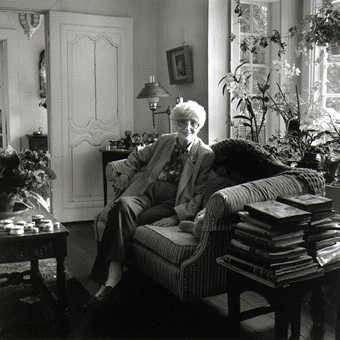
May Sarton

Born May 3, 1912, in Wondelgem, Belgium, and a naturalized U.S. citizen from the age of two, she remained something of an outsider, which no doubt made her a better observer. That's probably one of the reasons I have always appreciated her: a perpetual outsider, not always a happy one, occasionally caustic, but with an eye for detail that missed little of what was around her. Nobody sees what's actually there better than a stranger. Her poems were usually compressed lyrics, often reflective of the universal within the particular, often full of those details that an outsider sees. Sarton didn't follow any poetic fashions or schools, and was not a self-conscious literary experimenter like many of her generation. In her novels, which I would also call lyrical, she had a fine ear for the subtleties of relationships and human family drama. Some of her very best fiction is about love, insightful and funny and harrowing and profound all at once.

Sarton considered herself first and foremost a poet, with more than a dozen volumes of poetry published, but she also published nine volumes of journals and nineteen novels. It seems likely that her journals and memoirs will be what she is most remembered for, as they remain her most popular books. They continue to inspire new generations of readers. There is an honesty, even in edited form, about the difficulties of reconciling life and art. Journal of a Solitude is still one of the most often read of the journals, a story of living alone on the Maine coast, mostly cut off from others, with the occasional visitor: such an occasion as makes an artist go within and examine one's own darknesses and shadows.

In 1965 she published her tenth novel, Mrs. Stevens Hears the Mermaids Singing, which describes a woman’s quest to belong in the world as an artist and a lesbian. After that novel was published, to some controversy even though her reputation as a novelist was already well-established, her later journals were more revealing about her own love for women. In Journal of a Solitude she wrote, "The fear of homosexuality is so great that it took courage to write Mrs. Stevens Hears the Mermaids Singing . . . a novel about a woman homosexual who is not a sex maniac, a drunkard, a drug-taker, or in any way repulsive, to portray a homosexual who is neither pitiable nor disgusting, without sentimentality. . . ." Eventually she admitted what many readers believed, that this novel was autobiographical in spirit, if not literally so in every detail.

Nonetheless, she always insisted that she wanted to known as a poet and novelist, not a lesbian novelist. Some of that of course was the more circumspect times, and the generation she belonged to. There was some critical backlash against Sarton after that, but she has always had a devoted and dedicated fan following. I find this interesting because it means she was always a success to her readers, even if some of the critics were not supportive. What artist doesn't feel sympathy with that?

That double assessment continues to this day. Every so often I still get comments on my blog post here about the day I spent in Nelson, NH, where Sarton lived before Maine, and where she is buried: May Sarton at Nelson, NH. Yet two years after Sarton died in 1995, Margot Peters published May Sarton: A Biography. I read it a few years ago. It's thorough, discusses her entire life, her most important friendships, the places where she lived, and what she wrote. It's also a hatchet job, a biography that is biased towards depicting Sarton as an impossible person who was hard on her friends and angry all the time. Well, she was indeed restless, tempestuous, and strong-willed—but to be a woman artist in her times, one needed to be strong-willed. She doesn't paint herself as perfect in her journals, she doesn't pretend to be without fears or hard times. Nonetheless the journals contain moments of exceptional beauty, of near-awe, of pathos. Any artist who struggles with making a living and making art can sympathize; that many readers do just that speaks highly for her relevance. Plant Dreaming Deep, her first mature memoir, a series of short pieces about her house and friends in Nelson, set a new standard for memoir and journal writing; it remains a lucid and engrossing book, in some ways exceptionally brilliant. So I didn't like Peters' biography very much; it felt quite unbalanced. I think we're still waiting for a more balanced, definitive biography.

Labels: , , , ,

Thursday, June 11, 2009

May Sarton at Nelson, NH


looking down the long hill towards Nelson Commons

This small town in south central New Hampshire was poet and novelist May Sarton's adopted home, and where she is laid to rest. I've written before about May Sarton, in appreciation of her writings. When I began to realize that this roadtrip to Maine and back was more of an arts pilgrimage than a photography trip, I also realized that I would be passing very close by Nelson, so there was every reason to stop there. Sarton had lived her last few years on the Maine coast, near York, but always planned to be buried in Nelson.

Now I walk around Nelson, thinking of Sarton and her presence here.


wild narcissus bloom
along old stone walls—
wild angels of the hills


In 1972, Sarton published her tenth volume of poems, A Durable Fire, written while living in Nelson. Late in the book is the poem "The Fear of Angels," which seems relevant to me, in contemplating the inner journey that this roadtrip has become.

The Fear of Angels

It is not what they intend,
But we are light-struck,
Blinded by their presence,
When all they want is to see us.

We have to turn away,
Cannot look at the huge, deep Unknown
That speaks through their eyes.
They strip us down to the infant gaze
Still deep in the sky,
Still rooted somewhere we cannot remember.

Angel, look away,
I cannot afford to yield the last defence,
to go back—

"Not back, but deeper,"
Said the angel, folding his wings
to wait.


I think of Rilke's angels, in the Duino Elegies, which also immolate us merely because they want to stoop down to be with us. As Rilke wrote, Every angel is terrifying. How could they not be? They are the immolation of spirit, of bliss, of ecstasy. They are beings of light, and the force of the light can be blinding.

I think of the Annunciation, that story of the angel visiting the shepherds in the hills, blasting them with light, terrifying them. Who among them had ever seen such a thing? All the angel was doing was calling them, the ordinary peasants, the common folk, to come witness an extraordinary birth. But it must have been overwhelming. That's my sense of how it seemed to the shepherds, at least; and so I wrote about it in a poem, Evangelismos.

Angels spend so much time waiting for us to make up our minds, to choose, and re-choose, to keep choosing to do the right thing. We can always change our minds, to do the right thing, to do the next thing. But it is hard to let go of our preconceptions, of our expectations and demands of life—what is the last defense but our stubborn clinging to our sense of selfhood, our sense of our own rightness and willful rightness? So the angels keep waiting, asking us to go deeper. Again and again we choose, or refuse to.


spring emerging—
wildness of flowers among
the dark bare hills


I was able to spend several hours this overcast afternoon at Nelson. I pulled into the small town Commons, recognizing some of the buildings from photos in Sarton’s published Journals: the Town Hall, the Congregational church which her house had been next to, the buildings across the square.


I went into the Nelson public library, right there on the Commons, a little tongue-tied, and just blurted out, I’m on a literary pilgrimage. The librarian was very quick to understand, as they regularly get pilgrims for Sarton at Nelson. She showed me the corner where her collected books are kept, including a box of newspaper clippings and gathered other loose papers. Then she gave me directions to the cemetery, where Sarton's ashes are laid. I decided to walk up the hill first, then come back to the library. Sarton is buried next to her neighbors and friends, the Quigleys, in the cemetery up the long hill across the Commons from the church. Sarton wrote in her late journals about being buried here, and that’s how she described her final resting place: up the long hill across from the church.


So I walked up the long hill to the cemetery, admiring the narcissus in wild bloom, strewn apparently randomly along the roadside, at the edges of the fields. The road is bordered with the handmade stone fences common to this part of New England.


The fields are full of rocks, glacial erratics, dumped there in the dirt as the glaciers scoured these old hills, making valleys and leaving behind outwash debris. Generations ago the first farmers here cleared the biggest stones from the fields, and built these fences.


The stone fences here are very handsome; sturdy and magnificent in their quiet durability. These hills are largely folded slate, old rock crunched up in the northernmost Appalachian uplifts, interfingered with rough, grainy marble. Much of the rock from upstate New York all the way to here is made from these basic rock types, weathering as flat slabs of varying thickness, that, in the riverbeds, create stair-step waterfalls with sharp-edged lips the water plunges over as it rushes down the gorges to, eventually to find the ocean. It’s a wet forested land in this mid-spring, the trees still budding out, all the flowering bushes and trees still in full bloom.


As you enter the front gates of the cemetery, turning off the road to your right as you hike up the long hill, the field of graves slopes down into a valley filled with groves of trees below you to the north.


Many of these graves are very old, the tall flat stone markers tilting as the soil creeps downhill. In the grass among the graves tiny white and deep indigo flowers were blooming; off by the east wall a crabtree flowered hot pink; in the other direction, a small forsythia was hot yellow against the green grass.


Sarton’s grave is off to the left, next to Quig’s, near the far west wall, partway downslope. Her ashes were buried here under a stone relief-carving of a phoenix rising out of stone flames. The effect is to see the soul of the person who lies here rising out of the earth, catching light, and bursting upwards into that other place, the summerland of dreams and forgiveness and passing.


It’s a lovely spot. I sat there on the ground for awhile, taking in the quiet day and the calm afternoon, despite the gnats and flies trying to land on me continuously.


I thought to myself: she did not know me, ever, this restless, tempestuous, impulsive and strong-willed spirit. We never corresponded. Yet I learned from her, from afar, many lessons about life and living. The marks she left on me were through her many Journals, some of her late poems especially, and one of my favorite of her novels, Mrs. Stevens Hears the Mermaids Singing. I don’t know that we would have liked each others’ company: we might have been too alike, in some ways, and rubbed each other the wrong way. That she cared deeply about the people in her life did not prevent her from being testy with them, or arguing with them when it mattered; we are alike in that. The testiness is a sign of impatience, perhaps, with those who we love who would rather linger in their self-absorbed feelings of being a victim than grab their lives, wrestle them into a mature shape, and live them to the hilt. But the testiness is also a sign of a passionate nature, wild and fiery, occasionally bursting out from behind the civilized veneer. I think we were alike, the writer and I, in this passion, as in our inability to suffer fools gladly. A failing I struggle with mightily at times.


It’s a beautiful cemetery. One of those New England cemeteries stuffed with history and memory, all crowded together, leaning on each other the way the oldest stones do. They become unreadable, even more mysterious, some of them etched black by weathering, standing as silent dark monoliths to Mystery. What lives were lived here now forgotten were as important to those who lived them as ours are to ourselves, now. New England is full of the restless dead, their markers creeping slowly downhill as time and the weather erodes the soil and makes it creep over the bedrock slabs underneath.


Burial

The old man who had dug the small pit
Opened the two boxes with a penknife
And let the ashes fall down into it,
The ashes of this husband and his wife,
My father and my mother gently laid
Into the earth and mingled there for good.

We watched the wind breathe up an aspen breath
And blow thin smoke along the grass—
And that was all, the bitterness of death
Lifted to air, laid in the earth. All was
Terribly silent where four people stood
Tall in the air, believing what they could.

—May Sarton, from A Durable Fire


After awhile sitting and thinking, then wandering through the rest of the cemetery, taking many photos—picturesque is the quaint but accurate word for it—I slowly walked back downhill to the library. The natives I passed were all friendly enough to say hello to a passing stranger, another oddball literary tourist or sightseeing pilgrim.


I went back into the library, grabbing my laptop, and looked through the Sarton loose papers in the box from the shelves. They were kind enough to let me Xerox whatever I wanted, which was about half of what they had. Among the papers were: the complete program for her memorial celebration; an interview with her about her neighbors, the Quigleys, after Quig had died; several other local articles about Sarton of which were new to me, and probably not well-known to many Sarton scholars; a cassette of the memorial service. I asked about the latter, hoping that they would digitize it to preserve it. If I'd had a cassette player, I would have recorded it into my laptop right then and there; if I get back to Nelson, I will do my best to do that next time.


I also chatted with the librarian for some time before leaving, about local history, and so on. She told me not too many had done as I did, to photocopy so much, to take with me. A visit like this, for me, is not just a pilgrimage, but also a learning trip; it brings out my natural scholarly research habits. For me, knowing a writer’s or artist’s place, for myself, so that I have my own sensory memories of it, helps me see more deeply into the wellsprings of their creative work. It locates the artist for me in a place, and helps me get a feel for the land-law of that place.

This was a very meaningful interlude, for me, in an otherwise tiring and distressed day.

Labels: , , , , ,

Tuesday, February 24, 2009

May Sarton: An Appreciation


May Sarton is a writer that one grows into. One can read her when young, but if one re-reads her later in one's own maturity, her words take on extra depth and meaning. When I was in my twenties, I discovered her journals and poems, particularly Journal of a Solitude, most likely still her best known book. While I liked it, I moved on. When I re-read Sarton in my early forties, suddenly every word was alive and deeply compelling. I had grown up enough to have caught up with her. I went out and read almost all of her work, then, and found as many hardcover first editions as I could find. I read or re-read the journals, and the poems; I read the novels, and found myself reading one or two them more than once within a short span of time. I discovered a spirit, sometimes cranky and forthright, not always living up to the stereotype of the kindly elder writer but always with genuine kindness as a river flowing underground.

Sarton often finds her audience among younger women writers, who then develop a lifelong relationship with her work. Sarton was a woman-centered woman: very much a feminist although not militant, as her social graces were deeply influenced by her European background and connections. Sarton never explicitly said she was a lesbian, as she actively resisted being categorized in ways other than literary—she wanted to be thought of as a "universal writer"—although her deepest friendships were with women; one might say that she was a person who loved both men and women, but for whom individual women were her Muses.

In her sublime and spiky novel, Mrs. Stevens Hears the Mermaids Singing, one of those I mentioned that I have read several times, the central character is a woman writer whose creativity is given to her by her enlivening encounters with individual women. The central part of the novel is structured around a long interview the writer gives in her home to two visiting guests, broken up by reminiscence and memoir; there are also long prologues and epilogues, in which the writer gives wisdom to a young man she knows, a friend who is troubled. The young man is clearly having homoerotic feelings and experiences; and the elderly writer at one point says, in effect: "people like us are always going to have problems." But she means, sensitive artists like us, as much as she means people who are emotionally attracted to their same sex. Lenora Blouin writes in May Sarton: A Poet's Life:

Frequently referred to as her "coming out novel," [Mrs. Stevens Hears the Mermaids Singing] was embraced not only by "feminist" scholars but by Lesbians as well and marked a turning point in Sarton scholarship; her work began to be studied in colleges and universities, especially in Women's Studies programs. Articles appeared in feminist journals and books, and much would be written about this novel in the years to come. For Sarton this posed a dilemma; she celebrated the serious recognition her work was beginning to receive yet shunned the label "lesbian writer" which she felt narrowly limited the perception and focus of her work. She was and wanted to be seen as a universal writer and had, in fact, already written many novels about family and married life.

Mrs. Stevens Hears the Mermaids Singing is nonetheless Sarton's most openly autobiographical novel, and one of only two that openly deal with the topic of women-centered women; the other novel is The Education of Harriet Hatfield. My other favorite among her novels is Kinds of Love.

Sarton thought of herself first and foremost as a poet. Entry after entry in her journals show how much happier she was when the poems were coming, and how much she worried when they were not. In the long run, I sometimes feel that Sarton will be best remembered for her many journals, which are a deep and rich history of one writer's struggle through writing to examine herself, her needs, her wellsprings and sources. Every writer ought to read May Sarton's journals (especially, again, writers over forty): there is so much humanity in them, which leads this writer, at least, to feel less alone, and to find some solace in knowing that at least one other writer has met similar struggles and overcome them.


Going through the many books I'm still sorting in the basement reading room—I have still lived in this house for less than a year—I came across my volumes of May Sarton, and paused to browse. The journal I picked up again, a few weeks ago, and have been re-reading since, is The House By the Sea (1977), the journal that came after Sarton had moved from country-village New Hampshire to her home in Maine overlooking the Atlantic Ocean. The last year in her old home had been traumatic, as had been the move. (I relate to both of these, since my last two years in my parents' old home were as live-in caregiver then, with my sister, having to sort through everything, and also find my own new home and move into it.) In early January of 1976, Sarton writes:

I feel now very much at peace, even happy, as I start a new year with poetry. It is the first time in three years that I have dared look down into the depths or play records while I am working. Until now music had been too painful . . . if I opened that door I began to weep and couldn't stop. I had been traumatized by the final year at Nelson. [her New Hampshire home]

. . . But at least some of the anguish was transformed into As We Are Now, so it was not all waste. What deep experience, however terrible, is? And I think I came out stronger and more sure of my own powers than I have ever been.

The sea has erased the pain. I have never been so happy as I am here, and I welcome the new year with great expectations. Since they are expectations that I myself can fulfill and have to do with inner life and with the beauty of the world around me, I dare to say this. Peace does not mean an end to tension, the good tensions, or of struggle. It means, I think, less waste. It means being centered.


That last paragraph is key. It's key not only to my own struggles, but is a universal key. Poet Rainer Maria Rilke echoed it in both poems and as a refrain throughout Letters to a Young Poet. For example, from the third letter:

Being an artist means: not numbering and counting, but ripening like a tree, which doesn't force its sap, and stands confidently in the storms of spring, not afraid that afterward summer may not come. It does come. But it comes only to those who are patient, who are there as if eternity lay before them, so unconcernedly silent and vast. I learn it every day of my life, learn it with pain I am grateful for: patience is everything!

Sarton wrote, Peace does not mean an end to tension. Chaos doesn't go away; living itself is a kind of ordered chaos, and even the biochemical processes of life can be articulated as tensions resisting the mineral stillness of death. This knowing, this mature wisdom, phrased in Sarton's unique voice, is why her journals are so rich. They are filled with insights like this, which emerge from more scattered and chaotic times like a balm of true peace. I once wrote, years ago, a line in a poem that perhaps Sarton would have agreed with: True peace is hard-won, still, and private. It's a teaching that I still need to keep re-learning.

Sarton's journals are also full of thoughts about the writer's life: not only about the process and the product, there are also critical insights into literature, genres, and the collaboration with the reader. Later in The House By the Sea, in an entry from February 1976 she writes:

I wonder why it is that "inspirational" writing such as appears in The Reader's Digest and in religious magazines so often, far from consoling or "uplifting," makes me feel angry and upset. Most of the platitudes uttered are true, after all. But the fact is that this kind of superficial piety covers the real thing with a sugary icing meant to make it more palatable. It makes me feel sick. And the sickness is because I feel cheated. It debases God (by making him a kind of universal pal), and sentimentalizes Jesus, and—what is most dangerous and unchristian—it makes its communicants feel superior, part of an elite club where the saved can gather, shutting everyone else out. Into all this [Paul] Tillich enters like a cleansing, ruthless wind. . . .

I wish I had written that: it's exactly how I feel.

In the March 1976 section of this journal, Sarton ruminates:

I have always been attacked for writing political poems, first by Conrad Aiken years ago, then of course by Louise Bogan (some of this argument is in our letters). Bad rhetorical poetry is just as bad as any bad poetry and I think the question is how deeply moved one has been, whether the political poem can come from the subconscious or reach the subconscious to be fertilized.

And here we get at why a lot of "political poetry" is bad, and also why some poetry that happens to contain political thinking can be good. The artfulness of the poetry, not of the rhetoric, is the determinative element. Sarton's attitude is, I think, the proper one; and it reflects her desire to be a universal writer, not only a lesbian-feminist, or merely political one. That the poem must arise from, and activate or be activated by the deeper (subconscious, unconscious, archetypal) parts of the self is essential. Sarton demonstates why poems, rhetorical or otherwise, that are written only from the head ultimately fail.

Sarton is a writer who needs to be read by mature men as well as young women. In some ways she is a very "masculine" writer—forceful, honest, unafraid. Sarton pointed out more than once that while these attributes are seen as desirable in men, in women they are seen as unseemly or negative. In a word, uppity. Sarton was from an early age a feminist thinker, if only later seen as a "feminist writer." I agree with her opinions, written during the 1970s and 80s, about these cultural filters through which men and women were and are differently judged. What Sarton became as an opinionated writer, though, was one of the very agents of change, in her times, that she looked for in the writings of other women who were more overtly feminist. Sarton acted is if the differences between men and women writers mattered not at all, and by doing so, set the example that they did not, and thereby made them matter less.

Male writers need to read Sarton because she can be from them a mirror for their inner selves, their innermost feminine selves, their anima, which can become as strong in them, as writers, as any post-Hemingway emblem of macho male writerly superiority. (Norman Mailer failed as a writer, to pick only one example, because he rejected all things "weak" in himself, meaning feminine, and so never became a whole person.) In the image of this strong woman, men can see themselves reflected, as do other strong women. Sarton's writings emerge from and activate deep psychological resources—not only from her strengths, but her wounds—that every writer needs to encounter, sooner or later, to become fully human. Gay and lesbian writers need to (continue to) read Sarton for the affirmation that their own struggles can be overcome by assuming, as Sarton did, that the battle was already won and no longer mattered. She knew she presumed, and she also knew that her presumptions were not yet universal; but the very act of presuming helped make it come true. That's a courageous and effective strategy, to live as though the struggle were already won, and to hold one's head up and take the high road, as Sarton generally did.

May Sarton will, I believe, be remembered for her journals if for nothing else. I do think she was a poet, occasionally a very good one; and some of her novels can be held up as among the best in the naturalistic (or literary fiction) style of the 20th Century. They continue to be popular among readers even if most critics have forgotten them for the moment. Sarton will in print a lot longer than some of her contemporaries who literary critics now give more attention to—which means she has succeeded in her oft-stated desire to connect with the reader, with the person who the reader is, in their shared humanity. But even if all she had left us were her journals, that would be a rich and treasured legacy indeed.

Labels: , , , ,

Monday, May 28, 2007

Ripeness


Between two moments, bliss is ripe. —William Blake, The Proverbs of Hell

A garden is always a series of losses set against a few triumphs, like life itself.  —May Sarton

Some writers are best appreciated when you have had some life-experience under your belt. Some writers may speak to you when you're young, and speak to you even more in later years. I scoffed at this idea, when I was young, as most young people do, I suppose; but now, moving towards that point in life where one realizes that the end of life is nearer then the beginning, I feel more of the truth of it. I simply was not able to appreciate some things, then, that I do now.

May Sarton is a writer who, I believe, the reader needs to be mature enough to appreciate and understand; I first read her journals and poems in my 20s, and didn’t get that much out of the reading; but after I passed the age of 40, I re-read her and received a tremendous range of insights out of her combined writings. Everything clicked, and I became completely absorbed. I think that Sarton may be one of those writers who you can't really appreciate till you're 40 or so. I mean, of course you can appreciate her at any age; but much more so, once you have some more years on you. Like a fine wine, she gets better as a writer, as you age.

Perhaps the same is true for writing poetry. This is not to say that younger poets shouldn't write. But they shouldn't be astonished to learn that what they have written as young poets is shallow, lacks depth and resonance, and may in fact be very much like what a lot of other young poets have written. Ignorance is a commonplace problem, and leads to a lot of repetition; I can't tell you how many times I've seen teenage poets write exactly the same angst-written poems, as though they were the very first to do so, all unaware that so many others had already written the exact same poem. Truly, most young poets don't read enough. One tries to be gentle, when pointing out this crushing sameness. But ignorance is cured by experience. Ignorance in the young is forgiveable, because time will remedy it. Willful ignorance at any age is, on the other hand, inexcusable. You can grow into your best work, if you give yourself time, and don't expect your best work to happen when you're still in your 20s or 30s. One wonders if poets are capable of producing a truly great poem before they're 40. Certainly there are exceptions, but perhaps this is one of those few times where the exceptions do prove the rule. So, younger poets should write, and write a lot, and read a lot more than they write, and write some more—and not expect the world to come worship at their feet as though they were geniuses.

Poets who become too successful too young often become lazy, and rest on their laurels, and never finish fully developing their talent; and that's a shame, and a loss. Poets who peak too young often end up repeating themselves, rather than continuing to grow, broadening their range of interests and styles: and broadening the scope of their talent. The Yale Younger Poets series is a long list of names of published poets who produced one or two fine and original books, early on, then endlessly repeated themselves therafter. Most of those names never produced a late work of genius. What happened to these poets? Perhaps they got praised too much, too young, and came to believe what people were saying about them, and got stuck in trying to reproduce their early successes. Nothing is more dangerous to creativity than the desire to repeat success. It means you start caring too much about the outcome, and neglecting the process. Maintaining a healthy process, and ignoring the outcome, serves the creative writer much better, in the long run.

You grow into your potential, not overnight, but gradually. It takes time to grow an artist. Some plants flower early, many others flower late. Some wait a long time to flower, and when they do, their fruits astound and magnify.

At the same time, the older poet needs to maintain a younger, questing attitude towards life, and not ossify into solidified habits. Beginner's mind is far more flexible than expert's mind, and far more open to possibility. I look at Sarton again, and her youthful spirit, even in old age, kept her looking at the world with fresh eyes, rather than getting stuck in a mindset that thought it had all the answers. Perhaps that's the other thing that went wrong with so many of the Yale Younger Poets: they came to believe, possibly because critics told them so, that they already done their best work, and could afford to coast thereafter; or, perhaps, that they were already brilliant, and didn't need to keep exploring the edges of their talents and crafts. They stopped growing because they thought they didn't have to anymore. But Sarton, dedicated and observant gardener that she was, noticed what all gardeners noticed: plants never stop growing; neither should poets.

You grow into your potential, not overnight, but gradually. But you never stop growing, until you're dead.

Of course, this is a synchronicity of experience, or emotional maturity, rather than of calendrical time. It isn't necessarily a product of middle age. We think of those exceptional poets who wrote mature work at a young age. It's what comes after, though, that matters: what you do next. The paradox of experience, or its synchronicity, is that many of the older, more enlightened souls you will meet in your travels, maintain spirits that are very young-at-heart. Similarly, younger souls even in older bodies can be quite stuck on themselves, and humourless.

The convergence of beginner's mind and elder's experience may indeed be that cusp in which art happens.

Labels: , , , , , ,

Monday, November 06, 2006

Does the Audience Matter? (Notes Towards a Position Paper)

There’s the art we do because we love doing it, that we do for ourselves, and will always do, and will always be interested in doing, no matter what; and there is the art that we do, that we may not think much of, that the rest of the world, starting with other artists, encourages us to do because they love it when we do it. And then there is the art that we will be remembered for having been done by us, if we’re remembered at all. (Literary immortality, or at least longevity.) There is no shortage of ironies in this creative life. The root of that irony lies in the difference between our expectations and hopes for our creative legacy, and what that legacy will truly be.

I am reminded of a science fiction novella I read back in the 60s or 70s, which has stuck in my mind all these years, about a man who is a time-traveling historical researcher. He goes back in time to interview creative people such as Georges Bizet, the composer of Carmen and other operas, none of which were successful in Bizet's own lifetime; the protagonist also meets other artists of that era. Part of the novella consists of the protagonist's memoir-writings of these encounters; these are truly sublime passages, full of insight into the creative life, and into an artist’s successes and failures. The other main plotline of the story is how another time researcher from the protagonist’s own future comes back to visit him; because of his memoirs, he is very famous in the future. The deep irony of the story is that he is a painter who wants to be remembered for his paintings; but now he knows that he will be remembered for his writings, and there’s nothing he can do about it. At the end of the story, he sighs, and for the moment, puts down brush and takes up pen; but he knows he will go back to his painting, eventually, simply because he loves to do it. He is a mature enough character to accept the irony of his own artistic life, without despair. The novella involves a complex layering of past and future, artistic intention and artistic result, and on a more subtle level is a meditation on the law of unintended consequences.

I am reminded also of May Sarton, who throughout her life thought of herself first and foremost as a poet. But rather than for her poems, she is most likely to be durably remembered for her exquisite and luminous published journals: the books wherein she talks about the creative process, her home life, growing old, her trials and frustrations and triumphs, and in every way gives a deep and meaningful look into the artist’s life and work. Her revelation of her self, and her creative process, is profound. The most famous of her journals is Journal of a Solitude, but I find the later-life journals such as At Seventy even more rewarding. Sarton’s poetry was good, sometimes very good, but not consistently great; individual poems achieve greatness, I think, but overall, her very best writing is her prose. Two or three of her novels will also keep her name alive, I believe, perhaps Kinds of Love or Anger. For myself, her two most overtly autobiographical novels, which deal with themes of same-sex love and its connection to the creative life, Mrs. Stevens Hears the Mermaids Singing and The Education of Harriet Hatfield, will always have a place on my shelf; Mermaids in particular is a novel that speaks very directly to me. Sarton is also a writer who, I now believe, the reader needs to be mature enough to appreciate and understand; I first read her in my 20s, and didn’t get that much out of her; but after I passed the age of 40, I re-read her and got a tremendous range of insight out of her combined writings. Everything clicked, and I became completely absorbed. I think that Sarton may be one of those writers who you can't really appreciate till you're 40 or so.

The irony of intent should be apparent by now: we may not be remembered, if we are remembered at all, for those products of our art that we most value ourselves. Instead, we may be remembered for artistic products that we ourselves don't think very much about, or value highly.

The question that is all-too-often asked of artists by callow reporters is: If you would wish to be remembered for just one thing, what would that thing be? I reject this question completely. It is a question that feeds ego and expectations, it leads us to risk self-deception and denial, and it serves only to deepen the irony under discussion here. I think the question completely misses the point of what it means to be an artist. It is completely the wrong question to ask of artists.

The real truth here is that we, as artists, have no control over our artistic legacy. No control whatsoever. We cannot dictate to the future that which we would prefer to be known for having done. We can edit ourselves, try to preserve our privacy, leave things out; at most, this leaves a gap in the record, which, if there is interest enough someday, some biographer will try to sleuth. Perhaps some time-traveling historical researcher will come back to interview us about those gaps. But the verdict of time will always be beyond our attempts to manipulate it.

So, the reason to make art remains located in the present tense, not in the future. All we can do is produce. Artists who think too much about their legacies, who live too much in the future, cannot be content, or ever happy. The reason to make art is simply to make art: no other reason. All we can do is make art, and make art, and keep making art, till we drop.

Don’t make art for fame and fortune—those are accidental, on the evidence, since for every great artist who achieves fame there are usually several just as good who don’t—and by all means don’t do it for posterity. Do it for yourself. Do it to please yourself. Do what you have to do, to satisfy your own artistic urges. Do it because it’s as essential to your well-being as breathing. Do it because you must do it, or die. Anything other reason to make art is insufficient.

I have no idea what I will be remembered for, if I am remembered at all. I don’t think about it much, except to note the probability that the pieces that I personally care about the most are the least likely for which I will be remembered. My experience in dealing with an audience has often been that the art that I make, that I myself value the least, is the art for which I often receive the most encouragement. I note the irony, without judging it or the people involved. It’s actively amusing, when I do think about it. I note that the encouragement and praise does feed my ego, if I let it; but praise is not essential for making art. I recognize that I’m good at more than one form, genre, and medium of creative artwork: I recognize that I’m good at more than one artistic pursuit, and choose not to choose between them, and choose not to value one medium over the rest. This is a polymath stance that is often neither supported nor understood.

The artform out of which I personally get the most satisfaction, music, is the one artform which has least often provided me a steady income. In some ways, that’s liberating, because I don’t feel forced to compromise my music, to prostitute it (even though I would, if asked to), or to change it in any way to please others. In other ways, this is the root of irony: the painter who will be remembered for his memoirs, the poet who will be remembered for her journals.

Where we bury our egos in our work, where we invest our self-worth in our product, sometimes so deeply that we are not even aware of our buried investments—those are the places which can kick us back, hard. Any ego I develop about my artwork, in any genre, is profoundly laughable, and the irony of legacy both reminds me to keep myself from getting inflated, and also puts everything in perspective. I think perhaps the true test of artistic durability is: will anybody give a damn about it in a hundred years? It’s okay if they don’t; we shall not cease to paint, even though we know our memoirs will be what everyone remembers us for.

Sure, you can get good, useful feedback, critique, and support from other artists—some of whom will understand what drives you better, at core, than your loved ones ever will—and you might even develop an audience for your work. I’ve made my living, at times, from commercial and production art; but that isn’t my art, and even though I always undertake it with the utmost craft and skill that I am able to bring to it, in the end I don’t care about it. It’s not the art I do for myself, to myself, out of myself. It’s time-bound and ephemeral. Ironically, of course, my commercial illustration work has had an inherently wider audience than any of my personal artwork has ever had.

The trick to preserving one’s sanity, in this unstable, back-biting and crazy-making world of art, though, is to not care about it too much. Non-attachment to outcomes is an important self-discipline that any artist would be well-served to cultivate.

So, that’s how you keep going: you ignore the irony of legacy, or laugh at it, always remembering that the last laugh will be on you.

The reason to do your art remains, simply, to do your art. Do it because it must he done. Do it because you have to. Do it because no one else can do it the way you do it, with your specific sense of the craft and tools of your media. Do it because you can’t live without doing it. Do it because you have no other choice but to do it.

All audiences come later, if they come at all.

Labels: , , , ,